Thursday, February 09, 2012

The Death of the Newspaper: Here, Let me Help

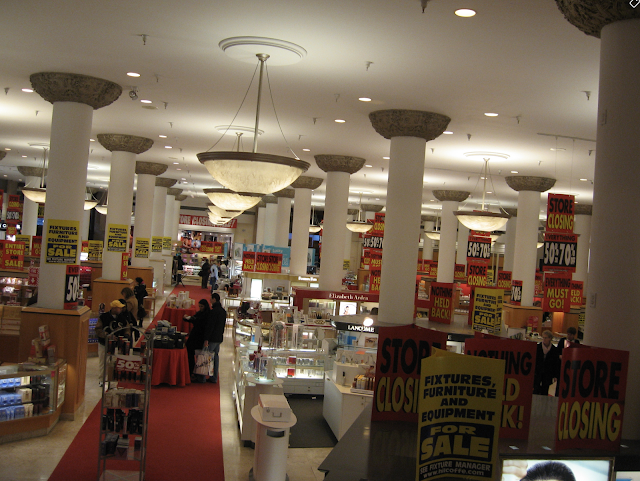
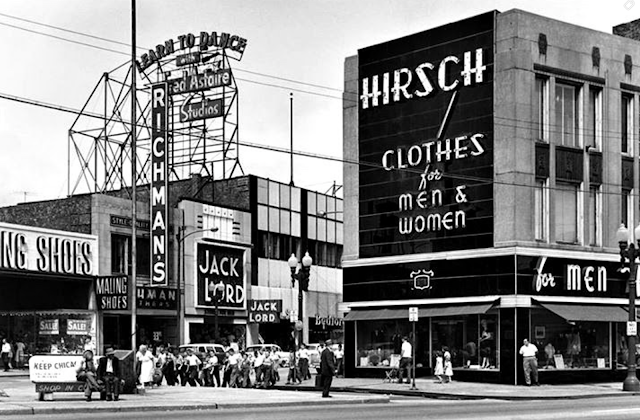
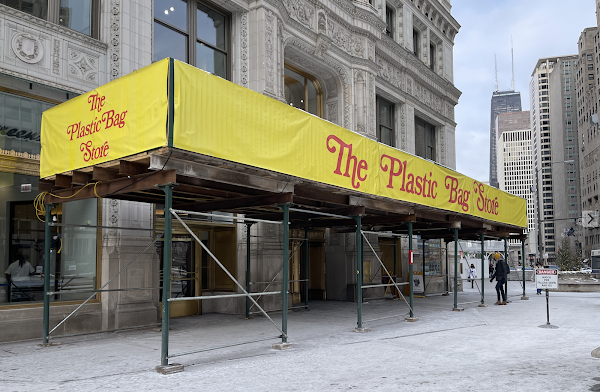
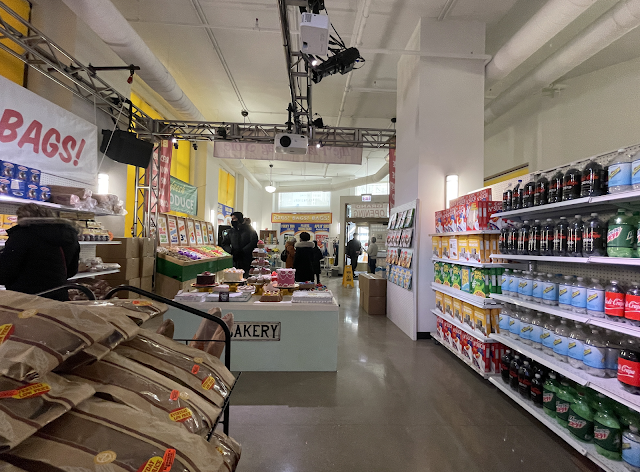
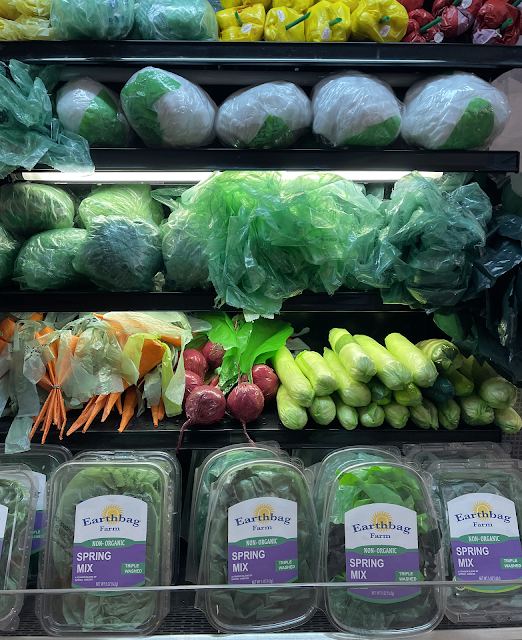
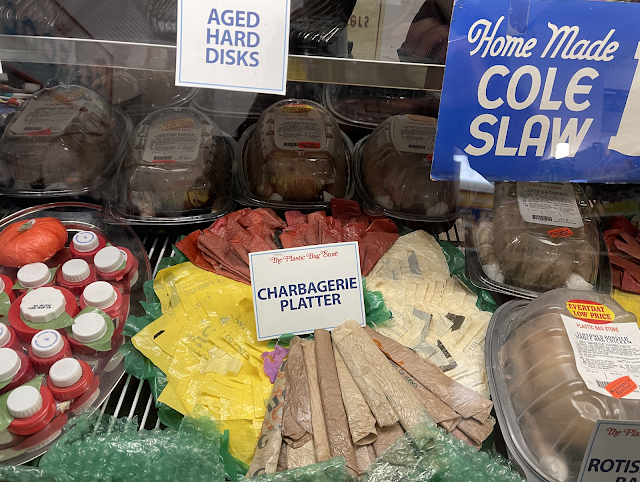
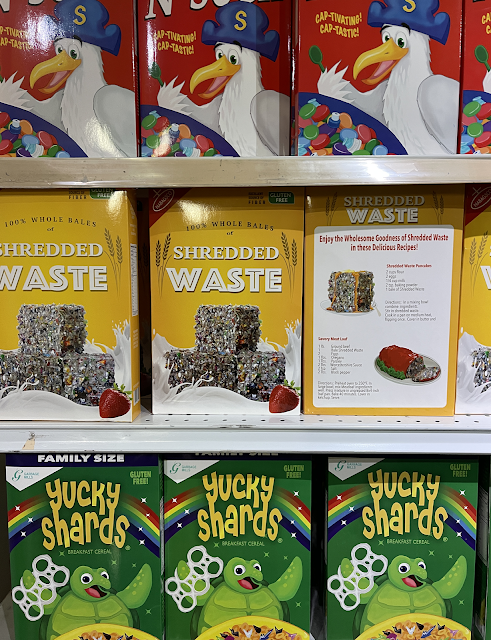
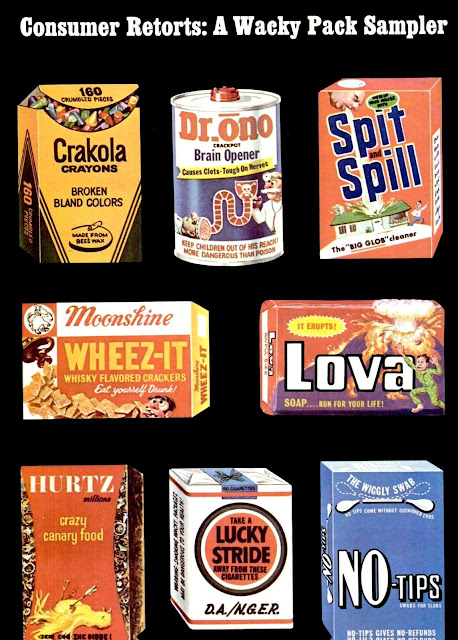
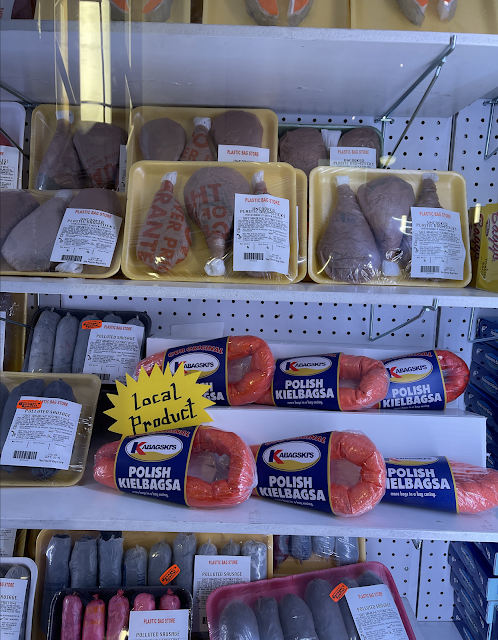
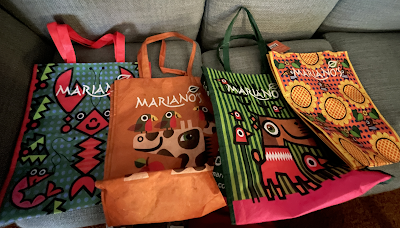
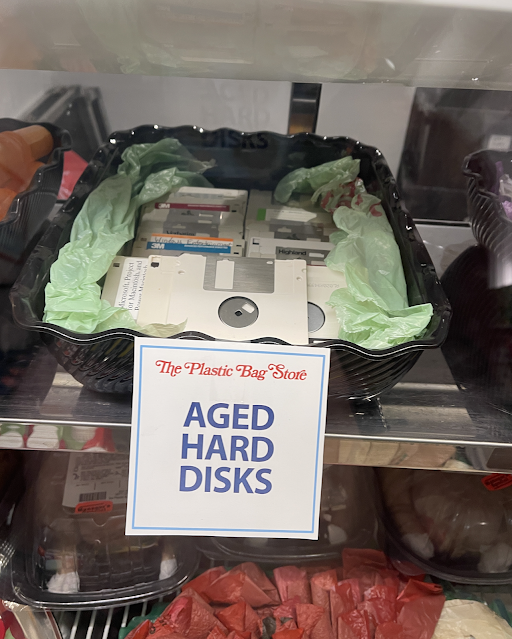
 click images for larger view (and apologies to Stanley Tigerman)

I knew it was coming.  The announcement was made last fall.

Still, it was with a bit of rue that I opened my home delivery bill from the Chicago Tribune to find that charges have more than doubled - up 122%, the latest brainstorm from company management, and proof that gross stupidity didn't leave the building with Sam Zell.  No explanation on the bill, just a message about how much I must be enjoying the "additional 40 pages of weekly coverage,"  every one of those pages costing me more than a nickle each.  What a bargain.  Somehow I don't recall the Trib dropping the rates when they shrank the physical size of the paper several times over the last decade or so.

If any more proof were needed of the complete contempt in which the Tribune holds its subscribers, consider this:
  • You can't cancel your subscription via mail.
  • You can't cancel your subscription via email.
  • You can't cancel your subscription on the Tribune website.
When I tried to log on the website, I was told that my email - the same email at which the Tribune has been sending me bills the last eight years - was "not found.  Please try again.  Your frustration amuses us no end."

When you call the 800 number printed on the bill, you go into automated response hell.  "Let me look up your account.  Is your address .................  three.....zero......zero?" What? That's not my address.  It's the street number.  Should I just press "1" for yes and take my chances?

OK, I guess that's what they wanted. The automated voice instructs "If you wish to discontinue you service, Press 4." With a complete lack of confidence that anything good will come out of it, I press 4,  only to find that at the Tribune, not even being an automaton exposes you to working overtime.  A different automated voice scurries on to say, "Please call back during normal working hours." 

Which apparently will be another grim experience I'm not looking forward to.  On a website called Customer Service Scoreboard, Chicago Tribune customer service is ranked 425 out of 525 companies, qualifying it for the official designation "Terrible".  Comments posted:147 negative, 1 positive.

The negative replies get a canned response titled "Official company reply".  Which doesn't exactly raise your expectations, for good reason . . . 
Good afternoon, my name is Autumn Smith, and I am an employee in the Client Services dept at the Chicago Tribune.

Although our main call center is in the Phillippines . . .
What follows is a series of a graphic customer descriptions of what you have in store for you when you talk to one of those hapless folk at outsource central in Manila, whose English is reportedly somewhat tentative and who will apparently try to bargain with you if you say you want to cancel, and commit only to "taking your request", which may or may not actually be honored without a second or third follow-up, and possibly the sacrifice of your first born male child.
I was brought up at the end of the golden age of newspapers.  As a kid, I read all three of Chicago's dailies (somehow, Chicago Today, the aereated aftertaste of Heart's old Herald American, never struck me as a real newspaper.) I couldn't even wait til the day of publication. Late every afternoon, I would walk to the corner newsstand to pick up the "Bulldog" edition of the Trib and Sun-Times, already carrying the next day's date.

Even today, I don't subscribe to the Sunday Trib.  I don't buy the Sun-Times on Sunday.  I can't wait.  I buy them as soon as they hit the newsstands Saturday morning, the same way that even though I
I've read every edition in the history of Crain's Chicago Business, I've never subscribed, because I can't wait until Monday or Tuesday for a paper I can buy Saturday afternoon. Which I do, along with the Sunday New York Times, pretty much every week, at one of Chicago's last surviving newsstands, at Chicago and Michigan.  Call me sentimental.
So now we get to watch the death throes of the very idea of a vibrant city newspaper, as the last survivors flail on their way to the graveyard.

Like pretty much every daily, the Trib killed off their book section years ago, shifting it to an anemic handful of pages in its Saturday edition, when a lower readership means not having to print quite as many copies of pages hardly anyone reads.  Now, the Trib's killing off even that, creating a Printers Row book section to be sold as a separate publication at $99.00 a year, about what I pay per year for the New Yorker and New York Review of Books combined.  The Reader's Michael Miner had a great piece on Thursday on a single Tribune article all but completey devoid of any curiousity as to the basic facts of the story being reported.

Removing content and doubling prices.  Making customer service an obstacle course. It's as if the sales staff at the Trib are all graduates of the class, "Marketing for the Suicidal."

It wasn't that long ago that publishing a city's dominant newspaper was thought of as a license to print money.  Now it's the way to burn through it.  It's the classic tale of challenges ignored as engorged margins became an addiction, of cluelessness, arrogance and desperation racing each other down a quickening whirlpool of dissolution.

You could get angry, but it doesn't seem worth the bother.  There's nothing you can do about death. It's just sad.

Time to move on.
 Why does the above shot remind me of the chamber pot scene in Visconti's The Leopard?

Wednesday, February 08, 2012

Four Buildings and a Funeral - Wrigley: The Architecture that Remains after a Great Company Dies

'The Chicago Sun-Times David Roeder is reporting today that the long abandoned William Wrigley manufacturing complex at 35th and Ashland, after being on the market since 2009, is finally being sold at a bargain basement price.

 click images for larger view
William Wrigley, Jr. came to Chicago from his native Philadelphia to sell the soap manufactured by his father's company.   The young Wrigley was a born salesman, but his job was made difficult by the fact that the nickel price for a box of soap left retailers little profit.  So Wrigley convinced Dad to double the price of the soap to give stores a heftier share of the take.  Wrigley Jr's sales mantra was "Everybody likes something extra, for nothing."  And so he purchased 65,000 cheap red umbrellas as a free incentive for buying a box of soap.  When the umbrellas ran out, Wrigley turned to baking powder as the premium.  When he found people liked the baking powder better the soap, he dumped the soap, and looked for a premium to help sell the baking powder.

He hit upon the idea of chewing gum, produced from spruce bark and originally used by Native Americans to freshen their breath.  The problem was, however, that the taste evaporated after a couple of minutes of chewing, so Wrigley did some research and hit upon the idea of substituting chicle, from sapodilla trees, up until them used primarily in making rubber.

And again, "chewing candy" soon proved more popular than baking powder.  In 1893, as people from all the world flocked to Chicago's World Columbian Exposition, Wrigley came out with both the Wrigley's Spearmint and Juicy Fruit brands.  To get his display cases into retailers, he gave away knives, lamps, scales, coffee grinders and even cash registers.  In 1909, Wrigley bought out the company that supplied him his gum, and began manufacturing it himself as the Wm. Wrigley Jr. Company.

When a financial panic swept the country in 1907, and his competitors were slashing their marketing budgets, Wrigley took out a $250,000 loan to buy an advertising schedule that in more prosperous times would have cost $1.5 million. "Dull times are the very times when you need advertising most." By 1910, $170,000 in annual sales had skyrocketed to $3 million.  By the time Wrigley died in 1932, he had spent $100 million in advertising his products.
In 1912, Wrigley bought 4-and-a-half acres of land at 35th and Ashland, part of a revolutionary new 400 acre Central Manufacturing District, formed to provide business for the Chicago Junction Railway, which had added capacity far beyond the needs of its original client, Chicago's Union Stockyards.  By 1915, according to a Chicago Landmarks Commission report, over 200 companies had joined Wrigley in the CMD.  Wrigley took up a large part of the 250,000 square-foot building on Ashland designed in 1911 by architect A.S. Alschuler.
Behind it, in 1913, he erected his own six-story, 175,000 square-foot factory, designed by the firm of Postle and Fisher.  In a book promoting the CMD, among the numerous other testimonials, there's a letter from Wrigley's Industrial Agent H.E. Poronto:
During the first year in our new location, we have found it even better than originally represented.  The service which has been rendered us by the Chicago Junction Railway Company in daily handling our ten to twelve incoming cars has been of the very best . . . We have affected a saving of $35,000 in the one item of cartage alone . . . The district is easily accessible from all parts of Chicago, as it indicated by the fact that of the 450 odd employees which we had at the we moved here from West Van Buren & Halsted Streets, fully 98% remained with us.
 
 At that time, 48% the city's population lived within a four-mile radius of the CMD.
Down through the decades, Wrigley became a global force in gum,.  Employment at the factory peaked at 1,700 in the 1960's, but even as late as 2001, the CMD plant was still the company's largest, with a thousand employees working in three shifts turning out 30,000 cases of gum a day.  Reported the Sun-Times' Sandra Guy:
The lumps of gooey stuff drop onto conveyor belts that seem to endlessly move the gum through the stainless steel and white lab-like environment inside the six-story plant. The all-synthetic gum base is heated, matched with the appropriate flavor, spiked with a high-intensity sweetener, pushed onto a palleted merry-go-round and cooled to 72 degrees Fahrenheit.
 By that time, the company was being run by the 37-year-old great-grandson of William Wrigley, Jr, strangely enough, also named William Wrigley, Jr.  Wrigley had lost big with $17 million investment in Flip Flipkowski's high-tech incubator company Divine, Inc, which burned through a billion dollars in cash by the time the dot.com bubble burst.  Flipkowski has lined up $14 million in city subsidies for a corporate headquarters at the Northwest corner of Goose Island.  He never collected, but the city then offered a $15 million tax subsidy for Wrigley to take over and develop the site.
The result was Wrigley's Global Innovation Center, a 193,000 square-foot, $45,000,000 facility designed by Gyo Obata leading a team from HOK.  The complex, which was certified LEEDgold in 2009,  including a 40,000 square foot pilot plant for testing manufacturing processes, and a main building centered by a winter garden covered by a glass tension cabled ceiling with 540 individual panels, and 25 different species of plants from four continents, a representation of Wrigley's global reach. "This building," said Wrigley,  "is a physical representation of our aspirations."

But not for long.

When the new Innovation Center and its $14 million in city subsidies were announced in 2002, then Mayor Richard M. Daley stressed that Wrigley had assured him the 35th street plant and its jobs would not be threatened by the new facility, and he was going to get it in writing.  and his then  "We're still working on all of that," his Planning and Development Commission Alica Berg told the Sun-Times, " but it's my understanding that it's their intention to expand their manufacturing into the space that their innovations center would be vacating."
One month after the opening of the Global Innovation Center, Wrigley announced they were closing the south side plant in December of that year.  225 employees moved over to the Goose Island facility; the rest lost their jobs.  "While this is a difficult decision for me personally, we would not be making this choice if we did not believe that this change was absolutely necessary for the long-term vitality of our company," said Bill Wrigley Jr.  "We value our deep roots in the city of Chicago, even as our business and our workforce continue to change," he said in a statement.

The remaining 600 workers were shifted, offered early retirement , or laid off.   In 2002,  the same year the Goose Island facility was announced, Wrigley failed in a takeover of Hershey Foods, in what turned out to be its last chance to keep large enough to compete globally.  In 2008, the Wrigley Company was acquired by international behemoth Mars.  In January, 2010, William Wrigley, Jr., himself, was gone. For the first time in its century-long history, a Wrigley was no longer running the company  In 2011, Mars dumped another 100 workers and announced its intentions to sell off the Michigan Avenue headquarters, shifting the last employees to the Goose Island facility, now the last remnant of a company that once helped define Chicago.
In 2009, Wrigley hired CB Richard Ellis to sell off the 1.3 million square-foot, 30 acre complex. For nearly three years, there were no takers, until this week.  David Roeder is reporting in the Sun-Times that the original asking price was about $19 million, but the actual sale price wound up being closer to 5. What was once one of the manufacturing powerhouses of Chicago is essentially being sold for scrap.


Tuesday, February 07, 2012

Last week to send Bertrand Goldberg's Prentice a Valentine; but you can Activate urban acupuncture through the 29th - two current competitions


Show Prentice Some Love
After placing and then yanking the issue of saving Bertrand Goldberg's Prentice Hospital from their agenda last June, the Commission on Chicago Landmarks has been missing in action in what has become the most important preservation battle of the new century.  The Save Prentice Coalition continues to battle Northwestern's hidden omerta  behind-the-scenes gaming of the city's political system to remove all obstacles to destroying Goldberg's essential structure - the only world-class building on the sprawling Northwestern Hospital Streeterville campus - for what it admits will be a long-lived vacant lot. 

The Show Prentice Some Love competition invites everyone to create their own personalized valentine to Prentice, with prizes for adults and for kids 13 and under.  First prize is "A rare copy of the catalogue for the 1985 Paris Art Center exhibition, Goldberg: On the City, signed by Geoff Goldberg (estimated value ‐ $300)"
click images for larger view
There are no restrictions on the nature of the submittals. You can make your Prentice “valentine” in whatever medium you choose—photography, paintings, songs, short video (60 seconds or less), t‐shirt graphics, and construction paper valentine are just a few of the options. Entries can originate in any format, as long it can be converted to a digital file and emailed to us. If you have lots of ideas, don’t let that limit you! Multiple entries will be accepted from the same entrant.
Deadline for entries is next Monday, February 13th by 5:00 p.m., via email to loveprentice@gmail.com.  The top five entries will be announced on the Save Prentice Facebook  page on the 14th and will be open to popular vote, for which the winners will be announced on the 17th.

The valentine everyone is looking for would be from 42nd ward alderman Brendan Reilly, an energetic leader in saving Northwestern from demolishing the Lake Shore Athletic Club on Lake Shore Drive and keeping the Chicago Children's Museum from building in Grant Park, who hasn't had much to say lately on the battle to save Prentice.  Reilly's latest newsletter to constituents includes a diagram of the remapped 42nd ward that shows the new northern boundary running straight down Superior and right past Prentice.  Has the Goldberg landmark been pitched into the 43rd?  Strangely enough, 43rd alderman Michele Smith's depiction of the new map on her own website shows the 42nd still going all the way up to Oak Street.

Last April, Landmarks Illinois put the lie to Northwestern's propaganda that - cue the crocodile tears - no future use could be found for the building and they have no choice but to grind it into dust, by issuing a compelling report detailing several viable reuse scenarios.

You can download the complete rules for Show Prentice Some Love from the Preservation Chicago website here.

Activate! Architecture for Humanity/Chicago's Design Competition to Re-Imagine Chicago Public Spaces 
You've got until February 29th to get your entry in to another worthwhile competition (check out MAS Studio's winning entry for 2010.  AFP/Chicago's Katherine Darnstadt talks about the competition process in this video), to create minimal-cost, high-impact interventions into the urban fabric - this year at the Reilly Elementary School, 3650 West School.  According to sponsor Architecture for Humanity Chicago . . .
Through an acupuncture style small-scale design intervention, the ACTIVATE! competition challenges individuals to create one or more objects that can activate a vacant site, is universally accessible, and fosters multi-generational community interaction for $1,000 or less.

Building on the success of the 2010 competition, the winning designs have fostered a dialogue about open space and how design can be the catalyst for the creation of meaningful and joyful places that facilitate community engagement.  The 2012 competition site is a Chicago Public School with a ‘blind spot’ on their campus that attracts unwanted loitering and illegal activity.  Site photos, plans, project information and previous winning installations are located on the Open Architecture Network project page and email furniturecomp@afh-chicago.org the chapter directly with questions.
More information here, and the competition brief (pdf format) here.

Sunday, February 05, 2012

Lifson on Prentice Curves, Explore Engineering at CAF, Marie Aquilino, Carolyn Armenta Davis, People's History and Preservation, plus last days for Bertrand Goldberg:Reflections - more for February

We told you there was a lot more coming to the February 2012 Calendar of Chicago Architectural Events, and it turns out we weren't kidding.  We've just added another dozen+ items.
On Thursday, the 23rd, Edward Lifson will be talking about Those Mysterious Curves: Why Prentice Women's Hospital Should be Reborn at the Häfele America Chicago Showroom, while a mile or so north, Rebecca Graff will be presenting Archaeology at the Charnley-Persky House: Changing Tastes on Chicago's Gold Coast, 1890-1930 at, appropriately enough, the Charnley-Persky House.


On February 29th, the Chaddick Institute at DePaul will have a symposium bridging the real and the virtual, Connecting Digital and Physical Space: Social Media and Technology's Impact on How & Where We Work, Live & Shop.  And on Sunday the 19th at CAF, Chicagoland Engineers Week will be sponsoring Explore Engineering - How do they do that? Find out. Figure Out. Try Out, "a day-long festival of fun, hands-on activities designed to help families discover what engineers do, try out activities, have fun building, constructing, and solving engineering challenges," targeting families with kids 5-13 and students 14 to 18.

And for Wednesday, the 22nd, we've added a lecture at the Graham Foundation by Marie Aquilino, editor of the book Beyond Shelter, Architecture and Human Dignity, who will describe the ways in which some of the world's most innovative architecture and engineering firms, nonprofits and research centers are changing how we engage in disaster recovery solutions.

This week, on Monday the 6th, we've got Yolande Daniels of Studio SUMO lecturing at the Art Institute, and on Tuesday the 7th, Jamie Simone talks about Planning in Progress: The Bloomingdale Trail Project at the Great Cities Institute in the afternoon, and in the evening there's the Structural Engineers Association of Illinois monthly dinner meeting at the Cliff Dwellers, on the topic The Structural Engineer and Construction Disputes, while Emmanuel Pratt is at the Chicago Cultural Center for Archeworks, and Carolyn Armenta Davis discusses Creativity Released: Designs from Black Architects in Paris, Dakar, and Beyond at Alliance Française de Chicago.

This Friday, the 10th, there's what promises to be a different kind of look at historical preservation with a  round table discussion at the Jane Adams Hull-House Museum, This is Not My Beautiful House: Historic Preservation and the People's History, with Vince Michael, Roberta Feldman, Estevan Rael-Galvaz, Mary Means and Lee Bey.

We're already in the second week of the month, but there's still 50 great upcoming events to check out on the February Calendar of Chicago Architectural Events.

And a final reminder that you have only through this Wednesday, February 8th, to catch the great exhibition, Bertrand Goldberg:Reflections at the Arts Club of Chicago.

Chicago Streetscene: Ghosts, 1911

click for larger view
The Library of Congress is one of the great resources for historical photographs.  Within its American Memory collection are 25,000 glass plate negatives, transparencies and color photolithograph prints taken by the Detroit Publishing Company from a forty year period from 1880 to 1920.  Several hundred of these are of Chicago scenes, including a number documenting, when new, the University of Chicago, and the 1911 Chicago and Northwestern station by Frost and Granger.

What's especially remarkable about these photos is their high resolution.  As opposed to most architectural photographs, which are, understandably, designed to showcase a building, the Detroit Publishing set can be blown up to shown the actual life of those buildings reflecting people, not as the usual specs, but as clearly identifiable individuals, down to the expressions on their face as look into camera, or, camera unseen, go about their daily lives oblivious to being observed.

Another common effect in the Detroit Publishing photographs is that the prolonged exposures often provide the kind of artifacts you see in the above photograph, of the Northwestern terminal, ghostly images of people long dead, beside shiny-new building long demolished, in a cityscape as vanished as the hanging gardens of Babylon.

Thursday, February 02, 2012

Tigerman's rêverie, CAF's Casino, Uhlir's Netsch, Yolande Daniels,Ragdale, the Monroe, Roosevelt's Vertical Dorm, and more - it's the February calendar!

 OK, I'm sure I'm going to find more stuff to add, but even now, we've got nearly 40 great items on the February 2012 of Chicago Architectural Events.

Today, Thursday the 2nd, there's a discussion of the new Target at Louis Sullivan's former Carson Pirie Scott store for Friends of Downtown at the Cultural Center, and the opening reception for the new Stanley Tigerman exhibition, Ceci n’est pas une rêverie, at the Graham, where Tigerman, himself delivers a lecture, Displacement, on Wednesday the 15th.

Monday, the 6th, Studio SUMO's Yolande Daniels is at the Art Institute, on the 7th Emmanuel Pratt is at the Cultural Center for Archeworks.  There's a program of short films, All Tomorrow's Cities, at Gallery 400 on Monday the 13th, while the 15th, Tom Lassin of Holabird and Root talks about his firm's recent renovation of the historic Monroe Building, lunchtime at CAF,  where the next Wednesday the 22nd, Christopher of Groesbec of VOA discusses the new Roosevelt Vertical Dorm.  On Tuesday the 28th, CAF is offering up the latest edition of its Chicago Debates - Beating the Odds: Designing a Casino for Chicago - Lakeside Resort or Bling Bingo in a Box - at the Chicago Theater, with an all-star panel including the Reader's Toni Preckwinkle, Mick Dumke, plus Jerry Roper, Dennis Judd, John Norquist, Kimbal Goluska and moderator Edward Lifson.

February closes on Wednesday the 29th, with the inaugural event in a new Walter Netsch Lecture Series 2012 sponsored by Friends of the Parks with Millennium Park Executive Director Ed Uhlir discussing The Legacy of Walter Netsch.

And this week is the last chance to catch the don't-miss exhibition Bertrand Goldberg:Reflections at the Arts Club of Chicago.  February 8th is the final day.

We've only scratched the surface.  Check out all the great items on the February 2012 Calendar of Chicago Architectural Events.

Wednesday, February 01, 2012

The Donald: Trump Riverwalk ghost town ok with me

We wrote yesterday about the current state of the Wrigley Building plaza and the empty shops at the Trump International Hotel and Tower riverwalk.  Today, Alby Gallun of Crain's Chicago Business has an interview with Donald Trump in which the creatively coiffured mogul says that if you're expecting to be able to sip a coffee, or buy a gelato or Coach handbag at his spectacular, SOM-designed riverwalk, don't hold your breath.  Trump tells Gallun they've basically given up for now, putting leasing on hold until retail rebounds.  Oh, he would also like to land bank the site of the Calatrava Spire, if he can get it cheap.  Read the full interview (subscription or registration required) here.

Juan Moreno and UNO Charter today at CAF, Tigerman rêverie at the Graham tomorrow - February calendar . . . ?

We're still in our hamster-in-a-wheel phase of completing the February calendar of Chicago architectural events . . .
So, here's a heads-up that today at 12:15 at the Chicago Architecture Foundation, 224 South Michigan, there's a lecture, Instituto Health Sciences Career Academy and UNO Charter School, featuring Juan Moreno, AIA, President JGMA Architects.
And a reminder that tomorrow at the Graham at 6:00 p.m., there's the opening reception for the Stanley Tigerman exhibition, "Ceci ne'st pas une rêverie".  (At Yale, it was known as "Ceci n'est pas une rêverie")  The accompanying 5:00 p.m. lecture by exhibition curator Emmannuel Petit, Scaffolds of Heaven: on Tigerman, is waitlisted.  More info here.

. . . and now - back to the wheel (spin,spin,spin)

Tuesday, January 31, 2012

Gummy Passage: Why Landmarking the Wrigley needs to consider its elegant plaza

 click images for larger view

This Thursday, the Commission on Chicago Landmarks will consider bestowing official landmark status on the Wrigley Building, the gleaming cream terra cotta pair of towers that are one of the crown jewels of Chicago architecture.  Designed by Graham, Anderson, Probst and White, the two linked buildings - the main structure completed in 1921, the annex in 1924 - ended nearly a century serving as the high-profile headquarters of the Chicago gum maker last summer when the company, now a subsidiary of global candy behemoth Mars, announced it was dumping 100 Chicago area employees, and pulling out of the Wrigley Building, shifting the last 250 workers to its research center in the ritzy confines of Goose Island.

In September, a deal was finalized to sell the structure for $33 million to an investor group led by BDT Capital Partners.  Earlier this month, the new owners announced their intentions to redevelop the buildings, and now the first new business on Thursday's Landmarks agenda is preliminary landmark designation for the Wrigley.  The second agenda item is a recommendation to the City Council to approve a Class L Property Tax Incentive that would substantially reduce taxes on the building for the next 12 years, in exchange for renovations that would equal at least 50% of the complex's value.

While the actual terms of the ordinance had not been posted on the Commission's website as this is being written, it's reasonable to suppose that it will protect all exteriors facing Michigan, the river, and on the west facades.  What is not clear is how the ordinance will address - if it all - the exterior of the two buildings facing the wide plaza between them.
As we wrote about in this photo essay, in August of 2010, the Mars subsidiary undertook a bargain-basement renovation of the plaza that saw, on the plus side, the removal of a dilapidated fountain and planters, versus, on the minus side, leaving behind an ugly motley of paving, and the installation of new generic and cheap-looking storefronts on the annex side of the plaza that gashed an ugly scar across the elegant terra cotta ornament of the historic facades.
For decades, the Wrigley Building restaurant, which had, itself, grafted a modernist entrance onto the annex's plaza facade, was a prime lunchtime destination.  Now, according to a report in Crain's Chicago Business, the new owners are planning to bring a restaurant of the same quality back to the plaza, along with additional retail.  The way Crain's describes it - "The shops will be built out into the plaza with entrances from the outside" - is fairly ambiguous.  Does it mean new storefronts and entrances will be added to the current facades, or that there will be new construction extending behind the current exterior walls?

In either case, the landmarks ordinance for the building needs to be written to protect the Wrigley Building plaza from further insensitive assaults on its distinctive architecture.  We've already seen, in the Mars renovation, how not to do it, but there are any number of ways to do it correctly, and the ordinance should make sure the new owners, whose hearts seem to be in the right place, are encouraged to adopt one of them in meeting their own needs.
The quality of the plaza has become even more important as it is now the Michigan avenue gateway to River North, leading in to the broad expanse of the Trump Tower promenade, which terminates visually in the shimmering short-and-tall backdrop of the illuminated Trump Tower parking ramp and Goettsch Partners elegant 353 North Clark office tower, disgorging pedestrians into two different pathways leading to either to Marina City or the IBM Building at 330 North Wabash.  Right now, the shopworn Wrigley Plaza is clearly the poor sister to the newer Trump promenade, even after Trump Management trashed Hoerr Schaudt's distinctive landscaping for a cheaper and more generic alternative.

Outside of the landmarking process, there needs to be more planning between Trump and Wrigley management in helping the plaza and promenade realize its full potential as a vibrant civic amenity.  In this case, the Wrigley could actually take the lead.  Imagine, on a warm summer day, people taking a break from their workday or shopping watching the world go by as they sit at a Wrigley Plaza table enjoying a leisurely meal or sipping coffee.  It's a large space, and a lot can be done with it, both with permanent retail installations, and with event programming throughout the year.
The spectacular Trump Riverwalk offers up an even larger space, but a lot more disappointment.  In the over two years since its opening, none of the retail on its terraces has been leased, so on most days, even in great weather, the huge complex can seem almost depopulated.  No one's suggesting turning it into a carnival (the way that huge O'Briens restaurant on the opposite side of the river sucks up all but the perimeter of the riverwalk is another example not to be emulated), but maybe Trump should explore some loss-leader incentives to get the momentum going.  The Wrigley landmarking and plaza development, done right, could be the spark that leads the Wrigley-Trump promenade and riverwalk to overcome its current, largely unrealized status to attain its full potential as one of Chicago's great urban treasures.

The monthly meeting of the Commission on Chicago Landmarks takes place Thursday, February 2, in City Hall chambers, room 201-A, 121 North LaSalle, at 12:45 p.m.  It is open to the public.

Saturday, January 28, 2012

Urban Degreening: Garden Gateway to Back Door Stonefest

 click images for larger view
In memory of the AMA Building Park,  the last real green space in River North,  a gift from John Buck that survived nearly two decades before the Daley administration and Lori Healy rebuffed offers from Buck and refused a lift a finger to save it.   Relive its destruction here.

Wednesday, January 25, 2012

North Grant Park at Block 37, Archeworks Mid-Year Design, McCurry's Distillations, Urculo and Bruder - still more for January

Still more for January Calendar of Chicago Architectural Events:

click images for larger view
The latest revisions for North Grant Park, a/k/a/ Daley Bicentennial Plaza, will be on display for the next week in the lower level pedway of Block 37.  Today, Wednesday, January 25th, buy a soft pretzel and hear the Park District and landscape architect Michael van Valkenburgh present where the still evolving plans are now.

For tomorrow, Thursday the 26th, we wrote yesterday about the lecture by Thomas Heatherwick at IIT.  Also Thursday, 6:00 p.m. at Access Living, Archeworks presents it's Mid-Year Design Review, including the projects Sustainable Food Through Design Innovation, and the Cermak Creative Industries District.

And a reminder that today, Wednesday, 5:30 - 7:00 p.m., there's a reception at Poliform showroom for Margaret McCurry and her new book Distillations: The Architecture of Margaret McCurry, and at 6:00 p.m. at the Graham, there's a lecture by Madrid-based architect Luis Urculo.  The month closes out Friday the 27th with Will Bruder at Crown Hall.

Check it out:  There's still over a dozen great events to come on the January 2012 Chicago Architecture Calendar.

Monday, January 23, 2012

today's daVinci or merely the future of British Architecture? Thomas Heatherwick at Crown Hall this Thursday

click images for larger view
It was the architectural sensation of Shanghai 2010 Expo - the Seed Cathedral, the UK Pavilion designed by Thomas Heatherwick 
a 20-metre high building, constructed from 60,000 transparent 7.5-metre long optical strands, each of which has embedded within its tip a seed. The interior is silent and illuminated only by the daylight that has filtered past each seed through each optical hair.
In August of that year, roaming scholar Edward Lifson had a great piece in Metropolis on the Seed Cathedral, including a Q&A with Heatherwick, of London's Heatherwick Studio, who says that the project brief was "exactly the same brief that every other designer of every other pavilion has been given.".  Lifson's article shows how what they got was anything but ordinary.  Don't miss Lifson's end photograph, which is super-cool.  Make up your narrative (but the one combining languorous eroticism and Sunkist jellies is already taken.)

In a last-minute coup, the School of Architecture at IIT is bringing Thomas Heatherwick to Crown Hall this Thursday, January 26th, for a 6:00 p.m.,  lecture, Current Work, in which we expect the architect will talk about such spectacular projects as the London drawbridge that doesn't just rise up, Chicago bascule fashion, but actually bends back and curls up into a ball.
 There's also a streamlined resign of the classic London red double-decker bus, and this . . .
. . .  Bleigiessen, the spectacular piece pictured above, in the 8-story atrium of the London Headquarters of The Wellcome Trust.  Bleigiessen refers to a German/Austrian New Year's tradition is which small amounts of lead are melted in a spoon over a candle and then dropped into a bowl of cold water, where they quickly harden into shapes that are then read, like tea leaves, to foretell a person's future for the coming year.  Heatherwick and his associates repeated this process to create over four hundred "extraordinary and complex forms in a fraction of a second."  Finally they came up with a single final form as the building block for the installation . . .
142,000 glass spheres suspended on 27,000 high tensile steel wires; 15 tonnes of glass and just under a million metres of wire. The spheres, made in Poland in a spectacle lens factory, were the result of a collaboration with Flux Glass, their shifting colour and brightness coming from a layer of dichroic film set between the two hemispherical lenses that make up each sphere.
Something like this could be perfect for the tall Macy's atrium not covered in Tiffany - are you listening, Terry Lundgren?

Heatherwick has been called everything from the daVinci of our time, to the man who could be "the future of British, if not world, architecture."   No pressure there.

In the current edition of Intelligent Life, there's a great profile of architect, The Designer Who Makes Buildings,  by Bryan Appleyard - the same guy who hinted at Heatherwick as architecture's savior. Heatherwick's entrance?
Finally, a dark, curly-haired, slightly bearded man appears with a wide-open, ecstatic expression, a bit like Harpo Marx when playing the harp.
An ecstatic Harpo Marx?  Can Crown Hall's minimalist sobriety endure such subversion?  Will it dissolve into a mist?  Beams of metal in spontaneous meltdown, reborn as a galaxy of shimmering spheres?  Stop by Thursday at 6:00 and find out for yourself.


Sunday, January 22, 2012

A winter's tale: stitch embroidery on a Miesian grid

This is what the curtain wall of the Mies van der Rohe designed IBM Building (aka 330 North Wabash) looks like normally . . .
click images for larger view
. . . a monochrome grid of strip windows, spandrels and soaring I-beam mullions. 

But throughout the city, winter - cold, and, more specifically, snow - changes the acoustic.  Newly fallen, it turns sidewalks to sand . . .
 . . . and. multiplying the light, transforms night into a strange cousin of dusk . . .
And on the classic glass tower on Wabash, there was a small, subtle subversion.  Thin sills of snow formed on the spandrels, creating a new visual tension by bringing forward the horizontal elements to break the accustomed dominance of the verticals . . .
One day, a day we hope will not be too distant, sun and blue sky will return, to again animate the glass boxes with color, in backdrop and reflection.