Showing posts with label John Vinci. Show all posts

Friday, March 06, 2026

When a Museum Devours its Own: The Mortal Threat to Adler & Sullivan's Stock Exchange Trading Room

Eric Allix Rogers photo, courtesy Preservation Chicago

Here's the thing.  Great art museums are both amazing treasures and amoral empires.  Just ask countries like Benin, or Jewish families whose ancestor's art was looted by the Nazis.

To paraphrase George Carlin, erecting massive calling-card buildings lets museums find more space to display their ever-expanding stash of stuff.  Perhaps more importantly, they're a great way to rope in mega-donors, who gain far more lasting notoriety from having their names on a new wing than they ever could from even the most grandiloquent mausoleum.

Sometimes, however, unchecked ambition can tempt these esthetic empires into releasing their inner Mr. Hyde.  This week, Preservation Chicago announced Adler & Sullivan's Stock Exchange Trading Room as one of their Seven Most Endangered places for 2026.  Only hours later, The Art Institute of Chicago confirmed to Chicago Sun-Times architecture critic Lee Bey that they were, indeed, contemplating ridding itself of the Trading Room to make way for their wet dream of another mega-wing.

Turns out Preservation Chicago learned of this possibility a year ago, and decided not to go public with the news on the chance the museum might, by way of extended contemplation, come to its senses and let a putrid idea die a natural death.  Instead, spurred by a $75 million gift last year to jump-start a new building program, it's apparently blossomed into an idée fixe.

Put simply, this is nuts.  Suicidally, reputation-killing nuts.

First, some background: Adler & Sullivan's 1894 Stock Exchange was one of the greatest structures of the First Chicago School.  Despite that, despite being fully rented, and being the subject of an intense preservation battle, it was cleared for demolition, destroyed in 1972, and replaced by 30 N. LaSalle, a glass tower whose only distinction was that, after opening, some of its windows started popping out and crashing to the ground.  Most recently, it was used to grow vegetables.

As the bulldozers begin to circle, renowned Chicago photographer and preservationist Richard Nickel became obsessed with the keeping the memory of the building's beauty alive by salvaging as much of its striking ornament as possible.  The Trading Room was a particular revelation.

"I think it is sort of like a holy room," Nickel is quoted as saving in Richard Cahan's moving biography, They All Fall Down. "The more you are in here the more you are in awe of it."

As recounted by Cahan, when the Trading Room's drop ceiling was removed, the original design was revealed for the first time since a Depression-era modernization . . .

... with the gold-leafed column capitals, leaded art glass, and carbon filiament lamps showing, the room looked like it had when it was first built.

"Why do we just save the pieces?  Why don't we save the whole room?" Nickel asked.

His young co-worker - and, on this project, his boss - John Vinci thought the idea was insane, but soon came around.  "I was sick and tired of saving bits and pieces."

image courtesy Eric J. Nordstrom

The task was Herculean.  A double-height room, 100 by 75 feet, richly ornamented.  Intricate, beautiful wall stenciling.  Gold-leaf capitals.  Hundreds of art glass skylights.  The often damaged originals were carefully removed; the entire room meticulously notated.

For Richard Nickel, the Stock Exchange building brought him to the point of despair and exhaustion.  Then it killed him.  Early in 1972, a portion of the Trading Room collapsed and crushed him, ending his life even as it secured his legend.

The restoration and reinstallation at the Art Institute was an equally rigorous task.  As team leader John Vinci told Betty J. Blum for an oral history ...

we had to recreate everything below the drop ceiling including the baseboard and wainscot.

Recreating the stencils was especially arduous, "52 distinct hues in muted tones of gold, green and yellow."

John Vinci photograph, courtesy Eric J. Nordstrom

John Vinci photograph, courtesy Eric J. Nordstrom

In another oral history with Blum, architect Walter Netsch, who designed the building that would house the Trading Room, recalled thinking, "Wouldn't it make a great trustees' room ... I received a very recriminatory comment from Mary Block saying, 'Walter do you realize there are so many colors in that room, what can I choose to wear?'" Eventually, said Netsch, "the Art Institute was happy because they have this money-making spot to rent and show off."

image courtesy Eric J. Nordstrom

An early champion of the project, Art Institute curator David Hanks, called the original Trading Room "a work of art as important as any work at the art museum."  In 1977 the restored room was unveiled to great acclaim.  Then New Yotk Times architecture critic Paul Goldberger judged it "one of the finest interiors created before the turn of the century,"

John Vinci photograph, courtesy Eric J. Nordstrom

Back in 1894, the shimmering beauty of the Trading Room was probably visible for only a few months before unruly use and an endless procession of insensitive retrofits trashed it.  Restored and recreated, its splendor has endured, largely pristine, for just short of fifty years. The Art Institute raises the prospect of demolishing and reconstructing the Trading Room - AGAIN!!! - at some player-to-be-named-later somewhere else. Puh-leeze. The original project cost $1.5 million, back when that was real money.  Who is this Daddy Warbucks waiting in the wings to repeat the process at today's prices?

If the Commission on Chicago Landmarks is to rescue their recently compromised status as an entity promiscuously designating mediocre buildings like 30 North LaSalle just so connected developers can fleece taxpayers for massive tax breaks, they need to landmark the Trading Room, the Stock Exchange arch, and, possibly, McKinlock Court.  They need to be the antidote detoxing the Edward Hyde-like impulses two-facing the outwardly respectable alter ego of the civic jewel known as the Art Institute of Chicago. 

###


Tuesday, June 24, 2014

John Vinci to receive AIA Chicago 2014 Lifetime Achievement Award, even as his indispensable Adler and Sullivan book still out of print


Davis House, Vinci|Hamp Architects
AIA Chicago announced last Thursday that long-time architect, preservationist, and activist John Vinci will receive the organization's Lifetime Achievement Award at this years Designnight Gala October 24th.
Vinci has just finished curating the open-air exhibition Millennium Park: An Anatomy in Photographs, on the park's North Boeing Gallery, which runs through October of next year.  From the press release . . .
Vinci, 77, has been practicing architecture since he graduated from Illinois Institute of Technology (IIT) in 1960. A collaborator with famed architectural photographer Richard Nickel, Vinci is known for his staunch, outspoken defense of classic Chicago architecture over the past 50 years.  From his initial preservation work as a student - organizing an IIT exhibition on the work of Adler & Sullivan or salvaging ornamentation from the then soon to be demolished Garrick Theater - he has played an integral part in the preservation and restoration of works from architects as varied as Frank Lloyd Wright to modernists Ed Barnes, Ludwig Mies van der Rohe and Eero Saarinen. Among his numerous restoration projects, Vinci was instrumental in the salvation and reconstruction of Louis Sullivan’s Chicago Stock Exchange Trading Room.

“No one has moved so effortlessly from past to present to future as John Vinci,” says AIA Chicago executive vice president Zurich Esposito. “His designs are rooted in history and informed by his scholarship yet most certainly of our time.”

“John is both a consummate designer and life-long advocate and practitioner of preserving Chicago’s historic architecture,” Bonnie McDonald, president of Landmarks Illinois says. “Because of his leadership and perseverance, some of Sullivan’s and Wright’s greatest works have been restored for generations to enjoy. And his dedication to the legacy of Adler and Sullivan, especially as documented by the late Chicago photographer Richard Nickel, resulted in The Complete Architecture of Adler & Sullivan – a book that will continue to motivate all of us to preserve Chicago’s great architecture.”
KAM Synagogue, from The Complete Architecture of Adler & Sullivan
That book, a collaboration between Vinci, Tim Samuelson, Ward Miller, building on the work of photographer, preservationist and scholar Richard Nickel, is one of the most essential resources on Chicago architecture, but it remains out-of-print, only four years afters its publication. (The going price is around $600.00 both at William Stout Architectural Books and Amazon.)  The volume is now owned by the Art Institute of Chicago, which acquired it as part of acquiring the Richard Nickel Archive in November of 2010.  AIC could bring something to the Vinci - and Chicago architecture - party by announcing sometime between now and October their intention of bringing out a new edition - or even a web version  downloadable as a PDF.

Vinci will receive AIA Chicago's Lifetime Achievement honor Friday, October 24th, at the Designight Gala in the Grand Ballroom of Navy Pier


Monday, March 03, 2014

mo Maas, van Berkel, Balmori, Petit, Vinci, Valerio, Water, Spotted Stone, Pecha Kucha 30 and more - it's the March Calendar!

Half-a-hundred great items mark the just posted March Calendar of Chicago Architectural Events.
Architects?  We've got Diana Balmori Tuesday at AIC, Ben van Berkel Thursday at Crown Hall, and later, in the month, Herman Hertzberger at IIT,  Emmanuel Petit at UIC . . .
John Vinci on Restoring the Auditorium Building . .  .
and then, again at Crown Hall, MVRDV's Winy Maas . . 
Elements?
There's water, both an Archeworks Chicago Expander session at AIA Chicago,  and a Great Lakes Symposium - Designing for Life along the Water's Edge at the Chicago Architecture Foundation.  SEAOI has an Anchorage to Concrete symposium, and Nate Lielasus takes on The Spotted Stone, Quarried in Chicago, at AIA Chicago.
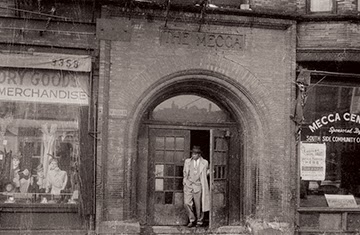
Tim Samuelson leads a curator's talk of his don't-miss exhibition, Mecca Flat Blues, at the Cultural Center.  You may take in the Chicago Design Exchange's Critical Pitches at the Graham, where the Chicago Architectural Club will announce the winners of its 2014 Emerging Visions competition.  You can also learn about the 1893 World's Columbia Exposition's Garden in the Phoenix in Jackson Park from Robert Karr Jr. in a Friends of the Parks lecture, and help honor John A Terlato, Joe Antunovich and Theaster Gates as Legendary Landmarks at Landmarks Illinois annual gala at the Four Seasons.
Emily A. Remus discusses Consumer's Metropolis: The Loop in the Age of Daniel Burnham, at the Driehaus, while Wednesdays lunchtime at CAF, Joe Valerio will present his Earl Shapiro Hall, Don J. McKay of Nagle Hartray talks about their Fountaindale Public Library, and JGMA's Juan Gabriel Moreno's discusses their Northeastern Illinois University - El Centro Campus.
March 27th brings Mies Pieces, the Mies van der Rohe Society's celebration of what would have been the architects 128th birthday, at Crown Hall. 

Just this week, Tuesday to Saturday, there are no fewer than 18 events.  Tuesday is logjam day, with Balmori, Luftwerk's Petra Bachmaier and Sean Gallero, Pecha Kucha Chicago Volume #30 and SEAOI's rescheduled dinner meeting on Hurricane Sandy and Coastline Rebuilding Efforts.  Wednesday lunchtime at CAF, there's Jerry Johnson of Perkins+Will talking about Cedar Ridge High, and Susan Vreeland discussing the “girls” of Louis Tiffany's studio, and the Grant Park Advisory Council providing updates on such projects as Maggie Daley Park and the South Grant Park Skate Park.  Thursday, Yue Zhang discussed her book The Fragmented Politics of Urban Preservation: Beijing, Chicago and Paris at the Great Cities Institute, and Anthony Rubano talks about Postwar Suburban Housing at the Oak Park Public Library.
Even with all this, we've only scratched the surface.  Check out all 50 items on the March Calendar of Chicago Architectural Events.

Friday, December 16, 2011

Door to the Heart: Bertrand Goldberg Reflections - the things he kept, the things he made (Open House This Saturday, 12/17)

click on images for larger view
This Saturday, December 17th, The Arts Club of Chicago, 201 East Ontario, will have a rare Saturday opening for a public Open House of its exhibition Bertrand Goldberg: Reflections, from 10 a.m. to 4:00 p.m., with gallery talks at 11, 1 and 3.
In an oral history conducted by the Art Institute's Betty Blum, architect Bertrand Goldberg (1913-1997) talked about how he should have known more about his mother's life, "but her life was, like most mothers, always so close to mine that I thought that was the only life she ever had."

Our relationship with buildings is like that.  Apart from a small number that we actually watch growing up from the ground, we experience a building as a done deal.  As far as our personal everyday experience is concerned, it's always been there, always will be there.  And never could have been anything else. 
Yet, architecture is more than what's left over after the making is done.  Like all art, it is not just a product, but a process, and in being an essentially practical art - art for use - it engages the society in which it's created more deeply than any other art form.

Nowhere is this complex, anything-can-happen process better captured than in the exhibition,  Bertrand Goldberg: Reflections,  at The Arts Club  of Chicago through February 8 of 2012.
Reflections stands in the shadow of Bertrand Goldberg: Architecture of Invention, the long-awaited blockbuster retrospective at the Art Institute of Chicago that runs through January 15 and draws on the museum's extensive Goldberg collection and archives, bequeathed to the museum by the architect. The show is spectacular and encyclopedic, beautifully designed by John Ronan and Cheryl Towle Weese, with a great, catalog edited by curator Zoë Ryan, richly illustrated and including a series of thoughtful and informative essays.  No question about it: if you care about architecture, it's a must-see show, which I hope to write about more before it closes.

As you walk through the wedge-shaped galleries with their mirrored gateways,  you feel the sweep of history, from Goldberg's 1938 North Pole Ice Cream stand, with its roof suspended from cables hung form a tall mast, to his last great vision, River City, from the 1980's.  Even as you observe the projects evolve, each individual stage looks inevitable and immutable.

In a small adjoining gallery, however, you get what's usually missing from exhibitions such as these: a sense of a building as it's experienced and lived through time.  Inside Marina City: A Project by Iker Gil and Andreas E.G. Larsson examines Goldberg's most famous creation by going beyond the abstract to see the architecture as it is experienced and transformed by its residents.  While in the big show next door, the photographs tend to hew black-and-white, Inside Marina City explodes with color.  In place of the snow-white, abstracted form of the Goldberg's pie-shaped wedges, we see those spaces animated through habitation, with glimpses of how dozens of Marina City residents have taken that basic container and made it their own.  Some of the views appear to extend all the way back to original tile bathrooms and pink-cabineted kitchens.
 Others are almost surrealistically traditional.  Some are classically minimalist . . .
Others seem to be stage sets of our contemporary hyper-virtual world, as in a shot of a studio crammed to the gills with gadgets, bare-metal shelving and a digital designers desktop abutting the balcony window wall, soaking up the light.  The exposed gearworks inside a modern machine for living.
Inside Marina City defines a work of architecture by carrying from its point of creation forward into tine.  Bertrand Goldberg: Reflections, like the Art Institute's Architecture of Innovation, moves in the opposite direction, going back to the beginning and moving sequentially to the end to define a lifetime of work.  Reflections adds another dimension.  In addition to renderings and drawings, it draws heavily on Goldberg's "personal collection of art and artifacts."

Don't expect to find smoking guns -"Aha, that's where Marina City came from!" - but where a traditional exhibition makes you a passive observer of a fait accompli progression, Reflections invites you to bring your own imagination to connecting the dots between the things Goldberg collected and the meaning behind the work he created. 

No two observers will the see the connections the same way, but to me it begins with a late, chalk-on-paper work by Paul Klee, Kindes statt (childlike state), that is unlike anything else I've seen from that artist: a borderless membrane of cells in green, gold and rust, given depth with a chiaroscuro texturing, separated by a irregular grid of thin charcoal lines that angle, bend, branch and insinuate small pods into larger cells.  Klee pulls on the collapsed regularity of Miesian geometry until the grid dissolves and blossoms into an organic web of asymmetric spaces that flood with color, pulse with pattern.   The impression is not one of fragility, but of a mysterious, timeless strength, like  moss clinging to a rock, observing the millenia pass by.

The artwork reminds us that early in his life, Goldberg had a knack of being in the right place at the right time, traveling to Germany in 1932 to apprentice in the offices of Mies van der Rohe and study at the illustrious Bauhaus with such teachers as Wassily Kandinsky and Josef Alberts.  Paul Klee taught there, as well.  Goldberg was in Berlin when the Reichstag burned. He heard Le Corbusier lecture at the Arts Club in 1935.  In 1937, he accompanied Mies van der Rohe and helped translate for the famous visit to Frank Lloyd Wright in Taliesen.  It was all preparation for when Goldberg would break free of the what he called the "Right Angle Club" to create a new modernist alternative in such works as Marina City, the Hilliard Homes, and Prentice Hospital.
Reflections is like a time capsule, filled with  wonderful things, the collected and the created in equal measure.  The exhibition, designed by architects John Vinci and Geoffrey Goldberg, Bertrand's son,  subdivides the Arts Club's main gallery in two, as part of creating several intimate spaces for the show.  You enter into a room filled mostly with sculptures by artists with which Goldberg had a long relationship, including an untitled bronze sculpture by Pietro Consagra which seems almost like a premonition of Marina City's twin towers crossed with Magritte's Sirens.

The small catalogue places the objects of the exhibition photographed in their original context, such as in the kitchen Goldberg designed for his mother-in-law Lillian Florsheim, including rounded metal appliance "garages", a spice rack made out of baking tins, and an amazingly complicated winch, made out of perforated stainless steel and metal engine parts, that allowed Florsheim to adjust the height and angle of a large lighting fixture near the ceiling.  Its drill-like crank, detached and displayed to the side, has the aura of a Medieval torture device.  (Geoffrey Goldberg told me that once Florsheim got the light in the desired position, she never moved it again.)

Free from a chronological structure, the objects in the exhibition offer up striking juxtapositions, such as in the corner where a working drawing for the Ronchamp-like theater for Marina City is next to a drawing of swirling ornament for a recreation of the Belle Époques splendor of Maxim's de Paris in the basement of Goldberg's strikingly modernist Astor Tower, next to a collage of a color field design for a Jack-in-the-Box(!) drive-in, next to a beautiful cut-away rendering of the architect's design for the Unicel Plywood Freight Car.

There's a selection of photographs taken by the architect, including a shot of Mies's iconic 860-880 North Lake Shore Drive apartments over which Goldberg places an arbitrary frame that challenges the geometric "perfection" of the offset box-like towers.  The great thing about the photographs is that they're not the usual shots that look like a neutron bomb went off, leaving the buildings but getting rid of the messy humanity.  In one Goldberg photo . . .
. . . the rooftop of Le Corbusier's  Unité d'habitation is framed and defined  by the people using it.  The man who fills and spills out of the frame to the left defines the foreground, just as the women vigorously walking towards the building defines the mid-distance. The bold, rounded patterns of her dress seem to grab the essence of the rounded concrete corner and spits it back against the unyielding rectilinearity of the facade.

In the Art Institute, there's a study of circles Goldberg did while studying with Josef Albers at the Bauhaus.  A quarter of century later, when Goldberg got the commission from Michael Todd to reimage Howard Crane's classically styled Harris Theater as a high-glamour showplace suitable for showing Todd's spectacularly successful Around the World in Eighty Days, Goldberg collaborated with Albers on a unique design for the theater's doors.  According to Chicago cultural historian Tim Samuelson, Albers had a succession of circles sandblasted at varying depths into the glass panels of the doors.  The aluminum doors bore concealed neon tubes all along the inside perimeter of the frames.  When the light from the tubes hit the glass, it became visible only on the sandblasted surfaces, creating the appearance of "glowing circles of light" floating on the glass.
photo: Hedrich Blessing Archive at the Chicago History Museum
Unfortunately, that glass no longer exists, but a section of the ceiling lighting Goldberg created for the Michael Todd, lovingly restored, rows of small round bulbs in counterpoint to the circles in the doors, has a prominent place at the Arts Club exhibition.
photo: Hedrich Blessing Archive at the Chicago History Museum
There's also a selection of furniture designed by Goldberg.  A menu from Maxim's.  A Clavilux, championed by no less than Leopold Stokowski as generating "a new art of color in form and motion" moving toward a day when art could be "pure spirit."  Two pairs of suspenders, one gold, one rainbow, some primitive sculpture, a monkey's skull.  Add up all the wonderful array of objects in Reflections and they spell - well, no, not "Rosebud" - but "Bud" (Goldberg), a man of unending curiosity and creativity, who wrote all the way back in 1967 . . .
Dynamic space is not an architecture of grids, of walls, of modular intervals of structure and form.  This is rather an architecture of forces, of energies, of movements of spaces.  This is an architecture regulated by time, volume, and change.  These are spaces which will be built from materials have have living plasticity, like the human body.  Cells of space, forming a structure as they combine together, will have a spatial biology
Walton-Seneca Building, 1977 (unbuilt)

Bertrand Goldberg was ahead of both the curve and his time in seeing what architecture could become.  Reflections is as close as you're likely be able to get inside this restless, ambitious, and relentlessly creative spirit.

Tuesday, February 01, 2011

Avant Les Deluge: Mansueto Library (NOW RESCHEDULED) and AIA Happy Hour - two one NO great events today

Follow-up3: Tomorrow's CAF lunchtime lecture with Ward Miller and John Vinci is also being rescheduled. Right now, I would say the safest bet is to just presume everything's been cancelled until the spring thaw.

Follow-up2: Tonight's AIA Chicago Happy Hour has been rescheduled to February 8th, tomorrow's Integrated Home Communication Systems program at AIA Chicago has been postponed.

Follow-up central. Tonight's Mansueto event as been rescheduled.  Don't go to the Cliff Dwellers tonight unless you're a cave man looking to get out of the snow:
Due to weather conditions, we are rescheduling tonight’s dinner meeting to Tuesday, February 15.  It will still be at the Cliff Dwellers Club.  We hope you can still make it and will assume that you will be there unless we hear otherwise from you.
OK, we're behind on the February calendar: what else is new?

So we want to alert you to two events for Tuesday evening, February 1st:
click images for large view
Mansueto Library - James Swanson and Jonathan Sladek of Halvorsen and Partners will talk about engineering the University of Chicago's new Mansueto Library (which we've written about here, complete with video tour) for this month's dinner meeting of the Structural Engineers Association of Illinois at the Cliff Dwellers. Reservations required.  Info here.

First Tuesday Happy Hour - this month's get-together by the Young Architects Forum of AIA Chicago is at Theory on west Hubbard.  Info here:

sometime during the course of these events, there will be a pounding at the door . . .
So I'm kind of thinking all bets are off for Wednesday, February 2nd, but right now, Ward Miller and John Vinci are scheduled to talk about their amazing new book, The Complete Architecture of Adler and Sullivan at the 12:15 lunchtime lecture at the Chicago Architecture Foundation.  Break out your huskies and stop by. Info here.

Also on Wednesday, the 2nd, there's a second scheduled showing for the documentaries koolhaus houselife and Interview at the Siskel at 6:00 p.m.  info here.

Place your bets, ladies and gentlemen.  Place your bets.