Wednesday, October 17, 2012

Michael Kimmelman pops by Prentice for a few minutes - solves problem

image courtesy Studio/Gang, Jay Hoffman
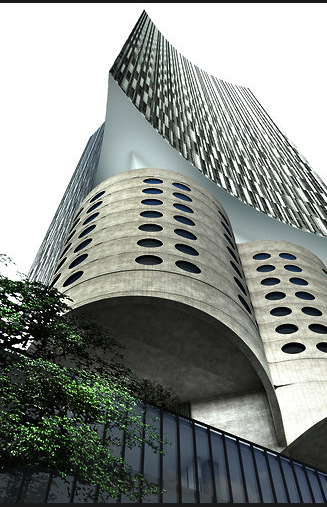
New York Times architecture critic Michael Kimmelman was in town recently, and between looking at the new Logan Center for the Arts, making some side excursions, and helping several little old ladies across the street,  he managed to shoehorn in a couple minutes to come up with the solution for saving Bertrand Goldberg's Prentice Hospital that should have been obvious to all of us all along: just build a 31-story tower on top of it.

I'll give him credit for this:  the proposal does seem to have caught everyone off guard - including Northwestern's press spokesman Al Cubbage who, of course, wouldn't say if the University would so much as consider the proposal.

Kimmelman enlisted architect Jeanne Gang and the staff at Studio/Gang, whose Jay Hoffman came up with the renderings you see here. The proposed structure is very striking.  Its facades provide a concave scalloped counterpoint to Prentice's convex cloverleafs.  Its very New York in its audacity, which can also be interpreted as meaning far more complicated than necessary - Kimmelman simply declined to see the two-block-square empty lot across the street. 

Unlike Studio/Gang, which researches all of its projects thoroughly, it doesn't look like Kimmelman spent much time fact checking.  He refers to Blue Cross/Blue Shield as a precedent for a building that added 25 stories years after its completion, but seems unaware that the original structure was designed specifically to bear the weight of the later addition.  Is Prentice engineered to carry another tower above it, or would a massive new support structure have to be inserted inside ?  The illustration shown below seems to depict the base of the Jeanne Gang tower pretty much covering the entire floorplate of Prentice as they meet.  Would Prentice become a hollowed-shell, a kind of facadectomy?
image courtesy Studio/Gang, Jay Hoffman
My initial reaction is that this would be an intervention like Rem Koolhaas's subsuming of Gene Summers Commons Building at IIT into Koolhaas's Student Center.  Prentice would remain free standing but look almost like a set of small spools beneath a large cabinet of thread - the new tower - soaring above it.

But that's just an initial reaction.  If you haven't already noticed, Kimmelman's piece strikes me as the kind of hot dog take-a-cursory-look-and-make-sweeping-pronouncements gambit that Tom Friedman has made famous, but bringing in Gang was his one saving grace.  "It’s about opening up a dialogue," he quotes her as saying.  Let us begin.

Read Michael Kimmelman's A Vision to Avoid Demolition for a '70's Pioneer.
image courtesy Studio/Gang, Jay Hoffman

And the Architect said to the Building: I Can See You Naked

courtesy Hyperallergic
If an anatomist - or a voluptuary - imagines the person standing before them without any clothes, does an architect standing before a painting with an architectural backdrop imagine it without any people?

Well, as reported by Hrag Vartanian on his excellent Hyperallergic website, Hungarian new media artist Bence Hadju has created the series Abandoned Paintings to make it easy. According to Hadju's artist's statement . . .
I am a student at the university of fine arts, Hungary. At one of the descriptive geometry classes we had a task to find and draw the perspective and horizon lines of renaissance and other pictures with significant perspective space. I thought it is not that interesting to just draw lines, so I decided to erase all the characters from them and examine how the painter really created the perspective space and how it actually looks. I saw this could be something exciting and continued thinking and working on it. After a while I found myself interested in the new atmosphere and the new thoughts the retouched pieces generated without their main subjects.
 Hyperallergic has made it even easier by creating animated GIF's - like the one of Sandro Botticelli's The Annunciation, which we cribbed above -  that toggle between the original painting and Hadju's depopulated version.  And so we have David's Oath of the Horati de-horatied, Lorrain's Seaport with the Embarkation of St. Ursula after everyone had gone home, and Leonardo's Last Supper with Christ and his disciplines all having left the room for a bathroom break.

Leonardo, of course, actually was an architect - along with being a painter, sculptor, scientist, inventor, mathematician and web developer - and we could say that he not only  painted the Last Supper, but designed the room in which it takes place.  All the artists here, however, were masters of perspective, and the backdrops of their paintings could said also to said to be an architectural analysis of space.

You can see all of Vartanian's now-you-see-them, now-you-don't GIF's here, and Hadju's Abandoned Paintings, with Mantegna's Occulus in the Camera Degli Sposi added, here.


Tuesday, October 16, 2012

An open letter to Mayor Emanuel on Bertrand Goldberg's Prentice Hospital - a few truths versus one Big Lie

Dear Mr. Mayor:

I know it's probably down a bit on your crisis-du-jour list, but the issue of possible landmark designation for Bertrand Goldberg's Prentice Hospital appears to be coming to a head.  Word on the street is that the fix is in and Prentice is toast. 

This is no time for modesty.  The decision, ultimately, is entirely yours, and before your thumb proclaims final public judgement, I wanted to make one last pitch.

Some things about the debate are incontrovertible.  
  • Northwestern University and Northwestern Hospital are both world-class institutions.
  • Northwestern University wants to build an ambitious new Research Lab
  • This project will employ thousands, and pump hundreds of millions of dollars into Chicago's economy
  • The work done in this Research Lab has the potential of finding cures and treatments that will create better medical outcomes and save lives.
One key thing however, is quite controvertible: one astounding lie that Northwestern is working overtime  to couple with the truths listed above:
  • There is a magic patch of land in Chicago.  It is magic because, although there are two vacant blocks directly across the street, and other opportunities across the large number of properties controlled by Northwestern, this patch of land is the only place in Streeterville, Chicago, or the universe on which Northwestern's Research Lab can be built.  It just so happens that this  patch of land is the site of Bertrand Goldberg's Prentice Hospital.  Northwestern would have us believe that if they are not allowed to circumvent legal process and destroy this landmark-quality structure, that new Research Lab, its thousands of jobs and hundreds of millions of dollars in investment will vanish into thin air, never to be seen again.  And, if we are to believe Northwestern's more insidious intimations, many will die from cures never to be discovered.
The claims about this magic patch of land are so outrageously dishonest that any objective analysis would dismiss them without a second thought.  Except that Northwestern has committed millions to an increasingly desperate and meretricious campaign to influence public opinion and provide cover to its actions.  For this campaign, they have turned to a firm called Purple Strategies.

As someone who knows his way around Washington, Mr. Mayor, you know this kind of firm well -   beltway lobbyists that offer one-stop shopping.  They have Republicans.  They have Democrats.  They can argue one way, or they can argue other.  It just depends on who cuts the check.  Whatever you want to be true, no matter the reality, they will, for a price, create the appearance of it being true, through such tools of the trade as biased polls, astroturf support and misleading ads.   Key clients are Big Oil, Big Pharma, and Big Chemical.  According to The Nation, while Purple Strategies' staff may be cross-party, its activities are not.  Purple Strategies has received over $43 million to help Republican candidates foster the impression that Barack Obama is not the President who stopped America from falling into another Great Depression, who killed Bin Laden, and created the health care reform that had eluded all his predecessors, but a feckless, corrupt bumbler who hates America and wants to turn it into a socialist, Muslim state.  If you liked the kind of poison Joe Ricketts wants to bankroll, Mr. Mayor, you'll love what Purple Strategies has come up with for Northwestern.

Northwestern has come up with a handful of architects who support destroying Prentice. No need to demonize; they're good people.  But the Save Prentice Coalition  has come up with a coalition of many of the most distinguished architects, not just in Chicago, but throughout the world, all of whom are urging you to save Prentice.

And if you're tempted to dismiss their opinion because they've got no skin in the game, I would ask you to consider what these architects have created for Chicago . . .

Jeanne Gang:
Frank Gehry:
 

John Ronan:
Renzo Piano:

Krueck and Sexton:

Tod Williams and Billie Tsien:
.  .  . and compare it to what we've gotten from Northwestern:


From this physical evidence, I would leave it it to you, Mr. Mayor, as to whose judgement on matters of architectural quality are the more reliable.

I respect the judgement of people like Jeanne Gang and John Ronan, David Woodhouse and Jack Hartray, and their colleages, because, unlike Northwestern,  they have a proven track record of serving their clients while adding to the cultural capital of the city.  Northwestern knows only how to destroy and replace, with the kind of faceless mediocrity that sucks all the air out of the very idea of inviting, liveable urban space.

As someone who knows how the game is played, I'm sure you were amused by the press release where Northwestern promised they would do it right this time and hold an architectural competition  if they're allowed to destroy Prentice.  What - if they can't, they'll put up another piece of crap just for spite? And I'm sure you noticed that in the very next sentence, they took away what they had just given, proclaiming they wouldn't in any way be bound by the results of that competition.  But they promised to involve a Chicago architect no matter what.  Well, they've already had Chicago architects involved in most of their buildings, and the results are not reassuring.

I'm sure you've walked the streets of the Northwestern campus.  They're a depressing place, one anonymous building after another, often with dead-windowed walls facing the sidewalks.  It's a good thing most people being rushed to Northwestern are looking up at the ambulance ceiling, because the view of the unrelenting drabness out their window might convince them life wasn't really worth living, after all.

Along with the old Furniture Mart, Bertrand Goldberg's Prentice Hospital is the only architecturally distinctive marker in the Northwestern hospital district.   And those markers are essential. 

Marina City, the Wrigley Building, Sears (oops) Willis Tower, the Chicago Theater, Aqua, BP Bridge and Pritzker Pavilion in Millennium Park, and many more like them.  These are the buildings that form the face of the Chicago - in newspapers, magazines, films, videos, books, on the internet, in vacation snapshots - all across the globe.  Out of necessity, there's seems always to be a new slogan for Chicago - "The City That Works", "Second to None".  They come and they go, but the images of Chicago make them almost superfluous.  The great buildings of Chicago are the pictures worth a thousand words.  They're the thing that builds and sustains the brand of Chicago throughout the world.  And Bertrand Goldberg's Prentice Hospital is a key component of that brand.


I understand politics.  (I once ran against Tony Laurino for alderman in the 39th, and I got more votes than any opponent he ever had.  [He still crushed me like a bug.  And then, to top if off, he mapped all the precincts I carried out of his ward.])  But it's wrong for Northwestern to hijack the legal process carefully put in place to consider landmark designations, simply because they are powerful and connected.  If I were Joe Schmo who wasn't happy about my house being in a proposed landmark district, I wouldn't be able to get the Landmarks Commission to yank consideration of that proposal from the Commission's agenda.  But that's exactly what Northwestern did, and they've kept it off, month after month for over a year and a half, to buy Northwestern more time to mount a P.R. offensive to counter the grass-roots campaign to save Prentice.

We are told this was to allow "talks" about Prentice to continue, but it's unclear how many and what kind of "talks" have actually taken place.  I know it's perceived to be the "Chicago Way", but frankly, it is disturbing that when you were quoted about ongoing talks on Prentice at a recent press conference, the only participants named were Northwestern and those already on record as opposing designation.  Bonnie McDonald of Landmarks Illinois has stated neither she or any other advocates have been invited to these closed-door meetings. 

You know the story of the Eiffel Tower.  How it was built as a temporary structure for the 1889 World Fair.   How a lot of the best people considered it a blot and an eyesore - just like Prentice - and relished the idea of it's being demolished at the end of its original 20-year permit.  It survived by the skin of its teeth, but could anyone today imagine Paris without it?  Paris is at the top of world-class cities because it doesn't trash its history.  When the Gare d'Orsay was no longer needed as a railroad depot, it wasn't wantonly destroyed. It was saved and renovated into one of the city's great museums, the Musee d'Orsay.

Prentice isn't quite as prominent as the Eiffel Tower, but the dynamic is the same, with the additional overlay of a great Chicago institution willing to blackmail an entire city to bend it to its will.  Allowing Northwestern to destroy Prentice is not good politics, and it's not good urban planning.

The explanations of why Prentice Hospital is a major work of architecture have been made many times, and very eloquently.  I'm sure you've read them, so I won't repeat them here.  Landmarks Illinois has already documented a number of ways Prentice could be effectively reused.  Drawing upon the expertise of Chicago's real estate community, a viable plan could easily be found. Northwestern is crammed to the gills with brilliant people, and it will have no problem finding an alternative path if Prentice gets the landmark designation it deserves.

The choice is between short-term expediency and long term vision.  Northwestern will always be able to take care of itself.  Bertrand Goldberg's Prentice Hospital, and Chicago's architectural legacy, which lack a $7 billion endowment, need a little help right now.  They need someone to run the kind of interference that keeps Chicago from becoming known as the city that lets its world-class riches slip through its fingers. 

Sincerely,

Lynn Becker

Monday, October 15, 2012

Erich Mendelsohn's Incessant Visions, plus, Canberra today, Magic and Poetry of Havana, Wednesday


Never too late to be adding to the October Calendar of Chicago Architectural Events.

On Wednesday, October 24th, at 6:30 p.m., the Spertus Institute will be hosting screening, Incessant Visions, on the life and work of Architect Erich Mendelsohn.
In March 1933, German Jewish architect Erich Mendelsohn, head of Germany’s largest architectural firm, fled Berlin, foreseeing grave consequences from Hitler’s rise to power. In Amsterdam he bumped into an acquaintance who asked what he was doing there. The reply: “I’m relocating my office.” It wouldn’t be the last time Mendelsohn would start over in a foreign land.

In Incessant Visions, Israeli director Duki Dror unfolds the amazing story of Mendelsohn’s life through letters exchanged with his wife Luise, an accomplished cellist. The film explores Mendelsohn’s rise as an architectural visionary, his friendships with Albert Einstein and Frank Lloyd Wright, and the jagged trajectory of his career as he worked in England, Israel, and the United States.
 Following the screening will be a discussion led by Stanley Tigerman.  More information here

Today, Monday, October 15th, David Headon, Advisor to the Centennial of Canberra and Australian Capital Territory projects, will discuss The Planning of Canberra, at 5:00 p.m. in Kresge Hall at Northwestern in Evanston.  The 1911 plan was the result of a competition won by Marion Mahony and Walter Burley Griffin.

Then this Wednesday the 17th, 12:15 p.m. at the Great Cities Institute, Julio César Pérez Hernández, author of Inside Havana, will discuss The Magic and Poetry of Havana: A Glance at the Past, Present and Future of a Caribbean Metropolis.

Also this week, we've got The Core at The Eden Project at AIA/Chicago, Felipe Assadi discussing Contemporary Chilean Architecture at Crown Hall, IIT, Carol Ross Barney talking about Design for Sustainable Transportation at CAF, Anna Tobin D’Ambrosio on Cranes, Dragons and Geishas: Metalwork of the Aesthetic Movement, at the Driehaus Museum (twice), Bill Tyre on Glessner House at 125, at the Cultural Center for Landmarks Illinois and, again at CAF, Our Buildings as Ambassadors: U.S. Dept. of State's New Design Excellence Initiative.

There are 15 great programs just this week, and nearly three dozen still to come this month.  Check them all out on the October Calendar of Chicago Architectural Events.

Saturday, October 13, 2012

Chicago Architecture Sacred and Profane at Open House Chicago

click images for larger view (highly recommended)
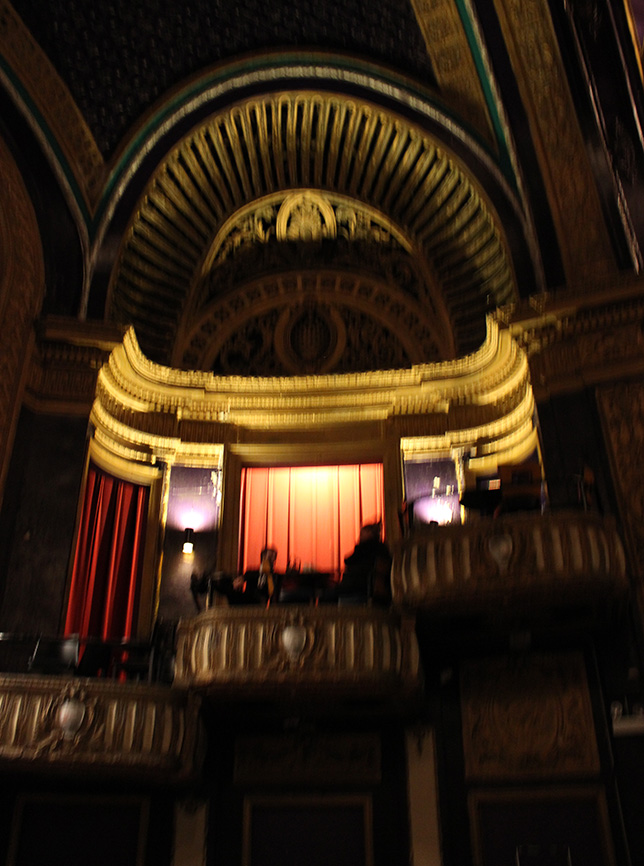
If you haven't caught out on our admonition Open House Chicago 2012 is one of great events of the year, I've included this gallery to convince you, starting with the image above, from the delirious Oriental Theater.  There's one more day, Sunday, October 14, to take in your own selection of the 150+ participating sites from Rodgers Park to South Shore and all points in between with a bunch sites that were closed Saturday opening up on Sunday.

Check it all out at Open House Chicago 2012.
MDA City Apartments


from the rooftop terrace of MDA, at the top of 203 N. Wabash, soon to be a Virgin International Hotel
Illinois Center from the MDA rooftop terrace
Essanay Studios
Bridgeview Bank (former Uptown National Bank)
Bridgeview Bank
Agudas Achim Synagogue
Frank Fisher Apartments
organ loft, former Scottish Rite Cathedral, now Harvest Bible Chapel
a bird

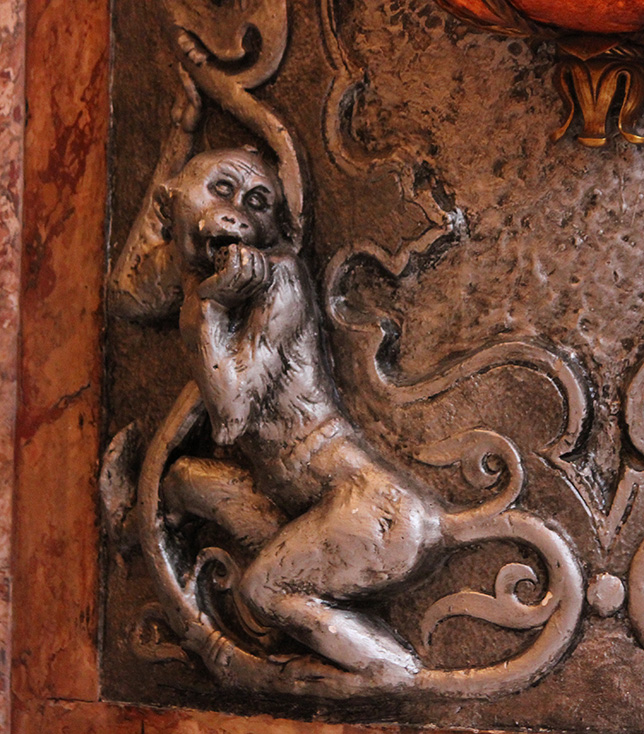
a minkey, and a few more Oriental images
And here's a few more shots, from day two:
Aragon Ballroom

Civic Orchestra Brass Quintet at the top of the Original Sears Tower

Power House High
Riviera Theatre


Working this Weekend?: Monday deadline for CAC Future Prentice competition entries

click images for larger view
If you were going to do it, my bet is that you wouldn't have forgotten, but just in case, noon Monday, October 15th is the deadline for submissions to the Chicago Architectural Club's Future Prentice competition.
This single-stage international design ideas competition is intended to act as a platform for public debate about the future of one of Chicago’s most architecturally significant Modern buildings, Bertrand Goldberg’s Prentice Women’s Hospital.  FUTURE PRENTICE is open to anyone with a vision of what the former Prentice Women’s Hospital could become.  Students, architects, landscape architects, planners, designers, artists and concerned citizens alike are encouraged to enter the competition. 
The Commission on Chicago Landmarks graciously keeps putting off consideration of Bertrand Goldberg's should-be landmark to allow the November unveiling of the competition winners, plus a promised exhibition of all of the ideas generated for reusing the structure.  (Or maybe it's just to give Northwestern additional time to pour more millions into its increasingly dishonest and misleading PR campaign to circumvent landmarks consideration and create still  another vacant lot on its campus.)
CAC has assembled an all-star competition jury:
  •  Zoe Ryan, John H. Bryan Chair and Curator of Architecture and Design, The Art Institute of Chicago
  •  Carlos Martinez, AIA, Principal and Firmwide Design Leader at Gensler 
  •  John Ronan, AIA, Founding Principal, John Ronan Architects 
  •  Martin Felsen, AIA, Co-founding Principal, UrbanLab 
  •  Kevin Harrington,, Architectural historian and Professor 
  •  Zurich Esposito, Executive Vice President at AIA Chicago 
  •  William F. Baker, PE, SE, FASCE, FIStructE; Structural Engineering Partner for Skidmore, Owings & Merrill, LLP
  •  Bonnie MacDonald, President at Landmarks Illinois.
But as Northwestern will tell you, what do they know?

The competition is open  to everyone - architect or not, professional or not  - as long as you've got what you think is a good idea, and the $90.00  ($50.00 for students) registration fee.  First prize is $3,000; second $1,500, third $750.00.

So if inspiration has just struck, put on the coffee, check out the rules and download the brief, here.

Friday, October 12, 2012

Open House Chicago, complete with custom scores, opens up 150+ Chicago marvels Saturday and Sunday

click images for larger view
I make no secret of it:  I think Open House Chicago is as absolutely great event.  If you don't know about it already, let the experts describe it:

"It's a free event for all Chicagoans." says President Lynn Osmond,  "Chicago Architecture Foundation's mission is to help inspire people to discover why design matters, and what better way than by opening up over 150 sites  for Chicagoans to go out and explore.  Last year we had over 85,000 people visit our sites, and it was really exciting to see how they discovered the sites of Chicago and our neighborhoods.  86% of those people were actually residents of the city of Chicago.  But we also had visitors that we welcomed from all around the world and from all 50 states."
original Sears Tower
"Last year, we had visitors from more than 54 countries," adds Bastiaan Bouma, Open House Chicago's Managing Director.   We're thrilled with the participation we received last year .  We're nearly twice the size this year.  We're in 25 neighborhoods, as opposed to 13 last year . We're in 13 community areas.  We're in 21 of the city's 50 wards . . . from Rogers Park to West Ridge to South Shore to Garfield Park , Little Village , Pilsen,  - it's a tremendous opportunity for people to rediscover the city of Chicago from a brand new perspective."

"Someone once said that Chicago is a city of 2.8 million architecture critics, and this is your weekend to take advantage of that instinct.  Free, behind the scenes, no tickets, no reservations.  Develop your own itinerary.  We do think that the bicycle is the ultimate Open House Chicago accessory.  The record last year was something over 50 visits by one individual , so we're looking forward to seeing somebody beat that record this year and I'll bet he or she is going to be on a bicycle."
St. Philip Neri Church
Most of the sites are open 9 to 5 both Saturday and Sunday, but there are exceptions - Churches, as is to be expected, are open later on Sunday - so double-check the sites you want to see.
Bridgeview Bank - photograph: David Suarez
Also very neat, four composers from Access Contemporary Music have written musical compositions that will be composed at the sites they will be created for:  Jude Matthews for the Bridgeview Bank (12:00 to 3:00 p.m. Saturday), Katherine Young for the Nickerson Mansion (1:00 to 4:00 Saturday); Eric Malmquist for the Poetry Foundation (12:00 to 3:00 Saturday), and Timothy Corpus for the Arts Club (12:00 to 3:00, Sunday).  All events free.
Among the new locations are places that almost never open to the public, such as the observation deck atop the Kemper Building, open for the first time in 40 years and offering a spectacular 360 degrees panorama of Chicago from 500+ feet up.  In the case of historic Agudas Achim North Shore Congregation, it's a space that's been closed even to its congregation since 2008.

Poetry Foundation, John Ronan Architects
Contemporary architecture?  You've got  VOAs new Wabash Tower vertical dorm for Roosevelt University, you can see Jeanne Gang's Kam Liu Building in Chinatown and Columbia College Media Production Center , Helmut Jahn's State Street Village at IIT, Farr Associates, Christy Webber Landscapes, Nagle Hartray's Ogden  International School, Williams and Tsien's Reva and David Logan Center for the Arts at U of C, Krueck and Sexton's Spertus Institute, Rem Koolhaas's Campus Center at IIT, and John Ronan's Poetry Foundation and South Shore International College Prep, to name just a few.
Theaters:  Check out Rapp and Rapp's hallucinogenic  Oriental Theater, the lovingly restored Apollo 2000 (the former Marshall Square Theater), Uptown's Riviera (Sunday only), and Adler and Sullivan's Auditorium.
The Green Mill
I've included here photos of many of the most spectacular interiors, but don't forget the equally spectacular smaller spaces, from the offices of many of the Chicago's leading architects, to the former Sunset Cafe in Bronzeville, Andrew Rebori's Frank Fisher Apartments, the Downtown Islamic Center, the former Swift Mansion, Jayuya Barbership , Shedd Park Field House, Thalia Hall, the Green Mill, the Berghoff, and even the Trib Tower aerie (a/k/a the Colonel's office) that was the site for Randy Michaels' notorious poker games.

I could go on, but I think you get the idea.  Right now, the weekend looks warm and rainy.  What could be more perfect weather to check out the great interiors of Chicago.?  Take a few minutes to explore, and you'll discover wonders you may never have known existed.
Start here.

Thursday, October 11, 2012

The Reveal: Tod Williams and Billie Tsien's Reva and David Logan Center for the Arts at the University of Chicago

click images for larger view (highly recommended)
The Reva and David Logan Center for the Arts has its official opening this weekend with a Launch Logan Festival, Friday through Sunday, October 12-14, and an October 12th program Beware the Stairs are Always Moving: a conversation with Architects Tod Williams and Billie Tsien, 6:00 p.m. in the Logan Center's Performance Hall.  Read our profile of the building and its architects here.

 “I think in life it's generally true,” said architect Tod Williams, “everything's pushing to the more broadly based and generic, kind of universal answers.  I think that's the trend of the moment, and I think there's certain places, certain institutions, and people that go against that.  We go against that.”
He was responding to my question about architecture in the era of the supply chain, where it's all about maximizing efficiency through standardization and scale . . .
We had the opportunity to tour the this stunning new building, the Reva and David Logan Center for the Arts with its architects, Tod Williams and Billie Tsien last Friday, and the result is this photo-essay.   Williams and Tsien talk to me about about how the building came about, how it works, and the challenges they faced in getting it done.  Images, in abundance.

Read:  The Reveal: Tod Williams and Billie Tsien's Reva and David Logan Center for the Arts at the University of Chicago