
Saturday, October 01, 2005

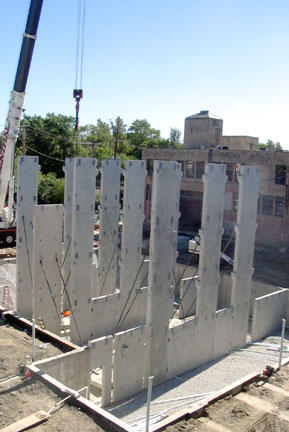
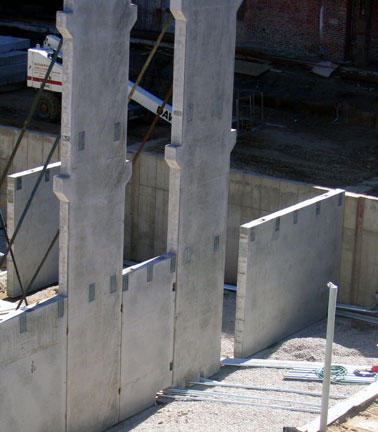
Chicago Streetscape: Prefab Stonehenge on Irving Park Road


September 30, 2005 - Prefab concrete elements lowered in place at metroNorthliving condo project on Irving Park Road on Chicago's northwest side.
Friday, September 30, 2005

September 30 Final Deadline for submitting abstracts to Greening Rooftops Conference

A last-minute reminder that today, Friday, September 30th is the last day to "submit your research project, your innovative green roof project, or your green roof idea to the Green Roofs for Healthy Cities committees for review. Composed of industry professionals, researchers and experts, the GRHC Committee members will jury all submissions for acceptance in our International Conference." Submission requirements: A 300-word abstract and 50-word biography by September 30, 2005. See details at www.greenroofs.org or email jphilp@greenroofs.org."

"The fourth annual Greening Rooftops for Sustainable Communities Conference, Awards, & Trade Show, May 10-12, 2006 in Boston, will bring together experts from diverse fields across North America, and around the world. The conference will raise awareness of the many benefits of green roofs, share new research findings and provide information on the latest designs, implementation techniques and products. It is a great opportunity to broaden networks and develop new business contacts while building more sustainable cities through green roof implementation."

Wednesday, September 28, 2005

Signs of Life outside the MCA


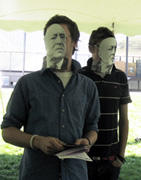
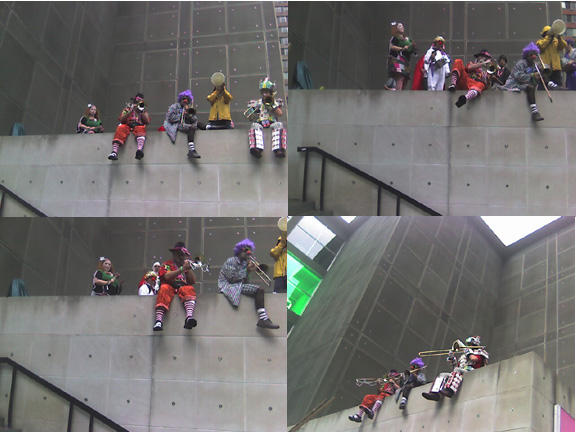
Courtesy of Edward Lifson of WBEZ's Hello Beautiful, here a few shots of this past Sunday's Musicircus, which provided a touch of humanity, however briefly, to the grave haunches of the building housing Chicago's Museum of Contemporary Art, designed by the late Joseph Paul Kleihues. The work was first created by composer John Cage in 1967, since which it's been put on throughout the world, but Sunday's performance represented it's Chicago premiere.

Monday, September 26, 2005

The Chicago Symphony at Gehry's Pritzker Pavilion - There IS a Difference

Classical music in American, like pretty much everything else, is increasingly about marketing. Very fine ensembles, often in the suburbs, market proximity, price and informality as much as music they play. It's just too much of a hassle to trek down to the Loop to attend Chicago Symphony concerts, they assure us. The suburban counterparts are "good enough," and a lot more convenient. This, of course, is like a Roman saying they've never visited the Sistine Chapel because the parking is better at the local parrish. Read about it here.

Saturday, September 24, 2005

Alert: new Stand competition registration deadline is October 1st

Information on the new Stand competition sponsored by Architecture for Humanity Chicago here. The inexhaustible Stanley Tigerman will head the jury, which will also include Patricia Saldana Natke and Henry L. English

Friday, September 23, 2005

Chicago Schedule


Architecture's Fall Season Begins With a Bang Next Week

Return of the Chicago Seven
This Tuesday, September 27th, at the Museum of Contemporary Art - a reunion of the Chicago architects who challenged and overthrew the hegemony of Mies's followers. Information.
New Orleans and the Netherlands: Living Below Sea Level
A special panel discussion added to the Sustainable Waterfronts conference at IIT. Panel includes Dico van Ooijen, senior advisor for dikes and dams of the Netherlands Ministry of Transport, Public Works and Water Management, Peter Torbijn, director of national spatial planning policy and advisor to the Dutch Minister of Housing, Spatial Planning and the Environment, Larry J. Prather, assistant director of civil works, U.S. Army Corps of Engineers and Dave Sanford, director for navigation policy and legislation of the American Association of Port Authorities. Information.
Three Generations of Classical Architects: The Renewal of Modern Architecture
A three-day conclave of classicists at the School of Architecture at Notre Dame. The extensive roster of announced speakers and panelists includes Robert Adam, Thomas Beeby and Leon Krier. Information

Wednesday, September 21, 2005

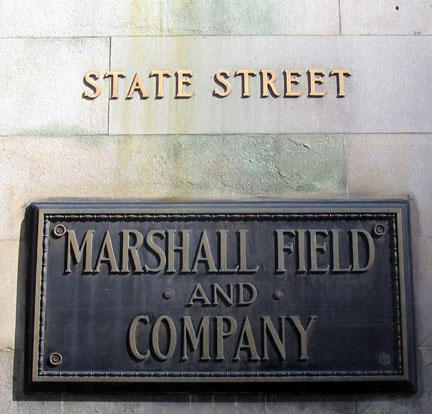
The Death of Marshall Fields and the Dissolution of The Sense of Place


Finally, the deed is done. Yesterday, Federated Department Stores announced that all of the stores of Marshall Field's, a Chicago institution for over a century and, with Wanamaker's, one of the two creators of the concept of the department store in America, would be converted to Macy stores in 2006.

From their inception, department stores were like a museum, a riverfront, a memorial, or a stadium - something that defined the unique character of a city. Now they're just roadkill in Wal-Mart America. A look at Field's recent history helps explain just how this happened, and what it may mean for the future of America's cities. Read it here.

Tuesday, September 20, 2005

Dutch Symposium at IIT to add program on New Orleans and the Dutch experience at Holding Back the Sea

When hurricane-force winds broke through the barriers, the result was a catastrophic flood that killed over 1,800 people, destroyed over 3,000 homes, and left over 700 square miles under water. However, the place was not 2005 New Orleans, but The Netherlands, circa 1953. Like New Orleans, large amounts of its territory is below sea level, and the country's survival down through the centuries is a direct result of what it's learned about keeping out the sea. (Read more here.)

Now, the organizers of Sustainable Waterfronts, Learning from the Dutch Experience, a symposium to be held at IIT on September 29th and 30th, have added a panel discussion for September 29th - time still to be announced - considering the Dutch experience and the challenges facing New Orleans as it rebuilds.

Participants will include:
- Dico van Ooijen from the Netherlands Ministry of Public Works and Water Management who will show the efforts of the Dutch since the flooding in 1953 to protect their country from a recurrence.
- An official from the Dutch Ministry for the Environment and Spatial Planning who will talk about the planning and environmental impacts in the Netherlands where a large part of the country is below sea level.
Two American participants are expected to be added shortly.

More information on the symposium and registration here.

Monday, September 19, 2005

Venturi Lecture Tops Architecture Events at 2005 Chicago Humanities Fest

Mies is More - Learning from Mies is name of a lecture to be given by Robert Venturi at IIT on Wednesday, November 9th as part of the 2005 Chicago Humanities Fest. Coming from the guy who coined the immortal retort, "Less is a bore", and who, along with partner Denise Scott Brown continues to confound and expand conventional architectural thinking, this event stands to be one of the highlights of the season. Tickets are free, but reservations have to be made through the festival here. Today, Monday, September 19th, marks the first day the general public can register for Humanities Fest events and buy tickets.

Unfortunately, the appearance by Shigeru Ban appears to have been cancelled, but other events include:

Saturday November 5th -
The Avant-garde Interiors of Francis Elkins, a lecture by Stephen M. Salny. Author of Frances Elkins: Interior Design, discusses the work of Elkins, who was also the sister of architect David Adler.

Sunday, November 6th

The Perfect Houses of Andrea Palladio, lecture by Witold Rybczynski. There will also be an event offering a discussion of Rybczynski's work.

Saturday, November 12th
Public Housing Beyond the Walls is a panel discussing "the importance of stable, affordable housing for low-income families."

Sunday, November 13th

Re-Placing Home is a lecture by Roberta Feldman, co-director of the City Design Center at UIC on the "meaning of home and its diverse physical representation in our mobile society." Feldman is also curator of the Out of the Box exhibition on pre-fab housing currently at Chicago's Field Museum.

The Festival includes over 180 events across all art forms, most either free or no more than $5.00. It includes scheduled appearances by Salman Rushdie (already sold out), Joan Didion, Adam Gopnik, Charlayne Hunter-Gault, Susan Orleans, Mia Farrow, Martin E. Marty, Rachel Barton-Pine, Elizabeth Futral, and Timuel D. Black, Jr., to name just a few. View all programs here.

Friday, September 16, 2005

Zoka Zola profile in this week's Chicago Reader

There's a great profile in this week's Reader by Dennis Rodkin on Chicago architect Zoka Zola: her life, work, philosophy, and the origins of her highly alliterative name. Pick up a copy or download it in Adobe Acrobat form here.

Architectural Exhibition at Oak Park Public Library


An exhibition organized by the Oak Park Architectural League is on display at the village's Public Library through September 30th. The show highlights the work of 23 Oak Park architects, and includes Annuradha and Arun Gandhi's entry, pictured to the left, to the Chicago Architectural Club's 2004 Burnham Prize competition for a series of three water taxi stations along the Chicago river.

Wednesday, September 14, 2005

The Return of the Chicago Seven

In 1976, just as Mayor Richard J. Daley controlled Chicago, the legacy of Mies van der Rohe was seen as controlling new architecture in the city, even though the master had died in 1969. When the Musuem of Contemporary Art's exhibition One Hundred Years of Architecture in Chicago squeezed the history of the preceding century through a forced Miesian and monumentalist perspective, provocateur Stanley Tigerman led a group of younger architects in mounting a counter-exhibition, Chicago Architects, where the work displayed a creativity and freedom that directly challenged the orthodoxy and dominance of Mies's followers. The group, expanded to include Tom Beebe, Larry Booth, Stuart Cohen, Jim Freed, Jim Nagle, and Ben Weese, became known as the Chicago Seven, an homage to the radicalism of the anti-war activists put on trial in the city in 1970. Several other historic shows followed, and many of the same crowd were instrumental in reviving the long dormant Chicago Architectural Club.

On September 27th, the Museum of Contemporary Art is hosting a panel, Celebrating 25 Years of the Chicago Seven, that hopes to reunite those seven architects. It beats still another Stones reunion hands down. Information here.

Great Blair Kamin reporting from New Orleans - what the city could learn form Chicago

There's a splendid extended article in today's Chicago Tribune by architectural critic Blair Kamin on the present state and potential future of New Orleans. His first hand report talks about what it's like to be a solitary tourist in a largely abandoned city, and talks about how much more of the city endured than reports have indicated. He makes a strong case for the rebuilding of New Orleans, both its feasibility and its necessity. Kamin talks about how reversing the flow of the Chicago river, to avoid the contamination of the lake and its drinking water, is just one concrete example of how a city triumphed over nature. If you can, pick up a copy of the paper so you can also see Chris Walker's great photos. If you can't, you can reader Kamin's account, free for the next seven days, here.

An even more cogent example, and one which I've yet to hear anyone discuss, is that in its early history Chicago almost drowned in its own muck and filfth, with regular and vicious outbreaks of cholera until the decision was made in 1850's to raise the level of the entire city six to ten feet. You can still see it clearly in the old neighborhood houses where stairs lead down to what used to be the entrance, and especially along the riveredge of the Loop, where you can clearly see how the current level of the streets are over a full story over ground level. Lower Wacker Drive is where Chicago's "natural" level lies.

As New Orleans is rebuilt, why can't we do something similar to raise its lower districts back above sea level?

Chicago streetscene - September 10th, 2005

Tuesday, September 13, 2005

Children's Fountain Back - in Black?


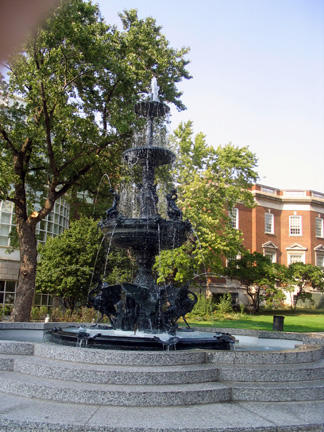
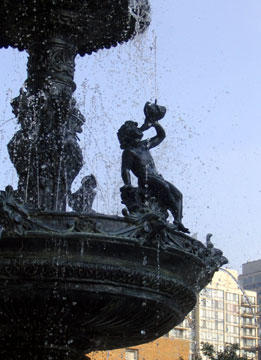
The Children's Fountain, a project of former Chicago mayor Jane Byrne, has been restored and reconstructed in front of the Chicago Historical Society, at the northeast corner of Clark and North. Dedicated in 1982, it had stood in a traffic island at Wacker and Wabash until it was dismantled, along with the same mayor's Vietnam Veterans Memorial (reportedly the first to honor that conflict's servicemen) for the 2001 rebuilding of Wacker Drive. According to the Building Blocks, Inc. website, the fountain was crated up by the reconstruction's contractor and stored under the Roosevelt Road Bridge, where it stayed for four years.

The restored fountain sits on a graceful new granite base, just across the street from the Latin School and Moody Church. The one glaring defect in the restoration is that the current finish, described on Building Blocks as "Antique Green 'Verde Grie' appears much darker than the original, which was a much lighter green both in memory and in photographs here, here, and here. Now, it's so dark that, even on a sunny day, it seems to suck in all the light, making it extremely difficult to see the ornate detailing, and giving what was a very playful fountain a heavy, funereal air.

Monday, September 12, 2005

Smash the Birdie


Migratory bird season is here again in Chicago, sometimes described as the "O'Hare of migratory birds." It's not a happy time for countless birds who meet their end smashing into Chicago's glass-walled buildings, so we're going into the vault for a story on an April, 2004 symposium where activists and experts like architect Jeanne Gang, Robbie Hunsinger of Chicago Bird Collision Monitors and David Baker of IIT talked about the problem and what they were doing about it. With September, 2005 updates. Read all about it here.

Saturday, September 10, 2005

A Bit of low rent Blade Runner comes to Marina City

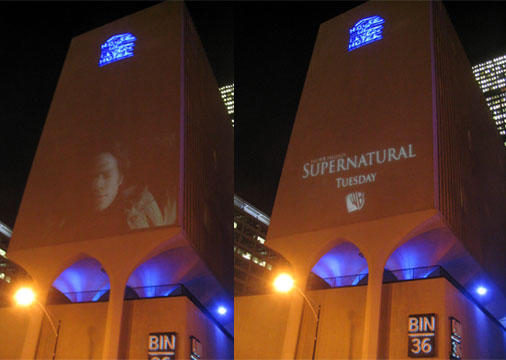
September 9, 2005 - a projected billboard on the Dearborn Street elevation of Bertrand Goldberg's Marina City office building, now the House of Blues Hotel.

Friday, September 09, 2005

Can the Children's Winery be Far Behind?


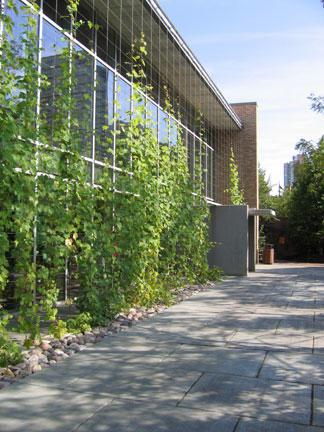
The grape vines have wasted no time in claiming their place along the facade of Chicago's elegant new Lincoln Park Pritzker Family Children's Zoo, designed by Marc L'Italien of EHDD.

Thursday, September 08, 2005

Classicists and the Dutch descend to save us


Two big conferences are coming up at the end of September. The Dutch Consulate and a number of other sponsors are hosting Sustainable Waterfronts, Learning from the Dutch Experience at IIT September 29-30. At the same time, for all of us who want to crawl back into the womb (and considering the way things have been going, who wouldn't?) the School of Architecture at Notre Dame is sponsoring a three-day conference Three Generations of Classical Architects, which will feature such luminaries as Robert Adam and Leon Krier.

Wednesday, September 07, 2005

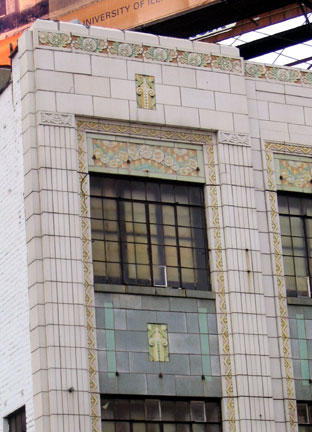
Art Deco jewelbox Veseman Building gets preliminary landmark designation


The Veseman Building, a 1930 art deco gem with polychromatic terra cotta in floral motifs, has just received preliminary Chicago landmark designation. Read more here.

Tuesday, September 06, 2005

Mies Resurrected


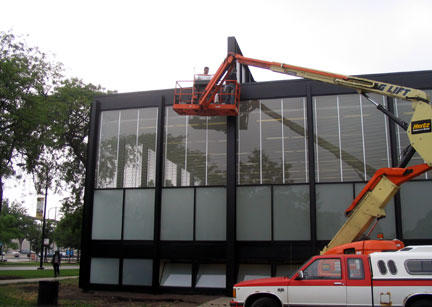
Mies van der Rohe's modernist masterpiece Crown Hall, on the Chicago IIT campus that he also designed, has just reopened after the most radical restoration in its 50 year history. Read all about it here. (This story originally appeared in the Chicago Reader in different and more manageable form under the title, Sweet Nothing, September 2nd, 2005.)

The Legacy of Crown Hall


Crown Hall and Mies van der Rohe, a shining beacon on the road to modernism or, as Tom Wolfe would suggest, a vampiric infestation of dead European values into the pristine American midwest. Some initial thoughts. Be sure to add your own here.

Monday, September 05, 2005

"Who Cares?" Sundays continue at WFMT

On this Sunday's Chicago Symphony Retrospective, the final announced work was Brahm's Fourth Symphony, which, run through WFMT's automated mixmaster, began with the final movement of the Bruckner 9th, followed by the final three movements of the Brahm's. No one caught the error, or fixed the error, or even acknowledged it. The announcers-in-a-can remained blissfully oblivious, a perfect mirror of the attitudes of current management.

Saturday, September 03, 2005

Katrina

Chicago Helps

The American Red Cross

The Salvation Army

Archinect has set up a disaster relief/adopt an architect web page here. Tulane University in New Orleans has cancelled its fall semester and is working to help its students to enroll as temporary students at other institutions.

Locally, IIT also has a web page up for support, and with information for students displaced by Katrina who are "interested in transferring to IIT" The University of Illinois at Champaign Urbana is also working to assist displaced students. Contact the Office of Admissions and Records at 217/333-0302.

And if you are as outraged by the complacency, misplaced economies and lack of preparation of our leaders as you are blown away by the bravery and selflessness of the rescue workers, medical personnel, and guardsmen, record exactly how you feel today in a note, and paste it into your calendar for the dates of November 6th, 2006, and November 3rd, 2008.

Friday, September 02, 2005

NY Crix Nix MvdR Hootch Licks

New York City's Skyscraper Museum has published the results of a survey it made asking 100 architects, engineers, developers, critics, planners and others of their ilk to name their favorite New York skyscrapers. The clear first place winner was the Chrysler Building, with 90 votes, but silver and bronze were taken by buildings designed by Chicago firms. Mies van der Rohe's 1958 Seagram Building claimed 76 votes, and Daniel Burnham's 1903 Flatiron got 73, placing it in a tie with Cass Gilbert's Woolworth tower.

Although World Trade Center Kapellmeister David Childs scratched Mies completely off his list, the Seagram scored strongly across all categories, except for the critics. Four out of six turned up their noses and didn't include the Seagram anywhere in their top ten, and the New Yorker's Paul Goldberger make a point of listing it sixth. (To be fair, Goldberger's iconoclastic top choice was the frequently overlooked 70 Pine Street, a sleek Art Deco masterpiece from 1932, the last major skyscraper to be built in the financial district until 1961, that is again, after September 11th, the third tallest building in Manhattan.)

In early public voting, the Chrysler is again the overwhelming favorite, while the Seagram is dead last. You can vote your own choice here.

The website has posted a complete table of all of the 100 professional responses, which includes the picks of local architects Helmut Jahn and Adrian Smith, former native Mike Wallace, and adopted son The Donald, who remains in character by ignoring all 25 official nominees and picking only four buildings, which coincidentally turn out to all be Trump projects.

Thursday, September 01, 2005

Last 4 Days to See Peter Behrens Dining Room


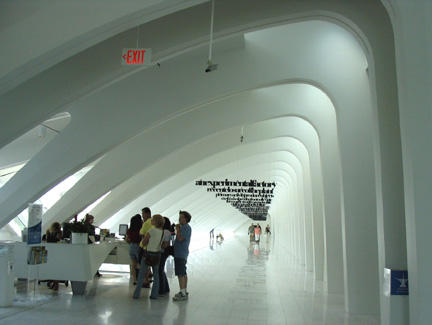
I finally got up to Milwaukee to see Santiago Calatrava's spectacular Milwaukee Art Museum. More of that later. However, a quick heads up on two exceptional exhibitions, both in their last days, that are definitely your while. The Arts and Crafts Movement in Europe and America, 1880-1920: Design for the Modern World runs only through September 5th. It's a country-by-country assembling of objects that include a George Maher fireplace and an entire dining room, from wallcoverings and carpet down to furniture, linens, cutlery and glassware, designed by Peter Behrens for the Wertheim Department store. Beginning October 16th, the show will move to The Cleveland Museum of Art, where it'll run until January 8th of next year. You have only a bit more time to catch another extraordinary show at MAM, Cut/Film as Found Object, in which 14 artists take existing films and transform them into their own artworks. I'll be writing later on the architectural aspects of Pierre Huyghe's "L'Ellipse" which depicts what takes place between two cuts in Wim Wenders 1977 movie, The American Friend, using the same actor, Bruno Ganz, twenty years later. The show will be up through September 11th.

Chicago street scene - August 31, 2005

Tuesday, August 30, 2005

Salon de Refuse


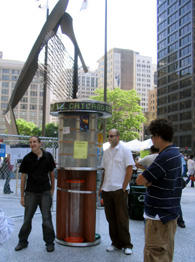
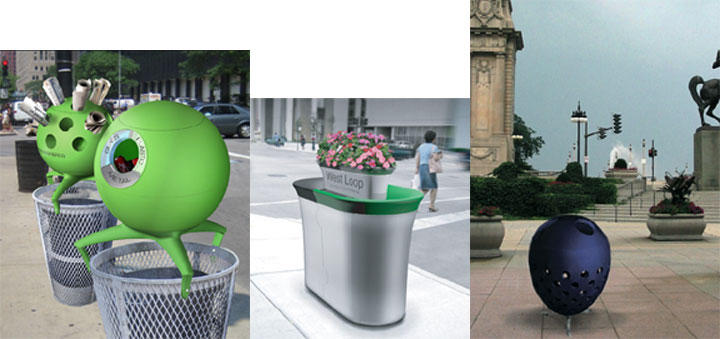
It's likely that there's never been as much garbage in Chicago's Daley Plaza as there was on Friday, August 19th, but that was OK, because it was almost all within one of the 25 prototypes that were finalists in a competition for the design of recycling receptacles, co-sponsored by the city and the Chicago Chapter of the American Institute of Architect's Young Architects Forum. Can better designed recycling bins boost Chicago's flagging recycling rates? Read all about it, and see a lot more pictures, here.

Monday, August 29, 2005

. . . and life goes on. Otters and fish besiege Racine


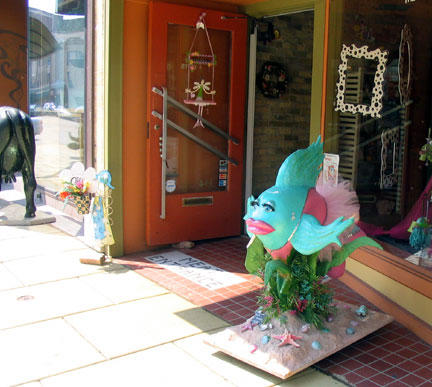
Chicagoans may have had their fill after cows and furniture, but Racine, Wisconsin has made that kind of municipal whimsy an annual infestation. From dogs, to cats, to bears (oh, my!), this year the city's Summer Splash program has turned to fish and otters, nearly a hundred of them, wrapping up their appearance all along Main Street on their way to being auctioned off at the city's Memorial Hall at 4 P.M on September 10th, with the opening bid for each item started at $350.00 Last year's auction was anything but bearish, kicking $20,000 into Racine's development coffers. Future summers will see the coming of frogs, locusts, gnats and boils. (Just kidding - I hope.)

Saturday, August 27, 2005

In memory of Ray Nordstrand

Ray Nordstrand, former President of Chicago cultural icon WFMT, died Saturday morning after a long illness. He was 72. The way things are going, he may be the last visionary to come out of Chicago broadcasting.

Nordstrand was Daniel Burnham to program director Norm Pellegrini's John Wellborn Root. His artistic sensibility may have been somewhat less than his partner's (although his halting delivery, often affectionately parodied, had a style all its own), but it was coupled to a bedrock business sense. By tranforming the WFMT Program Guide into the highly profitable Chicago Magazine, he created the economic model that sustained what became one of the nation's great radio stations. What CFL or WLS were for rock, WFMT was for the fine arts.

When I began listening to WFMT, I knew nothing about classical music, and I considered opera highly suspect. Within a few years, its programs gave me an education no university could match: not just about classical music, but Broadway, folk, comedy and odds and ends through the Midnight Special, about art, through the critiques of Harry Bouras, about writing, through programs with Herman Kogan, of theater and elegant vitriol from Claudia Cassidy, and just everything else, including justice and fairness, through the interviews of Studs Terkel. WFMT had a set of ethics, an ambition for excellence, and, rare in anything but almost nonexistent in broadcasting, a soul.

Today, WFMT still retains remnants of its former greatness but, smothered by the bureaucratic embrace of Windows to the World, Inc., which also runs WTTW, it often appears on the road to becoming the fine arts version of JACK radio. Like so many sectors of the American economy, an elephantitis has set in where marketing rules, and what it's supposed to be supporting brings up the rear, far behind. WFMT began so lean it could be run, initially, by just two people, Bernard and Rita Jacobs. According to an account in the Chicago Tribune, they pawned their car and luggage to buy the station. With radio outlets changing hands for tens, or even hundreds of millions of dollars, who has that much stuff to hock today? If there's a young Ray Nordstrand somewhere out there now (please, God, speed them along) we'll probably find him or her in satellite radio, or on the internet.

This coming Monday, August 29th, beginning at 8:00 A.M, WFMT (98.7 FM) will broadcast a tribute to Ray Nordstrand, including reminiscences from many members of the FMT family. His death makes this a very sad day, but for forty years, he gave us a hell of a ride.

Thursday, August 25, 2005

It's a Bean! - Big Tent Gives Birth (Again) to Kapoor's Cloud Gate after Prolonged Labor

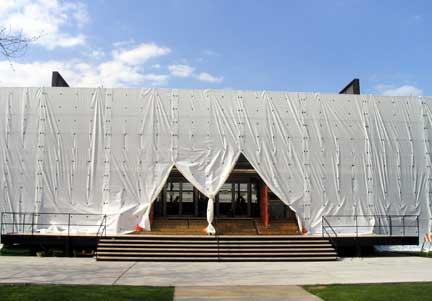
After being under wraps since January, Anish Kapoor's Cloud Gate sculpture in Millennium Park is again being unveiled for public viewing, this time with most of the seams visible at the time of the park's grand opening last July now polished away. leaving a spectacular uninterrupted. curving mirrored surface. The cost of the sculpture has now officially risen to $19,000,000, more than double the original estimate, and it's still not complete. Beginning in October, its underside will be closed off from the public view to polish away the last exposed seams. Public access, currently curtailed to remove the tent, scaffolding, and clean up the podium, is scheduled to be restored by Sunday, August 28th. See more photographs of Cloud Gate's unveiling here. Read Emily Nunn's Chicago Tribune story on ironworker Danny Kozyra and how he and his colleagues created "The Bean"'s surface here.

Wednesday, August 24, 2005

The Monarchs of Millennium Park

This is the second summer for Chicago's Millennium Park. Joining the hordes of tourists hovering around the greenery are contingents of Monarch butterflies. Make sure to look for them among the plantings along the walkways leading into the park from Michigan avenue. To see a photo gallery of the little buggers, and of the park's Lurie Gardens, click here.

Some great reading

Three great articles makes it worthwhile to pick up a copy of today's (Wednesday, August 24th) Chicago Tribune. You also have seven days to catch them on the web before they pass into paid archive hell.

Making it Shine Emily Nunn has a very fine story on the polishing of Anish Kapoor's Cloud Gate sculpture from the point of view of foreman and ironworker Danny Kozyra.

Jonathan Briggs reports on now the building's original purpose has been destroyed in the spectacular restoration of the Lambert Tree Studios.

Why can't Kamin write stuff like this?

And, finally, a splendid piece of writing and storytelling from an unlikely source: Woman's garden tells the story of a life lived well

Crowning Around - all day celebration of reopening of Mies Van Der Rohe's restored Crown Hall this Saturday, August 27th


The stunning restoration of Mies van der Rohe's landmark Crown Hall will be the focus of an all-day festival marking its public unveiling. Tours, taking off from the welcome center in the "north lawn tent" will begin at 11:00 A.M., Noon, 1:00 P.M., 2:00 P.M., 3:00 P.M., 4:00 P.M. and 5:00 P.M.

At 11:30 A.M., a tour of Mies' IIT campus will be given by Kevin Harrington, IIT architectural historian, professor and co-author of Chicago's Famous Buildings.

At 2:00 P.M. in the Center Core of Crown Hall a panel of Mies colleagues and historians "will share personal reflections and stories."

At 12:30 P.M., also in Crown Hall's Center Core, there will be a reading of scenes from "Glass House," June Finfer's play on the relationship of Mies and Edith Farnsworth and the creation of Farnsworth House.

From 11:00 A.M. through 3:00, Crown Hall's Graham Resource Center will hold an open house of the Center's collection, which includes over 6,000 books, journals and electronic resources that serve the College of Architecture, as well as an extensive print collection relating to Mies van der Rohe.

The day will also feature four different musical performances, and a number of events for families and chidren. For the complete schedule, click here.

Tuesday, August 23, 2005

In Praise of Obstinancy


The Wall Street Journal ran a story on August 3rd on reaction to the Supreme Court's recent ruling giving state and local governments an unrestricted right to define the seizure of property, even when the benefits accrue overwhelming to private intests, as a "public purpose". The Journal reports that public reaction to the decision has been so overwhelmingly negative that some developers are now backing away from controversial projects rather than be demonized as reverse Robin Hoods, seizing the homes and business of the middle class to hand them over to wealthy developers. Many local governments are also reported to be enacting legislation to put back the protections that the Supreme Court ruling removed.

It's easy to forget that this kind of governmental power is a relatively recent development In the 1930's and before, even powerful developers were often at the whim of recalcitrant landowners. Perhaps the most famous case is that of Hurley's Saloon, a Manhattan bar housed in a four-story, 1876 townhouse. In the 1930's, not even John D. Rockefeller could entice Hurley's proprietors to sell, and so Rockefeller Center's 70 story RCA (now GE) building had to be constructed around it. (Today, Hurley's has moved to 48th street, and the townhouse is occupied by a pricey seafood emporium and restaurant.)

A recent, local example of resistance is the three-story greystone whose owners held out for a price Loyola University was unwilling to pay, and so it survives squeezed between two far newer university structures.

Perhaps the most telling Chicago morality tale about the misuse of eminent domain was the leveling of all structures on Block 37. Gone is the McCarthy Building, an official landmark whose designation was repealed by the city council in its great rush to the bulldozers. Gone is the United Artists theater, originally a house for live productions, which could have provided the mid-size theater that the Randolph Theater district so glaringly lacks. Gone is the historic Unity Building, built by Illinois Governor John Peter Altgeld, which Chicago real estate magnate Sam Zell had been talking about acquiring and restoring as a headquarters for his firm. Gone is the Stop and Shop building and store, which, had it survived, would have provided the food hall that the mayor has wanted for the North Loop. And for what? For a decade and half Block 37 has remained a barren wasteland. Without the abuse of eminent domain, many of those Block 37 structures would still be around, probably upgraded and restored by private interests with public subsidy, keeping jobs in the Loop, and paying millions of dollars in property taxes every year.

Now and then, a little obstinancy can be a good thing, giving bad ideas and rotten deals time to be exposed, and helping insure that the city isn't homogenized into a generic anonymity.

Monday, August 22, 2005

Hotel Burnham Adding Breakfast & A Tour

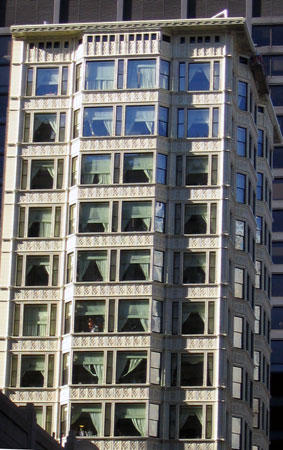
The Hotel Burnham, current resident of the restored 1895 Burnham and Atwood Reliance Building, is promoting its breakfast and a tour combo, the Burnham Breakfast Series. It starts at 8:00 A.M. with breakfast and an introduction to the building in the hotel's Atwood Cafe, followed by an "intimate and informative" 45 minute tour led by a Chicago Architecture Foundation docent. The hotel also promises "a goody bag filled with special keepsakes." (Mini-bottles of shampoo and conditioner, anyone?) The breakfast and tour will be available the second Saturday of each month: September 10th, October 8th, and November 12th. Cost is $25.00 per person, advance registration required. Call 312/762.3521. A portion of the proceeds with benefit the Chicago Architecture Foundation.

Friday, August 19, 2005

Winning Outdoor Recycling Receptacles Unveiled Today at Noon in Daley Plaza

Click here for larger image.

(And no, that's not Mike from Monsters Inc. in the left-hand picture, no matter what the lawyer from Disney is trying to tell you.)

The winning designs for what is billed as Chicago's "first citywide recycling receptacles" will be announced at a ceremony beginning at noon, today, Friday, August 19th, at Daley Plaza.

The competition was co-sponsored by AIA Young Architects Forum of Chicago and the City's Department of the Environment. More than 80 creative teams submitted designs for a outdoor recycling receptacle. Beginning at 10:30 A.M. prototypes of the top 25 designs will be on display at Daley Plaza. A jury of architects and recycling experts will select winners, and there will also be a "People's Choice" voting for public input. Mayor Richard M. Daley is scheduled to deliver a keynote address at noon, with the winning entries to be announced at 12:30. If you want to check it all out, do it now, because the prototypes will be on display only until 8:00 P.M. on Friday, the 19th. The City of Chicago’s “Live Green” exhibit showcasing recycling strategies and products, will also be on display.

Tuesday, August 16, 2005

CTA Curates "Trash Worlds", on display at selected subway stations.


It cost $15,000,000, but the Skidmore, Owings & Merrill redesigned Lake Street station on the CTA's Red Line is money well spent. When its nearly empty, there's something almost temple-like in the brilliantly lit platform with its procession of white columns and uninterrupted, block-long mosaic vault. At rush hour, when crammed trains disgorge horde and after horde of rushing, intent passengers, it's got the popping, romantic energy of a Gershwin rhapsody.

Step south of Randolph, however, and you're suddenly plunged into the scene from Beethoven's Fidelio where the prisoners are forced back down into the dungeon. Have platforms like the one at Washington ever seemed more dark and decrepit? At one section, five successive fixtures lighting the track are out of order, plunging the station into a gloom so deep that even the rats take Prozac. You would think the most logical priority would be to bring all Loop line stations up to standard as quickly as possible. But, as reported by Greg Hinz in Crain's Chicago Business, the agency is hell-bent to shift $42 million in city TIF money and $130,000,000 in CTA bonds to construct a "superstation" under the chimera known as Block 37 to serve a $500,000,000 express service to the city's airports that the CTA's own consultant has estimated will carry a grand total of about 6,000 passengers a day.

Meanwhile, back at the Washington Red Line station, the CTA has now apparently decided to rub the noses of riders in its indifference by treating discarded garbage as a new form of public art. Old trash receptacles have been replaced with transparent bags hanging listlessly off of metal rings. To commuters who happen to be anthropologists, these let-it-all-hang-out exhibitions of trash both mundane and disgusting may be objects of endless fascination (quick tip: the lighting of the refuse is better at Clark and Lake), but for the rest of us, it makes waiting for a train a little like visiting a landfill.

The CTA has so far declined to respond to questions about why the bags exist. If they're thinking it's a security measure, we're all doomed. Bad guys could easily make a nasty parcel inconspicious simply by wrapping it in a newspaper. Right next to the bags are big newspaper recycling boxes whose contents are completely shielded from view. Morever, it's only at certain stations that we're being given the honor of contemplating our own refuse. But it's pointless to speculate. The mind of a bureaucrat insistently remains a thing of mystery. Let's just hope the CTA takes aside whoever thought this was a great idea and sends them out for counseling.

Monday, August 15, 2005

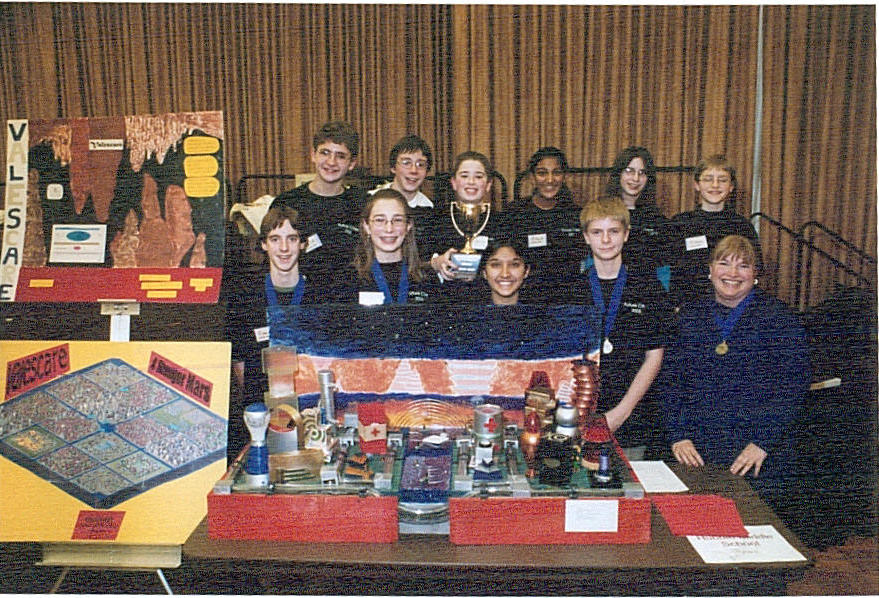
2006 Chicago Regional Future City Competition


Chicago area schools are being invited to participate in the 2006 Chicago Regional Future City Competition, which asks 7th and 8th graders to design their visions of the city of the future, first on computer and then as a 3-D model More than 30,000 students from 1,000 schools participated in last year's competition, sponsored by the National Engineers Week Committee, a consortium of engineering associations and major U.S. industries. Co-chairs of 2006 National Engineers Week are the Society of Women Engineers and Northrup Gruman Corporation.

Regional first place teams receive a trip to the national finals, held in Washington D.C. next February 20-22, 2006 during National Engineers Week. Prizes for the 2006 competition winning Future City team include a trip to U.S. Space Camp in Huntsville, Alabama. Other prizes include scholarships, computers and savings bonds.

Chicago Schools wishing to sign up, or engineers interested in volunteering as mentors should contact Don Wittmer, Chicago regional coordinator, at 312/930.9119 or via e-mail. For Competition materials and registration go to www.futurecity.org, and more information is available at the Future City - Chicago Competition home page. The deadline is October 15.

The complete press release is included in the first comment to this post.

Friday, August 12, 2005

no thing - Exhibition of architect Robert Benson's photography


no thing, an exhibition of the work of 4240 Architecture's Robert Benson, is currently on display at the TOJO Gallery at 1418 West Division. It includes 13 small photos ringing the gallery with six large photos 54” x 80” printed on unique materials hovering in the center. "The show," says Benson "is about finding beauty in the mundane ... looking at things and people that are often overlooked." The gallery is open by appointment only, but will be open to the public on the show's closing day, Friday, August 26th. For more information, call 773.726.4545 or contact the gallery by email.

Add ArchitectureChicago PLUS's feed to your News Reader

In our never-ending efforts to bring architecture news and my ramblings to the masses, you can now subscribe to ArchitectureChicago Plus and add it to your news reader.

Here's the url for the feed: http://lynnbecker.com/repeat/News/news.xml

If you're already using RSS, you know what to do with this to get it into your reader. If you don't, but want to learn more about how RSS can help keep you up to date, here's a basic overview from Robert Teeter, and an extensive article from Wikipedia.

Eventually, we'll have one of those nifty orange XML buttons you can just drag to your newsreader, but for now you have to set the channel up yourself.

Can podcasts be far behind?

Thursday, August 11, 2005

new STAND: Architecture for Humanity Chicago announces design competition


Architecture for Humanity Chicago has announced it's first design competition. Next to the international organization's projects creating homes for victims of Hurricane Emily, designing mobile health clinics to fight HIV/AIDS in Africa, and has assisting in the rebuilding after last year's Tsunami, the subject of the Chicago chapter's competition is bound to seem a bit of an anti-climax.

The competition brief for new STAND cites "the daily interaction between reader and news vendor" as part of the dynamic of a healthy urban streetscape. It directs that competition entrants address "a) the decline of print media; b) the positive effects of community business; and c) small scale architectural impact on the streetscape."

The application deadine is 5:00 CST, October 1st. The fee is $35.00, $15.00 for students. Interested parties can email afhchicago@gmail.com to request an applicaton.

The way the automated box now dominates the streetside sale of newspapers suggests that participants have their work cut out for them. Doug Garofalo's entry to the Art Institute's recent Ten Visions exhibition included a design from one of his students for a public digital information kiosk. Will there still room for newspapers and magazines (and the people who sell them) in the depersonalized, hyper-efficient supply chains of today?

Wednesday, August 10, 2005

Construction Begins at New Museum of Broadcast Communications


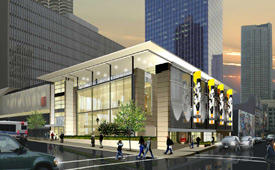
Work is now underway to convert a long-time parking garage on the southwest corner of State and Kinzie into the new home of Chicago's Museum of Broadcast Communications. Designed by Chicago firm Eckenhoff Saunders Architects, Inc. in partnership with sustainable design architect Helen Kessler, the 70,000 square-foot facility is expected to be the first public museum in the nation to earn a gold LEED rating. When completed in 2006, the $21,000,000 project will represent a major rescue of a corner that for decades has been a grungy, back-alley presence, dominated by a car ramp inadequately hidden behind a stark concrete wall.

Tuesday, August 09, 2005

8 Architects Chosen for Kroc Community Center Competition

A five person jury has selected eight architects to participate in Stage II of a competition to design the Salvation Army's new $60 $70 million Ray and Joan Kroc Corps Community Center at 47th and State Street in Chicago. Included in the list are Chicago firms Murphy/Jahn, Ross Barney + Jankowski, and Booth Hansen, as well as Antoine Predock, Rogers Marvel Architects, PPLC and Hood Design, Mack Scogin Merrill Elam, Behnisch Architects and Charles Rose Architects. The eight will submit their proposals to the jury on September 8th, which will then narrow the list to three or four firms for a final phase that will conclude with the selection of a design team in late October.

Saturday, August 06, 2005

Uptown Theater Community Portrait set for Noon, Sunday, August 20th


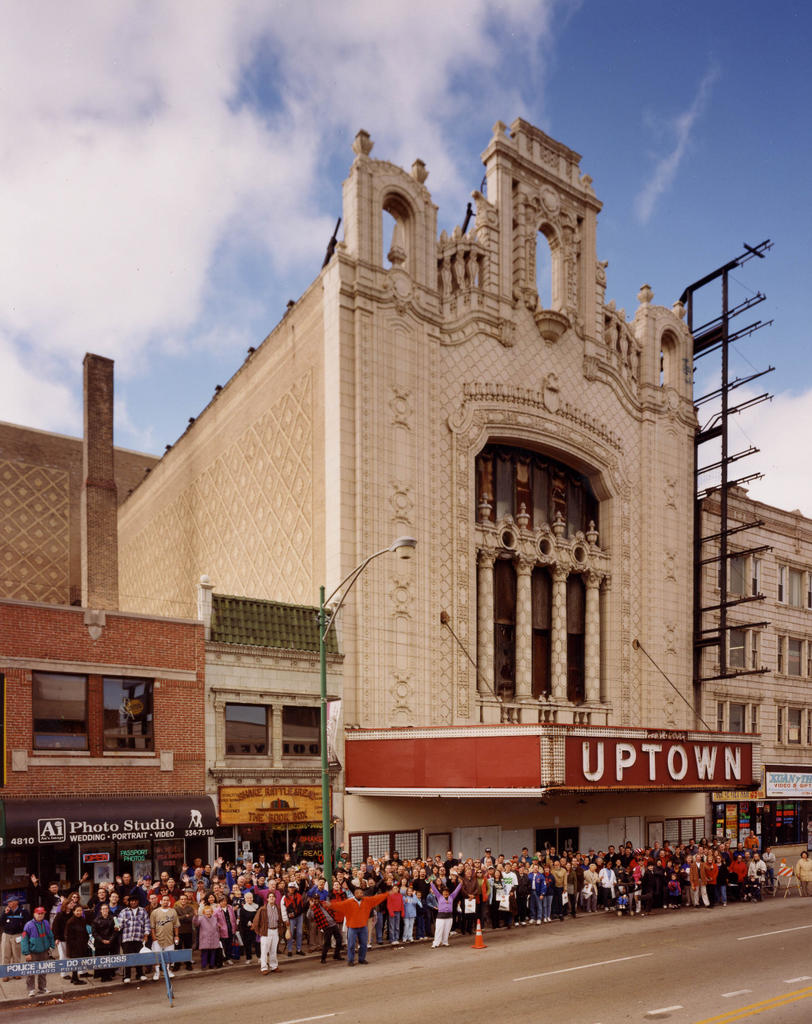
It's been closed for a quarter century, but activists are still trying to save the historic Uptown Theatre at 4816 N. Broadway. At noon, on Saturday, August 20th, poet Marc Smith will emcee "Uptown Community Portrait 2005," where community residents and architecture buffs will pose in front of Chicago's largest surviving movie palace for a portrait that will replicate similar shoots taken at the theater's opening in 1925, and again in 2000 (shown at left). Although officially designated a Chicago landmark, the Uptown is in dire need of funds to maintain the huge structure, and as well as an investor with deep-pockets and a viable business plan for making the 4,000+ seat neighborhood venue economically self-sustaining.

For more information, email to Friends of the Uptown, call (773) 250-7665 or (773) 878-1064, or view the Web site. The full text of the organization's press release can be found in the first comment to this post.

Friday, August 05, 2005

Millennium Park Has Broke Its Crown


A long, hot summer overheats one of the Crown Jewels of Chicago's Millennium Park.

(Originally published in slightly different and far better edited form under the title "At Least This One's Under Warranty" in the Chicago Reader, August 5th, 2005)

The first of Millennium Park's crowd-pleasers to develop a major problem was the Bean, as Anish Kapoor's Cloud Gate has come to be called. An enormous public success when favorite since its unveiling last July, the sculpture's been mostly hidden inside a tent since January as workers grind down and polish the seams between its 168 metal plates. In the process the original budgeted cost has almost doubled, to $17 million. According to Karen Ryan, spokesperson for the Department of Cultural Affairs, no completion date has been set.

Now there's been a meltdown at Jaume Plensa's award-winning Crown Fountain, the shallow sea of water stretched between two 50-foot tall towers whose LED panels project an array of more than 1,000 different faces that spout water from pursed lips. Recent visitors have noticed "dropouts," blank spaces interspersed like zits on the faces of the south tower.

. . . Read the article

Thursday, August 04, 2005

He's Baaaaack! Mies's Masterpiece, Crown Hall, reopens on August 27th


Saturday, August 27th, IIT will host a day-long festival to mark the reopening of Mies van der Rohe's 1956 S.R. Crown Hall, closed this summer to undergo a complete restoration. A full day of family-friendly activities is being promised, including tours, a performance of "The Glass House," June Finfer's play on the creation of Mies's Farnsworth House, and "some of Chicago's top bands, all under a tent on Crown Hall's expansive lawn." Times are from 11 A.M. to 6 P.M. Location is 3360 S. State Street on the Illinois Institute of Technology campus designed by the master, himself. All events are free and open to the public. For more information, call 312/567.5014 or go to the website.

Love Opera? Hate Opera? Try Julie Taymor's Brilliant Oedipus Rex, now on DVD


After the Lion King, is there any more famous or lauded director today than Julie Taymor, a status confirmed again by her magical production of The Magic Flute for the Met this season? Add in Sophocles, Stravinsky, Jean Cocteau, Jessye Norman, Seiji Ozawa and a young(er) Bryn Terfel - if this production of the opera Oedipus Rex doesn't offer an all-star lineup made in heaven, what does?

What a sad commentary on the current state of marketing opera and classical music that it's taken over a decade to bring this incredible production to DVD (up to now it's been available only on VHS)

And incredible this production is. The marriage of Sophocles, with his implicit violence . . . read more

Tuesday, August 02, 2005

EHDD's L'Italien returns West

Marc L'Italien has closed the EHDD Architecture (Esherick Homsey Dodge & Davis) Chicago office and headed back to the mother ship in San Francisco.

L'Italien was the architect behind the Factor 10 House built last year in Chicago's Hermosa neighborhood, a prototype of sustainable design that was one named one of 2004's Top Ten Green Projects by the American Institute of Architects.

The latest EHHD design in Chicago, the Pritzker Family Children's Zoo, at the city's historic (and free) Lincoln Park Zoo, opened just last month. "It's a North American habitat featuring black bears, red wolves, river otters and beavers," says L'Italien. "It's unique in that it is the fusion of zoo, aquarium and children's museum in one project. The hallmark feature is a tall climbing structure inside the exhibit pavilion. We created an instant forest."

"My plan is to remain involved in projects in the Midwest," says L'Italien."

Monday, August 01, 2005

Harry Caray's Adds Fire Escape Cafe


Sidewalk space around Harry Caray's restaurant at Kinzie and Dearborn is really too pinched to allow for a street cafe. (To get an idea of exactly how pinched, check out the outdoor dining at Ballo, Alex Dana's new restaurant a bit up the street.)

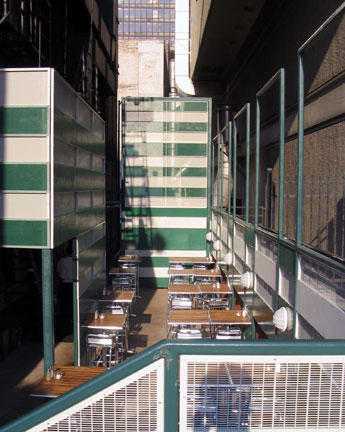
So the restaurant has come up with a nifty solution. They've created an attractive dining patio in what was essentially a fire escape well wedged in between the back of its vintage 1895 building, designed by architect Henry Ives Cobb, and the Bertrand Goldberg designed office building, part of the Marina City Complex, which now houses the House of Blues Hotel.

The architect has basically inserted a faux structure that successfully mediates the high grunge level of the original well. Striped glass panels are used to conceal both the lower levels of the fire escape and another alley-like driveway at the back of the patio. A shorter, green and white metal panel wall covers up the raw concrete wall at the rear of the hotel. A succession of tall metal frames, painted green, further define the space. All and all, an attractive oasis from the usual streetside cafe where, like it or not, you share your dining experience with every passing pedestrian.

(We're still trying to confirm the name of the architect responsible for the design. If you know, please pass it on.)

And now for something completely different . . . Will the Last Announcer at WFMT Please Turn Out the Lights

FM radio station WFMT, once one of the crown jewels of the Chicago cultural scene, is one step above an abandoned building. Need proof? Consider last night, Sunday, July 31st.

At 8:00 P.M. , Henry Fogel's taped Collectors Corner program, which runs until 10:00, began. Last evening's edition was devoted to the work of the late conductor Klaus Tennstedt, and after a performance of the Smetena's Bartered Bride Overture, Fogel urged listeners to stay tuned for a final work, Beethoven's 9th Symphony. Except that, when he returned from break, Fogel was bidding his listeners farewell and offering a preview of the next week's show. Beethoven's 9th had disappeared, but WFMT's feed plunged on, blissfully unaware that over an hour of programmming had suddenly vanished. The announcer-in-a-can told us it was time for 10:00 P.M's Vocal Scene. It was 8:48.

It appears less that someone was asleep at the switch, than there's no one at the switch. Not that long ago, what is now the city's only classical music station issued a press release announcing with great fanfare that it had decided to create a more undisturbed sabbath for its listeners by dropping all Sunday newscasts, a risibly and transparently self-serving rationalization for still more staff cutbacks.

In its glory days under former Program Director Norm Pellegrini, WFMT was all about getting great stuff on the air. Today, it seems more like a welfare program for administrators. . . . read more

Saturday, July 30, 2005

Original Schubert (Majestic) Theater Loggia Revealed


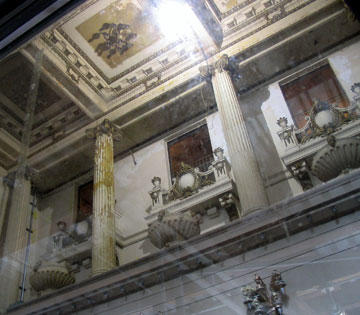
Hidden behind a drop ceiling for decades, the original classical entrance lobby of the Chicago's 1906 Majestic Theater has now been uncovered and will be restored as part of a $36,000,000 project, backed by $5,500,000 in TIF money, that will both modernize and return the theater to something resembling its original design, as well as gut the upper 17 floors of the 20 story Majestic Building for conversion into a hotel. ABN Amro Bank has bought naming rights, and what has long been known as the Schubert will be reborn as the LaSalle Bank Theater when it opens in the fall. Architect for the project is Laurence Booth of Booth/Hansen Associates.

Friday, July 29, 2005

Remmel Wins 2005 Carter Manny Award

Rachel Remmel, Department of Art History at the U of C, is the recipient of the $15,000 2005 Carter Manny Award to assist with her dissertation, "The Origins of American School Building: Boston Public School Architecture, 1800-1860."

The annual competition, sponsored by the Graham Foundation, "funds the research and writing of academic dissertations by promising young scholars" with architecture related topics. A list of prior recipients is posted here.

$10,000 and the Trustees' Merit Citation were awarded to two additional scholars: Vincent L. Michael of the Art History Department of UIC, and M. Ijlal Muzaffar, a student in the School of Architecture and Planning at MIT.

The full press release, also listing the eight students receiving Citations of Special Recognition, their schools and their topics, can be found in the first comment appended to this post.

Thursday, July 28, 2005

Edward Lifson hosts WBEZ call-in discussion on Calatrava Spire

In case you still haven't yet been bludgeoned senseless by the big stick of Santiago Calatrava's proposed 2,000-foot-high condo tower, Edward Lifson's Hello Beautiful on WBEZ, 91.5 on your FM dial, will devote this Sunday's broadcast to listeners calling in their opinion. He'll be joined in the studio by Art Institute Associate Curator of Architecture Martha Thorne, and also offer up comments by the Trib's Blair Kamin, Sun-Times architecture critic Kevin Nance, and Calatrava, himself.

All Calatrava - All the Time (My Head Hurts)

The good news is that the Calatrava Spire is getting us almost as much attention -local, national and international - as Millennium Park did last year. The bad news is that its thrust into the "world's tallest" sweepstakes is being hyped with the kind of sloppy inanity usually found in spam emails for penile enlargement. Think I'm kidding? I've just watched a typically breathless ABC World News Tonight piece that included an interview with Calatrava that ran under a supertitle that spelled his last name with a "K."

There's no question that Calatrava's design is a stunning piece of architecture. Like Jean-Paul Viguier's Sofitel Chicago Water Tower Hotel, it reimagines the Chicago-style skyscraper far more potently than those officially "post-modernist" works of the 1980's that failed to conceal the strain of breaking free from the Miesian box. If it survives the triple whammy of a post 9-11 impulse to concede defeat and crawl back into caves, the "history stops with me" dictates of the NIMBY levelers, and, above all, the economics, it will transform the character of Chicago's skyline in a way no building has since Sears Tower was completed three decades ago.

But am I the only one getting a little tired of how stories like this suck up all the oxygen? Not unlike cats, critics and the media are easily mesmerized by bright, shiny objects, and have grown fat and lazy on low-lying fruit. When's the last time you read an architecture story by Blair Kamin that didn't seem like it was inspired by a press release? Not that I claim to be any better. I'm hoping this blog will help expand the range of topics getting coverage.

Calatrava has been quoted to the effect that he "designs for the service of mankind," but in the case of his spire, mankind boils down to a handful of people with millions of dollars to throw around for an in-town apartment. For the rest of us, it'll be look, but don't touch.

There's a lot more to architecture than that, especially in Chicago. Right now, there are two rather wonderful shows: Visionary Chicago Architecture, exiled to the back of the Harris Theater in Millennium Park, and Five Architects, currently at the Chicago Architecture Foundation. They're ripe with fresh ideas. Many are wonderful. Some - especially in the case of Visionary Chicago Architecture- are fairly appalling. For the moment, I'll leave it up to you to decide which are which. Ultimately, however, it's how ideas like these eventually play out, in buildings made by architects with an ongoing commitment to Chicago, that will have far more effect on defining the future of our city's built environment than any vagabound architect, no matter how talented. How great it would be if just a fraction of the ink spent on Chris Carley's mad, twisting dream could be diverted to the kind of stories that don't just fall into your lap.

So to Mr. Calatrava, welcome and bon chance. To the Donald, take a pill. To the press (as I look into mirror) wake up: there's more to architecture than this. . . . and to Chicago's architectural community, help me make this blog a real resource, or tell how I should be doing it better.

Wednesday, July 27, 2005

How to reuse a building

Courtesy of the Greenclips newsletter, here's a link to a guide from the University of Dundee on how to reduce construction waste, which in the case of the United Kingdom, amounts to 72.5 million tons a year with 42% of it going to landfills at a time when that space is at a premium. Chicago architect John Ronan estimates that "70% of what’s in landfills right now is old buildings."

The 70 page study, in Adobe Acrobat format, can be downloaded by clicking here.

You can subscribe to the Greenclips email newsletter by sending a blank message to this email address.

Tuesday, July 26, 2005

Design for Santiago Calatrava's 2,000 foot high Chicago residential tower unveiled

Blair Kamin and Thomas Corfman in the Chicago Tribune, Kevin Nance in Chicago Sun-Times and Alexi Barrionuevo in the New York Times both reported this morning on the unveiling of a design by architect Santiago Calatrava for a proposed 115-story, 2,000 foot high residential tower to built along the Chicago river just off of Lake Michigan. Additional commentary can also be found on today's archidose. The tower, rising from a stepped plateau base like a braided, tapering stick of white licorice, would be called the Fordham Spire, named after the development company of the same name.

Christopher T. Carley, may be seeking to move beyond the often mediocre quality of design found in the recent upper-end projects put up by the Fordham Company. of which he is president. These include the Fordham, the Pinnacle, and the 65 E. Goethe, all of which had a propensity for backward-looking styling, complete with mansard roofs.

The project, with a price tag of at least a half a billion dollars and, given the experience of the massive cost overruns at Calatrava's soaring Milwaukee Art Museum, perhaps a good deal more, may be a tough sell in a market already saturated with ultra luxury housing. Trump Tower Chicago, already rising along the river, across the street from Mies van der Rohe's iconic IBM tower, on the site of the former Chicago Sun-Times Building , has 472 "super-luxury" condos, as well 286 condo hotel rooms. The same mixed used concept is being proposed for the Fordham Spire, but it would have only 200 condo hotel rooms and no more than 250 condo's, and contain less than a million square feet, versus Trump's 2,600,000.

Farley has experienced slow sales and problems with lenders in some of his recent projects, but if the Calatrava tower is built, it will mark a major step in the revival of Chicago's skyline, plagued over the last decade with a succession of numbingly ugly 40, 50 and 60 story condo towers.

Note: links to the Chicago Tribune and New York Times stories will expire into their respective archives after seven days.

Building Design and Construction includes Giants 300 list in July issue

Courtesy of a notice in the ArchNewsNow newsletter, we're passing on the fact that the July issue of Building Design and Construction includes its annual list of the top 300 U.S. architectural, engineering, construction and design firms. Topping the architects list is Gensler. Perkins+Will, at number 3, is the highest ranking Chicago headquartered firm. Solomon, Cordwell Buenz, with a 55% gain in revenue from 2003, moved up in the rankings from 21 to 40. Skidmore, Ownings Merrill ranks 2nd in the list of architecture/engineering firms. The entire list, in Adobe Acrobat pdf format, can be downloaded here.

Monday, July 25, 2005

Preservation Chicago Opposes Deconstruction of New York Life Insurance Building

Under the signature of Michael Moran and President Jonathan Fine, Preservation Chicago has sent a letter to Chicago Commissioner of Planning and Development Denise Casalino opposing a new development by Hamilton Partners, designed by architect Lucien Lagrange, that would involve demolition of substantial portions of William LeBaron Jenney's 1893-94 New York Life Building at 39 S. LaSalle Street.

Full text of the letter can be found in the first comment to this post.

Welcome to ArchitectureChicago PLUS

Welcome to the new ArchitectureChicago blog. This no-frills page is a more dynamic version of Repeat, where my writings on architecture are published. Check here daily for news about Chicago architecture and various musings that happen to ooze out of my brain.

Visit the Repeat website, a collection of my writing.

Vist the Repeat monthly Calendar of Chicago Architectural Events

Thursday, July 14, 2005

Registration for Architectural Competition for $70,000,000 Ray and Joan Kroc Corps Community Center ends July 19th

The Salvation Army is using a design competition to select architects for its new $70,000,000 community center, funded by a bequest from the late widow of McDonald's founder Ray Kroc. The center is to be built on a 25-acre site at 47th and State. The competition is in three phases, the first of which is a Portfolio phase, where firms that wish to compete must register and submit examples of work by July 19th. A Jury will then select a list of up to eight firms to move on to the second phase, where the firms will assemble complete A/E teams. In the last phase, four firms will be invited to participate in a 30 day design concept competition with a $25,000 honorarium.

Visit the competition website:

Graham Foundation website posts streaming videos of its 2005 lecture series.

The Graham has announced that its website now includes streaming videos of each of its spring, 2005 "About Chicago" lecture series. The series include lectures by Stanley Tigerman, John Brunetti, Annette Ferrara, Gunny Harboe, John Ronan, and David Woodhouse. The videos go beyond the usual static head shots of lecturers by incorporating relevant images. The quality of those images is still problematic - most are of projected images, and the 320 x 240 pixsel resolution of the videos is severely limiting - but the Graham Foundation's efforts mark a major contribution to using the internet to bring the richness of Chicago architecture and design
Visit the Graham Foundation's 2005 spring lecture series webpage:

Tuesday, July 12, 2005

Archeworks Launches Redesigned Website

Archeworks has unveiled what it calls the first phase of its new website. "Archeworks is really a hothouse in Chicago," says co-founder Eva Maddox in a streaming video overview on the distinctive school's mission and operation. "I think that our role here is to continuously stir the pot, and to push design to the limit."

Each year, Archeworks accepts up to 25 students, who are organized into three teams, each to research "a community need, work with community partners" and develop design solutions to problems that are usually neglected by the more traditional elements of the profession.

"Good design rarely shows up in public housing, in prison, the prison system, in a whole panoply of places," Archeworks co-founder Stanley Tigerman adds in the school's overview video. "Architects and designers are mostly working for, frankly, rich people or surrogates. They tend not to work directly with a constituency that really needs them."

The new site includes an archive of the over 30 individual projects that has been undertaken by Archeworks students since its founding.in 1993.

Visit the Archeworks website

Fountain of Time