Wednesday, February 28, 2007

Vinoly, Herreros, Kalach, Gang, Rosa, Harboe, the 2016 Olympics and Courtyards of Weishan and much, much more on March Calendar of Architectural Event


Spring is warming up the architectural scene in Chicago, with almost 40 items on the March calendar of architecture-related events. Rafael Vinoly will talk about his sets for the Chicago Opera Theater production of Monteverdi's The Return of Ulysses, at a March 28th CAF lunchtime lecture, Jan Herreros discusses his work at IIT, and Alberto Kalach his at UIC. At another CAF lunchtime lecture, Martin Felsen and Sarah Dunn talk about their winning entry in the History Channel's City of the Future Competition. Jeanne Gang talks about Aqua for the Friends of Downtown, and bird collisions at the Chicago Center for Green Technology. Then there's the Art Institute's Joe Rosa at Archeworks, and preservation architect Gunny Harboe at APA. Patrick Ryan and SOM's Thomas Kerwin discuss Chicago's bid for the 2016 Olympics at CAF, while Vince Michael lectures on the Courtyard Houses of Weishan, China for Landmarks Illinois at the Cultural Center.

Believe it or not, that's just the tip of the iceberg. There's a ton of other great events, and I feel guilty not to mention them all here, but you can check it all out here.

Monday, February 26, 2007

Endgame: Is the Fix in for the Farwell?

In January, to general astonishment, the Commission on Chicago Landmarks flashed a bit of backbone and voted down a Planning Department proposal to demolish the landmarked Farwell Building on north Michigan Avenue.

Well, we can't have that, can we?

A special session has been set for 9:00 A.M. on Thursday, March 8th to reverse the January vote. Read all about how power works in this city, including the developers and architects who are cutting the big checks to the local alderman promoting the Farwell's demolition here.

Wednesday, February 21, 2007

The Farwell Saga - Episode Four

Scaffolding has gone up around Michigan Avenue's Farwell Building, saved last month when the Commission on Chicago Landmarks voted down a proposal that would have stripped the Farwell's facades, demolished the building, and remounted the facades on a completely new building, all under the name of landmark protection.

Is the scaffolding a ploy in a PR campaign to reverse that vote by persuading the public the building is so unsafe that demolition is the only solution?

Read about what's at stake, and how its shaking down - including project architect Lucien Lagrange's candid discussion about the real reasons behind the developer's push to demolish the Farwell - in ten easy points, here.

Young? Chicago?


What does it mean to be a Chicago architect or designer? Are there affinities and synergies that they share, or could they just as well be working in anywhere U.S.A.? A new exhibition at Chicago's Art Institute puts the work of a sweet sixteen of architects, industrial, fashion and graphics designers on display, and the museum's new curator of Architecture and Design, Joseph Rosa, tries to make sense of the mix. Read all about it, and see the pictures, here.

Monday, February 19, 2007

Ouroussoff Takes On the Freedom Tower

After a number of diversionary excursions into places like Dubai, New York Times architecture critic Nicolai Ouroussoff is finally engaging his new home city with a simple, brave declaration: Freedom Tower is anything but.

Year after year, the enormous optimism of the competition that arose out of public disgust with the original proposals for the World Trade Center site has been beaten down and eviscerated by the ugly realities of developer Larry Silverstein's greed, Skidmore, Owings and Merrill's David Childs' raw political maneuvering, and the fecklessness of Governor George Pataki. By the time Childs' last cowering, capitulating design was revealed, the overall response was one of fatalistic resignation.

Now Ouroussoff has come forth to state what should have obvious to anyone with two eyes.

"The Freedom Tower, with its tapered bulk and chamfered corners, evokes a gargantuan glass obelisk. Its clumsy bloated form, remade by Skidmore, Owings & Merrill, vaguely recalls the worst of postmodernist historicism . . . the Freedom Tower is conceived as a barricaded fortress . . . It speaks less of resilience and tolerance than of paranoia." Read the full article here.

Although construction has already begun on foundations, Ouroussoff says its not too late to rethink the design. We can only hope.

Tuesday, February 13, 2007

Listomania


To mark its 150th anniversary, the American Institute of Architects has proclaimed 150 structures as America's Favorite Architecture. Laughter and ridicule ensue. Feel free to join the fun. I do my part here.

Monday, February 12, 2007

The Joy of Sax?

Just when you think it can't get any kitschier . . .

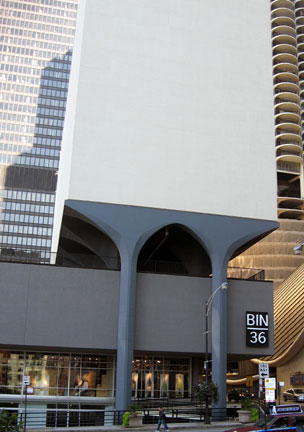
Crain's Chicago Business is reporting that the House of Blues Hotel, set up in what was the office building of Bertrand Goldberg's classic, groundbreaking Marina City complex, will soon be no more. This coming May, Gemstone Hotels and Resorts will reopen the facility as the Hotel Sax. Apparently regressing to vintage New Orleans is no longer enough. The New York design firm of McCartan will be creating, in the words of the press release, a concept that "mixes the essence of a 17th century French Salon executed with a 21st century twist. An eclectic array of furnishings from India and Europe are also used in exotic colors and finishes." Louis XIV, bowling alley attached. Lucien Lagrange, eat your heart out.

Gemstone has already vandalized what should be a landmark building with large expanses of battleship gray paint that subverts the lightness of Goldberg's original design, making it look gloomy and, yes, cheap. Buckets of money and a complete innocence of taste - what new wonders will they now bring?

Sunday, February 11, 2007

Weekend Reading: Kamin on What Lies Beneath, plus End of Winter: Myth or Possibility?

In the press this weekend:

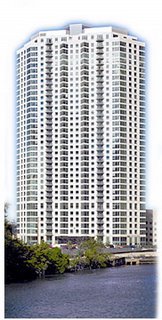
Chicago's Two Track Building Boom - Tribune architecture critic Blair Kamin explores how a monopolization of attention by high profile projects like Santiago Calatrava's Chicago Spire is overshadowing the far larger number of clunky new buildings that are littering the city. For every elegant solution, from Laurence Booth's 30 West Oak (pictured), or Miller/Hull's 156 West Superior, there's at least as many skyline-scarring clunkers like DeStefano + Partners Left Bank at Kinzie Station , which evokes less the sidewalks of Paris than a kind of architectural K-ration. It's possible that over the decades we'll come to accept, if not actually love, these kind of lazy build, flip, and repeat developments at which Fifield is a master, but it's more likely that the only thing they're accomplishing is lowering the standard of mediocrity. Ultimately, they're parasitic - bringing people back to city and its neighborhoods at the same time as they eat away at the character that makes them attractive places to live in the first place. Read it here.
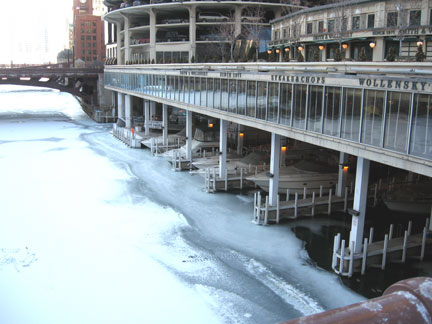
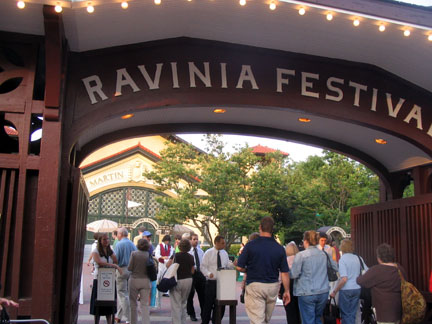
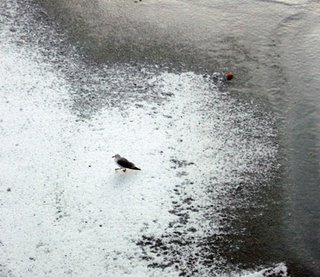
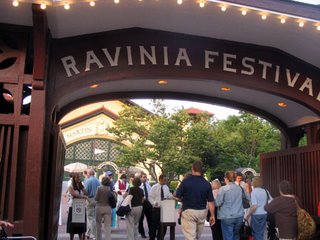
Winter - It Will Actually End? - With subzero cold leaving the Chicago River covered in ice in the first time in years, and our East coast compatriots buried in up to ten feet of snow, it's enough to make you momentarily doubt global warming, or even wonder if Spring will ever come. A hopeful answer came this week, not from a groundhog, but from the Sunday New York Times, which is carrying a full page ad announcing this summer's schedule for the Tanglewood Festival, for which tickets go on sale today. Ravinia's former long-time Music Director James Levine will lead performances of The Damnation of Faust, Bluebeard's Castle, and the full, four-act version of Don Carlos with Patricia Racette, Johan Botha and Samuel Ramey, as well as a sequence of fully-staged performances of Cosi Fan Tutte. It tends to be a little pricey, though - top tickets going for just a buck less than $100.00, versus a typical $50.00 top at last year at Ravinia, although Tanglewood wins out for the lowest priced seats - $18.00 versus Ravinia's $20.00. See the full schedule here.
CSO Still Top Ten - Meanwhile, Financial Times Music Critic Andrew Clark writes how, despite an increasing roster of quality orchestras worldwide, the list of the best of the best is pretty much the same as it was fifty - or even a hundred - years ago. According to Clark, while an exceptionally inspiring conductor like Mariss Jansons or Simon Rattle can make an ensemble like the Oslo Philharmonic or City of Birmingham Symphony appear world class, the quality of play seldom endures after their departure, and we're left with the usual suspects, which in America means the inevitable "Top Five" - New York, Chicago, Philadelphia, Cleveland and Boston. In Clark's own current global top ten, James Levine's Met Orchestra replaces Maazel's New York Philharmonic, Eschenbach's troubled Philadelphia doesn't make the cut, and the Chicago Symphony is grudgingly included, despite its "over-dominant brass" making it the embodiment of "pure American beefcake," which is pretty funny, when you consider that it's largely the product of two Hungarians named Reiner and Solti. Read it here.

Thursday, February 08, 2007

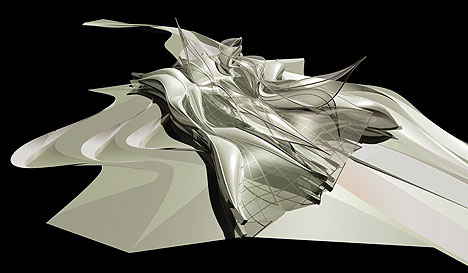
Urbanlab Wins City of the Future


The History Channel announced this morning that the Chicago firm Urbanlab has won the $10,000 first prize in the The City of the Future Competition for their vision of Chicago in 2106. The firm had already won $10,000 for winning the Chicago leg of competition, and now wins an additional $10,000 for beating out entries from similar competitions in New York and Los Angeles. The winner was selected by the public via the City of the Future website.

The award was announced by architect Daniel Libeskind, who served as "national competition juror." "UrbanLab is thrilled to have been named the National Winner of the City of the Future competition," said the firm's Martin Felsen, "especially considering the high caliber of ideas and proposals generated by the competition participants. We’d like to thank The History Channel for providing such an important forum, at a pivotal time, for an open discussion of future design directions of our cities.”

Read my take on the competition, and see the pictures here.

Thursday, February 01, 2007

Bruce Mau Heads South - Chicago's New Burnham?

Via Archnewsnow - and as tipped by Edward Lifson last November - the Toronto Star's Martin Knelman is reporting that graphics designer and futurist Bruce Mau will be opening a Chicago office by the end of June. And while a spokesperson for Bruce Mau Design says a personal move is not finalized, Knelman says Mau has told friends he's been shopping for a Chicago house and checking out schools for his three children.

Why Chicago? An increasing amount of Mau's business is in the United States, and Knelman reports a number of those clients don't like having to cross the border to meet with him in Toronto, an annoyance that will only increase now that the U.S. State Department is requiring passports even for trips to and from Canada.

The other major reason stated is that Chicago, from the mayor on down, "embraced" Mau's manifesto exhibition, Massive Change, when it ran at the Museum of Contemporary Art last fall, while, according to Knelman, the response to show in Mau's home town was more reserved. If Mau is expecting the type of fawning he received here to continue in perpetuity, he'll be in for rude awakening. Chicago, ultimately, is a tough town, with an allergy for puffery no matter how well intentioned. Massive Change was Mau's Chicago romantic courtship. Moving here will be the marriage, when you find, usually through a painful period of adjustment, that your spouse is not just a reflection of yourself, but a separate person with his or her own obstinate and not always subservient traits, habits and opinions.

Still, Chicago was built by people who grew tired of where they came from and fell in love with the city, in all its contradictions. Think Sullivan, Mies, Daniel Burnham. If Mau can disenthrall himself from the flatterers - sycophancy is one of Chicago's baser failings - and really engage the city, warts and all, he could be the next name in that line.

Last Three Days to Vote for your City of The Future

This Saturday, February 3rd, is the last day to vote in the History Channel's The City of the Future Competition, which asked participants to imagine the city of 2106, a century hence. If you follow the link, you can see info on all three finalists, and well as the path to casting your own vote for who should get the $10,000 first prize.

The more I look at this, the more I think the entry of Chicago's UrbanLab is truly the best of the bunch. And while I may be accused of local boosterism (Go Bears!), I'm thinking that after you examine all three, you'll come to the same conclusion. Read all about it, and see the pictures here.

Tuesday, January 30, 2007

Wither SOM? and American Architectural Education Looks the Other Way - Two Great Reads

Wither SOM?

In A New Order, appearing in the February issue of Chicago Magazine, Jay Pridmore creates a compelling portrait of megafirm Skidmore, Owings and Merrill at a point in its history when new blood like David Childs' protege Ross Wimer is being brought in from New York even as long-time mainstay Adrian Smith leads a group of architects out the door to form his own new firm, Adrian Smith+Gordin Gill Architecture.

Was this the right way to treat a guy who brought SOM back from dead in the 1980's? Are the recent changes a matter of Childs colonizing the Chicago office? Which Ross Wimer are we getting - the architect of the twistfest that is the soaring Infinity Tower in Dubai, or the designer of the - at least in its earliest stages - insipid proposal for a huge Olympic Village along Chicago's lakefront? Pridmore addresses all these questions - and more, in a lot more balanced way than my own leading questions.

His concise yet evocative overview of the firm's 70-year history reminds us that conflict among partners is in SOM's bones, from the original antipathy between Skidmore and Owings, to the legendary battles between Bruce Graham and Walter Netsch, and beyond, and it doesn't seem to have hurt the work, but often strengthened it. Read it here.

American Architectural Education Looks the Other Way

In the middle of the 20th century, architects fleeing Hitler came to America and changed the focus of American education from the Beaux Arts to the Bauhaus, first with Gropius at Harvard, and then with Mies van der Rohe, recharting the course of U.S. architecture from his perch as head of the school of architecture at IIT in Chicago.

It was a process portrayed as a descent of vampires in Tom Wolfe's 80's screed, From Bauhaus to Our House, but now it's the influence of Europe that is being threatened with being pitched into the dumpster, and not in a way from which Manhattan's greatest surviving dandy will necessarily draw comfort.

Don Lee of the Los Angeles Times has a great article on the USC School of Architecture's new dean, Chinese architect Qingyun Ma, whose own firm, MADA s.p.a.m., headquartered in Shanghai, is making waves both on the mainland and internationally, with work that touches on both the great cities and distant farming villages. And Ma is not alone - Japan's Hitoshi Abe will become head of UCLA's department of architecture beginning this spring.

"American education has cultivated strengths in your own reasoning process." Lee quotes Ma as saying, "If you come up with a hypothetical and you develop your own operation rationale, and the end product can fulfill that line of reasoning, then it's judged to be good. In China, the judgment is oftentimes poetic, literature and all those intuitive things rather than rational processes." Frank Lloyd Wright and Frank Gehry: secretly Chinese? Read it here.
Sunday, January 28, 2007

Catch a Thief - Do You Know This Man?

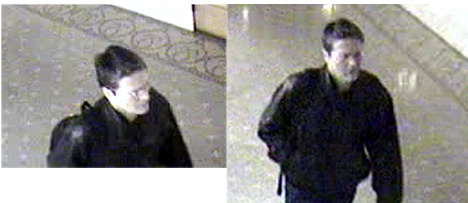
Is there anything lower - and more pathetic - than a dour young man who lifts what he thinks is a valuable newel post from one of Chicago's greatest landmark buildings and walks away with it stuffed into his backpack? Below is pictured just such a man:

Do you know who he is? And if do, could you let us know? On the afternoon of January 12th, this guy was caught on surveillance cameras walking into the 1890's Monadnock Building and nonchalantly stealing the newel post from the staircase. See all of the surveillance pictures and read the rest of the story here.

Friday, January 26, 2007

Moses is Risen?

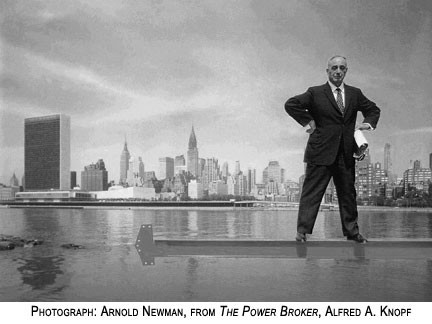
Robin Pogrebin, the always reliable New York Times architectural writer, has a fine article this week, Rehabilitating Robert Moses on three upcoming exhibitions - at the Museum of the City of New York, the Queens Museum of Art, and Columbia Unversity - that seek to provide a fresh look at the work of Robert Moses, the master builder of New York whose increasingly unchecked reign ran for almost four decades. (The article is accompanied by a good short video, produced by Erik Olsen.) As described by Pogrebin, the exhibitions seek to reverse the ultimately harsh judgement of writers such as Jane Jacobs, and, most decisively, Robert Caro, whose massive 1974 biography of Moses, The Power Broker, remains one of the great books of the 20th Century. The organizers of the new exhibitions apparently seek to expunge Caro's shadow on Moses's reputation, to the point of making the author a nonperson. According to Pogrebin, Caro was not invited to even one of the symposiums organized in connection with the shows.

We seem to have now reached the point where Moses has been dead long enough for people to lust after his ability to get things done, without being inconvenienced by any personal memories of the often dire results.

While Moses's life is an epic, and his personality complex and often contradictory, the trajectory of his career is simplicity himself. Moses was in his prime when he worked for master politicians like Al Smith and Fiorello Laguardia, who were the clout behind his great achievements like the the stunning neighborhood swimming pools, the hundreds of playgrounds, and Jones Beach. When Moses came up with a bonehead idea like a Brooklyn Battery Bridge that would have turned much of lower Manhattan into an the underside of an overpass, they - along with FDR - had the power to stop him. It was only afterwards, when Moses had cunningly gathered up more power than any mayor or governor, and insulated himself from all accountability, that he became essentially a rogue agent, working largely for himself. The meglomania that had previously made him so effective now turned against the city, with the mass destruction of neighborhoods for highways and megaprojects that sickened rather than healed.

It's a story straight out of Lord Acton. We still can't resist looking for the man on horseback, who will rescue us from our myriad weaknesses. But for such a man to attain full force, the rest of us must become helpless and dependent. Inevitably, he will come to despise us for it, and then, because he now believes he, himself, creates reality, he will follow his whims heedless to their consequence.

Thursday, January 25, 2007

2007 Chicago Prize, Seattle Olympic Sculpture Garden's Marion Weiss at Art Institute Tonight

A reminder that this evening, Thursday, January 25th brings the announcement of the winner of the Chicago Architectural Club's 2007 Chicago Prize competition, Crossing the Drive, for the proposal to span Lake Shore Drive at Queen's Crossing, just east of Buckingham Fountain, which the city arbitrarily shut down without notice a little more than a year ago.

Beginning at 5:30 P.M. over 80 entries will be on display in the Louis Sullivan Trading Room on the Columbus Drive side of the Art Institute. If the results are anything like the CAC's previous competition on the re-use of the city's water tanks, we're probably in for a rich range of proposals from firms all across the world.

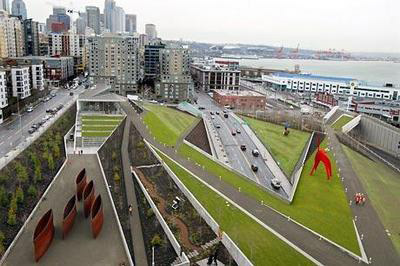
The jury is to be chaired by Marion Weiss of Weiss/Manfredi Architects, whose spectacular, just-opened Olympic Sculpture Garden has created its own crossing over railroad tracks and a highway to bridge downtown Seattle to the Puget Sound waterfront. The Seattle Art Museum project has drawn international raves. Billionaire Bill Gates was among the throng of opening day visitors, with the Post Intelligencer reporting he proclaimed the park's vista "impressive." Immediately afterwards, an agitated Steve Ballmer was seen repeatedly jumping up and down - causing the Calder Eagle to momentarily teeter on its moorings - while shouting above the roar of traffic that future vistas would never take anywhere near as much time to complete.

Around 6:30 P.M. in the Rubloff Auditorium, Weiss will present the CAC competitions two runners-up and finally the first prize winner, who will receive $5,000. Weiss will then deliver the evening's keynote lecture.

Wednesday, January 24, 2007

The Chicago Olympics - A Rude Question

On Tuesday, the City of Chicago unveiled more details of its bid to host the 2016 Summer Olympics, releasing a number of architectural renderings, including this rather handsome one of a temporary 80,000 seat stadium proposed for Washington Park, whose estimated cost, despite a reduction in seating from 95,000, is already up $60,000,000 - 20% - from an earlier estimate just a couple of months ago.

Exciting stuff, but I still have to wonder: In a city with limited capital and huge infrastructure needs - estimated at nearly $6 billion for the CTA alone - isn't there something obscene about spending $300,000,000 on a stadium that will be demolished just weeks after its opening?

AECOM Going Public

AECOM Technology, the engineering/consulting powerhouse whose massive expansion since its 1990 founding included a 1996 merger with Chicago firm McClier and who now employs nearly 30,000 people worldwide, Wednesday announced that it will be going public with an initial stock offering later this year.

Doing a 460 on the Mag Mile

The Terra Museum on Chicago's North Michigan may be long gone and its building headed for the scrap heap, with a new 40-story mini-tower by Lucien Lagrange for Ritz-Carlton on the way, but not before a few last spasms of showcase. Last October, the space turned crimson as a "pop-up" store selling the Motorola Red Slvr cellphones that kicked back a portion of each sale to "Project Red", Bono's inititive to combat AIDS in the third world, becoming the site of a media frenzy as the Irish rocker joined Oprah in a photo op trek to the store.

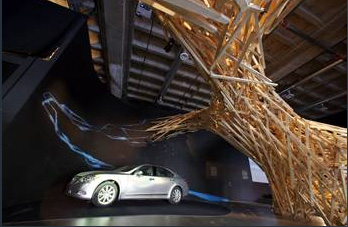
Now, beginning February 1st for a two week period, the space is again being transformed, this time as a Lexus 460 Degrees Gallery, promoting the car of the same name. The centerpiece will be an architectural installation by the Belgium designer Arne Quinze, whose Frame hard-foam furniture has a prominent place in Rem Koolhaas's new Seattle Public Library. (The illustration here is from Quinze's October install in Los Angeles). The installation will also include video art from Pascual Sisto and photography by Miranda Lichtenstein. After an invitation-only opening reception on February 1st, the "Light and Speed Exhibition" will be open to the public 10 A.M. to 6 P.M. February 2 through 15th, with test drives on the 2nd through 6th, and 8th and 9th. And Garrett's, Chicago's best pop, cheese and karmelcorn, right next door. Wipe your hands before you touch the car.

Monday, January 22, 2007

Great Moments in Marketing

From the Sunday New York Times Magazine.

You or me, we get a unit that's renovated, but if you're really special (and really rich) you get one that's remastered. And you're not just buying the unit, you're engaging in The Exchange of Power. Which is a lot tonier way of saying here's a 1902 lux office building that's going through the mill now for a second time, having been converted to apartments in 1997 and renamed The Exchange, and where in 2006 - I guess this is the exchange of power part - the residents found that none of their leases we're being renewed so the building could be recycled again, this time as high-end condo's in the renamed 25 Broad Street. (669 square-foot 1 bedroom just $797,000) Could this be where Donald Trump learned to convert friends and associates who were early purchasors of units in his new Chicago tower, jump-starting pre-sales, into patsies from whom he invoked an obscure clause in their contracts to yank back the units and keep all the profits for himself?

Sunday, January 21, 2007

Kamin uncovers latest design for Calatrava's Chicago Spire

Less than a week after it was withheld from a packed public meeting, Santiago Calatrava's latest design for the 2,000-foot-high Chicago Spire is unveiled by Chicago Tribune Architecture critic Blair Kamin. Read all about it - and see the pictures - here.