Friday, March 17, 2006

An Emerald Carpet for Mies and Wrigley

Every year since 1962, dyeing the Chicago River green has been a local St. Patrick's day ritual. Nowadays, both the dyeing and a big parade take place the Saturday before the 17th. (Next year, they'll coincide when the 17th falls on a Saturday.) It's a uniquely Chicago tradition that tips its hat to the central role the Irish have played in the city's history. The actual dye is orange. It turns green as it's churned into the water.

For a few hours every year, the architectural landmarks that line the Chicago River acquire an aquatic front yard that's as vibrant as the neon green relish of a genuine Chicago hot dog. Read all about it and see all the pictures here.

Thursday, March 16, 2006

Block 37 - The Curse Lives!


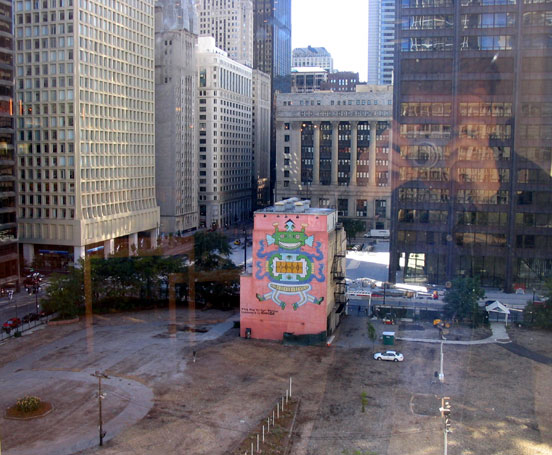
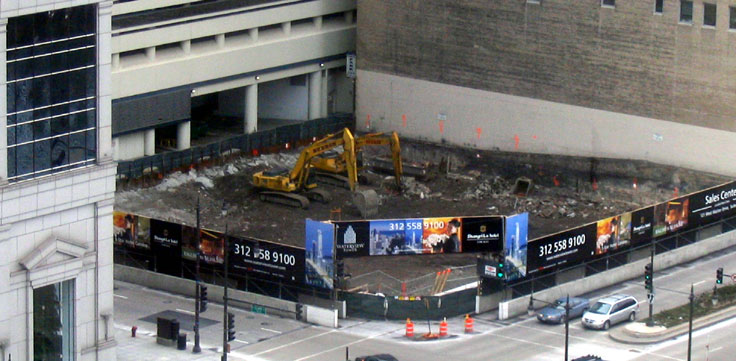
Block 37 is a prime parcel of land in downtown Chicago between Marshall Field's (soon to be Macy's) and Daley Plaza with its Picasso statue. It is infamous for having all but one of its building (a Commonwealth Edison substation) bulldozed to dust in 1989 and then remaining resolutely empty ever since, passing through the hands of several developers, as well as architects including Helmut Jahn and Solomon Cordwell Buenz.

Last November, it looked like the corner had been turned when the Mills Corporation staged a lavish party for the groundbreaking for the latest iteration of the project, which includes an office building designed by Ralph Johnson of Perkins+Will, a large retail mall along State Street designed by Gensler Chicago, and a street level studio along Dearborn for WBBM-TV designed by Jim Prendergast of Goettsch Partners. Shortly after, Mills Corporation's finances began unraveling faster than a cheap sweater, with financial regularities unveiled, key executives sent packing overnight, its German partner bailing, and Mills, itself, rushing to sell off its stake in the project.

Now, to add insult to injury, Crain's Chicago Business reports that project subcontractors have effectively shut down all work on the site as they attempt to force Mills to pay them in advance for their work. Also today, the Wall Street Journal has a story on an even more ambitious future project, a $500,000,000 shopping and entertainment megacomplex in New Jersey's Meadowlands, is now in jeopardy as Mills has hired investment bankers to shop itself around to potential buyers.

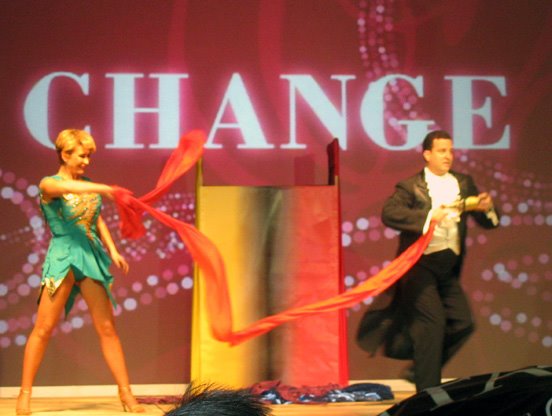
Last November's Block 37 groundbreaking included a performance by a magician and his quick-change artist partner. Maybe Mills should hire them back as consultants - their skills may be exactly Mills needs to get Block 37 back on track.

Tuesday, March 14, 2006

The future of WTTW in just one word: Exfoliation

Just when you think Chicago PBS outlet WTTW's shameless corruption can't get any worse, they manage to sink even lower. As it has for every day for the last week, Chicago Tonight was thrown off the air after half an hour Tuesday night in favor of "special pledge programming", which on this particular evening means Dr. Denese, on loan from QVC, lecturing on "Ageless Skin" and hawking her videos, exfoliating pads, creams and serums as premiums for high-end viewer contributions.

I'm not making this up. What's next? A seminar on erectile dysfunction with creepy smiling Bob from the Enzyte commercials in studio for the pledge breaks? Increasingly for WTTW, programming is little more than the filler between the commercials and the fundraising. Why not sell it all off to Barry Diller and be done with it?

Beethoven's Seventh - the Greatest Symphony?

Trying to pick one "greatest" of all symphonies reminds me of the chronically argumentative parents in Woody Allen's film Radio Days, where the father bursts into the living room and confronts his wife, "Wait a minute! Are you telling me you think the Atlantic is a greater ocean than the Pacific?! "

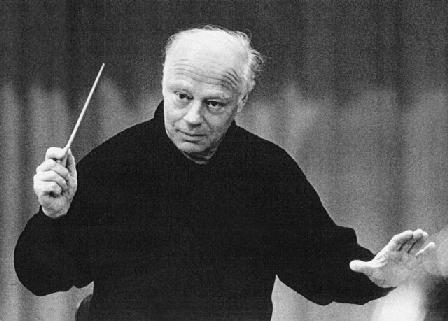
Be that as it may, the Chicago Symphony Orchestra performance conducted by Bernard Haitink last week reminded me once again why I believe the Seventh may have no equal. To some degree, it's a sentimental choice. It was a performance of the infinitely beautiful Allegretto in a performance by George Szell and the Cleveland Orchestra that first turned me on to the power of classical music over three decades ago. (I purchased the record from a bargain bin at the old Rose records as a "cutout", marked as a discontinued, price-t0-clear title by a small round hole punched through the upper corner of the cardboard sleeve.)

All of the Beethoven's other great symphonies are mired with extra-musical associations, beginning with Eroica, with its dedication to Napoleon that the composer tore up after Bonaparte embraced tyranny. The Pastoral, with its bird calls and lightning strikes - what else needs to be said? The 9th, of course, is where Beethoven hedged his expressive bets by overlaying Schiller's hymn to brotherhood over the music of the last movement. And no one can forget how the militaristic Fifth was appropriated as an anthem of victory by both the Allies and Nazis during World War II.

Despite Wagner's description of it as "The apotheois of dance", and Thomas Beecham's likening the scherzo to "a bunch of yaks jumping about," the Seventh has escaped being compromised by nonmusical associations. It resists any tone poem-like narrative. It simply is.

The masterful Haitink/CSO performance made this crystal clear, especially in the Allegretto. In most performances it takes on a mournful, death-march quality. Under Haitink's baton, it moved briskly, as it should, stripped of sentimentality, its profound sad beauty not worn on the sleeve but flowing organically from its innermost structure. And that momentum carried through all the way to the propulsive final Allegro Con Brio, where in the concluding bars the music seemed to lock into our own bodily rhythms - pulse, breathing, brain waves - and, for a few ectastic moments, the floor dropped from beneath our feet and we were transported to a state of pure energy. No subtitles required.

Monday, March 13, 2006

Goose Droppings in Grant Park and a Calendar Correction: LPCI Historic Columbia College lecture this Thursday


The idea of massive piles of droppings from the expanding populations of non-migratory geese that are making Grant Park their home sounds pretty funny until you're the one inadvertantly stepping into them. It's a topic being taken on by the Grant Park Advisory Council at a meeting at Daley Bicentennial Plaza Monday night. Also, a correction: Anne McGuire's LPCI Preservation Snapshot lecture on the preservation of the historic buildings that have been incorporated into the Columbia College campus is this Thursday, at 12:15 at the Cultural Center.

Also up this week, Snøhetta's Craig Dykers lectures at the CAF Thursday at 6:00 as does Sam Marts, on Timber Framing in Chicago, at 12:15 Wednesday. There's a reception and book signing for Perkin+Will's David Hansen's recently published Architect: Reshaping Corporate Culture at the Prairie Avenue Bookshop at 6:00 at Wednesday, and at Thursday's Chicago Plan Commission meeting, 42nd Ward Alderman Burton Natarus will be seeking to push through an amendment to the city's Planned Development ordinance to erase restrictions standing in the way of Santiago Calatrava's proposed 124-story Fordham Spire. Read about all these week's events on the March architectural calendar.

Sunday, March 12, 2006

A Different Take on Density in Tijuana and San Diego - Ouroussoff on Teddy Cruz


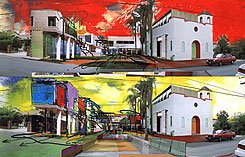
This Sunday's New York Times includes an excellent piece by architecture critic Nicolai Ouroussoff, that discusses the distinctive work of architect Teddy Cruz, of estudio Teddy Cruz. Like Orson Welle's Touch of Evil, it's a lot about crossing borders, in Cruz's case, in discovering connections between San Diego to the north and Tijuana, separated by a ten foot-high steel wall, to the south. Ouroussoff relates how Cruz has found an alternative to the affluent gated suburbs in California in a radically different concept of urbanism in Tijuana that draws on local traditions and supports the working poor.

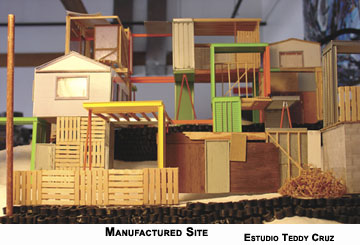
I first came across Cruz's work in Out of The Box: Design Innovations in Manufactured Housing, an exhibition that ran at the Field Museum last year. While some critics almost disdainly considered Cruz's entry, Manufactured Site, out of place among others that attempted to rebrand manufactured housing as designer pre-fab, I thought Cruz's work really got to the point. Despite the often splendidly inventive concepts of the other architects in the Field's exhibition, making pre-fab more than a niche product among the affluent seems a long-shot battle - the predominant aspiration still seems to be as large a house on as broad a plot as the mortgage holder will allow, built preferably on virgin farmland far away from toxic center-city cores.

Cruz takes on, instead, the central problem of housing the burgeoning populations of immigrant and working poor. We've seen how not to do this in the dreary high-rises of suburban Paris that became stagesets for recent riots. Rather than imposing what's best for them on populations without the economic clout to resist, Cruz draws on the methods that locals use to survive and creates an alternative that offers the choice and variety that bureaucracies seldom think the poor deserve.

As I said last March:

Cruz describes San Diego as "the Home Depot of Tijuana," from which discarded materials such as wooden pallets, garage and refrigerator doors, tarps, plywood - even entire houses slated for demolition - make their way across the border to be re-assembled into housing for the poor. Inspired by "the resourcefulness of poverty," Cruz's concept is a third-world revival of the Sears catalog house. Families would receive a kit with an assembly manual, a snap-in water tank, and 36 frames that can be placed in a variety of configurations, serve as frames for concrete poured on site, or to incorporate materials found nearby. Cruz would pair San Diego non-profits with local Mexican government officials to funnel money to the “maquiladora industry” - corporations that have built plants in Mexico to take advantage of a labor force characterized by low wages, no health care, and no unions - which would fabricate and distribute the kits, “to give back to the communities it exploits.”
The New York Times article includes a generous complement of photographs and renderings and should be up for free for at least the next week. (registration required.)

Thursday, March 09, 2006

Historic Chicago Vista Trumped Out

Click here for a larger view.
Things change. The mostly unlamented modernistic Sun-Times Building is now long gone, along with its secluded oasis garden, and the 1,362-foot-high Trump Tower is now rising on the site. The new building, a sleek steel-and-glass edifice from SOM's Adrian Smith, has its own charms, and will be a ready-made landmark on the Chicago skyline when it's completed in 2008.

But with change, however, things get broken, and the rise of the new tower brings the loss of one of Chicago's great urban vistas: the view down Wabash Avenue to the the high, colonnaded dome of Thielbar and Fugard's 1927 neo-classical Jewelers Building. It's probably as close as we're ever going to get to the view down Congress, towards an almost distressing phallic new City Hall at Halsted, as proposed by Daniel Burnham's 1909 Plan of Chicago and illustrated in a series of famous renderings by Jules Guerin.

Because of the way Wabash makes a diagonal shift to the west just before it hits the river, the site of Trump's new building actually crosses the street's path, and you can already see in the tall crane and low stumps of the first pours of the concrete columns exactly how the structure will completely obliterate the view of the Jewelers Building and subsume it's role as Wabash's visual terminus. Not necessarily bad, but certainly a very different character. Take a final look at the current view while you still have the chance.

Tuesday, March 07, 2006

Koolhaas from Bangkok to Louisville - Never Throw Anything Away

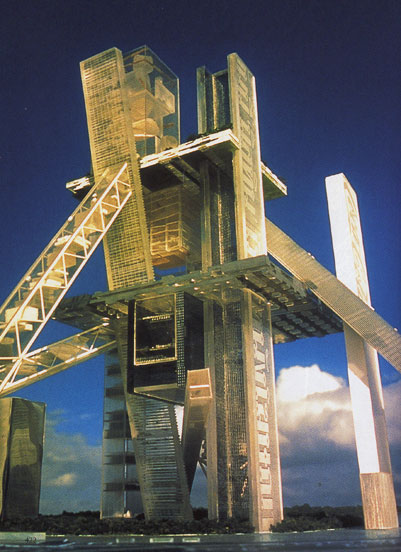
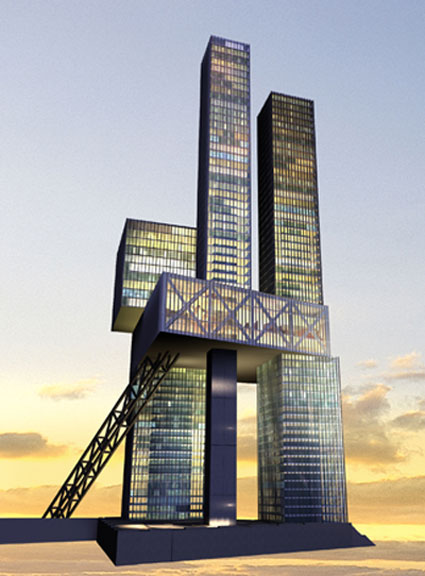
Thumbing through Rem Koolhaas's 2004 compilation Content, I came across a section I had forgotten: "The Hyperbuilding - OMA's brief, titillating brush with sci-fi." a proposal for Bangkok, Thailand - "a city on the edge of the tolerable (which) offers the perfect context in which to test these theories." The theories are for a "self-contained city", a 1,000-meter-high "mass of thin towers and blocks of program."


Bangkok, Thailand (left) Louisville, Ky (right)

The idea went nowhere, but Koolhaas and his collaborator Joshua Prince-Ramus are nothing if not persistent. Once they develop a theory, they kept refining it, often through several unsuccessful competitions or pitches, until they finally find a willing client. Who would have thought the client for OMA's wildly radical hyperbuilding would be found not in Tokyo, New York or China, but along the banks of the Ohio River, in Louisville, in the recently announced Museum Plaza project. It's not unlike how OMA's Seattle Public Library is a direct extension of their thinking for losing entries in competitions for a library in Jussieu and for the National Library in Paris, where the concept of floating programmatic elements within a large rectangular void can also be seen in simplied form in the Wyly Theatre project in Dallas, where programs are stacked vertically in an 11-story-high glass cube.

Searching for Embarrassing Architecture and Lagos: World City of the Future?

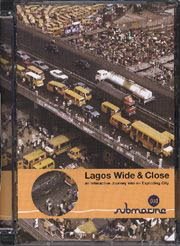
I've just been looking over the Prairie Avenue Bookshop's February email of new arrivals, and what caught my eye was not a book, but a DVD, Lagos Wide and Close: An Interactive Journey Into an Exploding City, a documentary by Bregtje van der Haak, who followed Rem Koolhaas around for two years as the architect worked on researching the urban condition of the Nigerian city of 14,000,000 that is adding 21 new residents every hour. Koolhaas sees Lagos as a prototype for his concept of a "culture of congestion", where the traffic jams are so pervasive and severe that impromptu trading markets break out amidst the stalled vehicles. This Harvard Design School Project on the City was discussed in Koolhaas's 2001 compilation Mutations, but has still to produce a final book, as projects on shopping on China did previously. Perhaps the type of rapid change Koolhaas and his team are trying to document can no longer be captured on a static, printed page, but only through full-motion video.

Prairie Avenue's list of new arrivals includes monographs on Shigeru Ban, Richard Neutra, Herzog and de Meuron, etc.,etc., but one book stands out solely on the basis of its title, Starving for Embarrassing Architecture. The book combines photos of "vernacular architecture" in L.A. with interviews that quiz residents about what they see as "ideal and utopian living and working spaces." The author sees "'embarrassing architecture' as a liberation from the formal and static rules of architecture." In Chicago, we could use a little more embarrassment as an alternative to the willfully characterless high-rises that are overtaking more and more of the center city.

The Prairie Avenue Bookshop, Chicago's - and perhaps the world's - largest architectural bookstore, will be sponsoring two book signings this month. The first, on Wednesday March 15th will feature David A. Hansen, Architect and his book Reshaping Corporate Culture. The second, Houses: The Architecture of Nagle Hartray Danker Kagan McKay Penney, will take place on Wednesday, March 29th. The Bookshop is located at 418 South Wabash, 800/474.2724

Monday, March 06, 2006

IIT's Robertson and Thirst/3ST's Valicenti honored

Donna Robertson, the Dean of the College of Architecture at IIT who has seen enrollment at her school explode and the campus's first new construction in almost four decades with striking new buildings by Helmut Jahn and Rem Koolhaas, was named last week a Fellow of the American Institute of Architects. She will receive a fellowship medal at ceremonies during the AIA's 2006 annual convention in L.A. this coming June. Fellows number less than 2,500 out the a total membership of nearly 78,000. Chicago architects also elevated to AIA Fellows this year include James Baird, Paul Florian, Holly Gerberding, Philip Hamp, Thomas Hoepf, Helen J. Kessler, Dennis Rupert, and Mark Sexton.

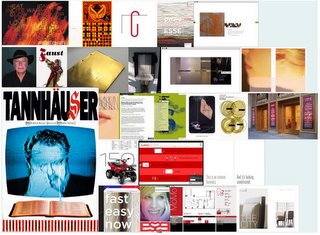
And speaking of IIT, the designer of the school's spring lecture poster, Rick Valicenti, of Thirst/3ST is one of three graphic designers winning the 2006's AIGA Medal, which will be awarded at the American Institute of Graphic Arts Design Legends Gala in New York this coming October. Valicenti was cited for "he passion and intelligence of his influential work, his inspiration to his colleagues and his mentorship to a generation of students." Valicenti's portfolio includes work Wired Magazine, for Lyric Opera, (including the poster for it's landmark 1989 Peter Sellars production of Wagner's Tannhauser that reset the work in the world of today's televangelists), for Smithfield Properties including the MOMO website, and a corporate identity campaign for 4240 Architecture.

Friday, March 03, 2006

God vs. Mammon on East Wacker


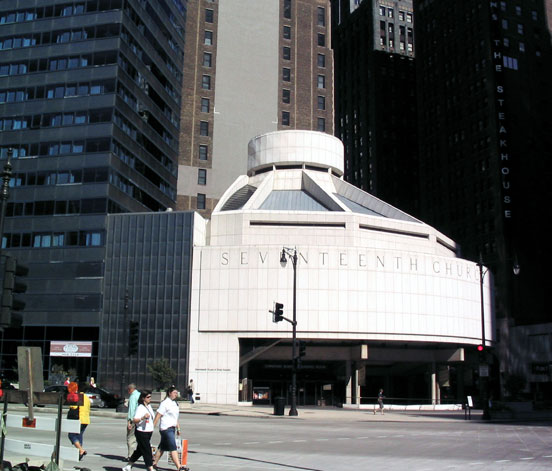
Harry Weese's 1968 Seventeenth Church of Christ, Scientist at 55 E. Wacker Drive is a perfect example of how it's often not the oldest architecture, but that closest to our time that's most in danger of destuction. It's not on the list of the Chicago Historic Resources Survey of important Chicago buildings, which doesn't anything built after 1940. The list was completed way back in 1995, and has yet to be updated, so that a masterwork like Bertrand Goldberg's Prentice Hospital remains completely unprotected. Northwestern Hospital and University have moved quickly to demolish old facilities like the neo-Gothic Wesley and Passavant Pavilions, and it's likely they've already signed Prentice's death warrant, and will dare anyone to stop them from carrying it out.

On February 17th, the Chicago Tribune reported that the developer who owns the 1928 Art Deco Chicago Motor Club tower has had problems redeveloping the property, and is looking to make the Church of Christ just around the corner part of a larger, more viable combined development parcel. According to reports, he's wooing church members to let me build over their church, or even demolish it.

Weese's church is far from perfect - the recessed, lower level garden tends to be little more than a dark moat, but Weese managed to use concrete to create a building that carries echoes of big-boned Gothic while being completely modern. The way its curving concrete facade turns the corner and its low exposed-ribbed, disc-topped dome counterpoints the angular skyscrapers all around it make Seventeenth Church of Christ one of the most graceful buildings on Wacker.

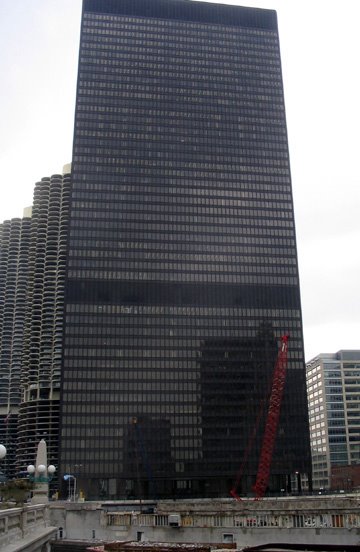
This Monday, March 6th, docomomo-midwest, the local chapter of the global organization dedicated to documenting and preserving modernism, is taking the bull by the horns by sponsoring a lecture by architectural historian Rolf Achilles. It's free for docomomo-midwest members, $8.00 for non-members. The lecture will begin in front of the curch at 55 E. Wacker, and continue in the offices of Perkins+Will in Mies van der Rohe's IBM Building, where you'll need a photo ID to enter.

You can make reservations via email.

Wednesday, March 01, 2006

What Becomes a Parking Garage Most?

There are two basic schools of thought regarding the design of parking garages. The first could be said to be the "honesty first" approach. Cars have minimal physical needs in terms of shelter, and no sense of aesthetics. The best garages, therefore, are like really big closets: we don't expect them to be beautiful - just an efficient place to store out stuff. In architecture, the homely, if frankly presented, can even gain our admiration. A good example would be Harry Weese's parking garage on South Federal, next to his striking Chicago Metropolitan Correctional Center, where he gives absolute minimalism his highly personal stamp. Bad examples, alas, abound, such as the huge and stupid garage behind 900 North Michigan, and the podium of just about any "plop architecture" condo tower you can name.

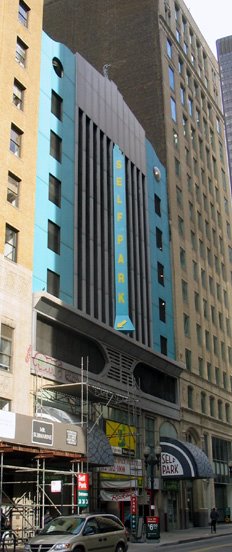
The second could be named the "silk purse" approach. A prime example would be Stanley Tigerman's witty self park on east Lake Street, but the variations are endless. At DeStefano+Partners' One South Dearborn, the cladding over the garage is lightened by a series of six-story high vertical glass louvers along Madison. Often, the ramp, itself, becomes the ornament countering the severity of the garage proper. Think of the spiral ramp at the John Hancock Building that provides a bravura counterpoint to the expressionless dead windows of the garage floors. At James Goettsch's 111 S. Wacker, the bottom of the ramp becomes a sculptural element in the ceiling of the lobby. At Ralph Johnson's Contemporaine, the exposed ramp becomes a stage set bit of urban theater.

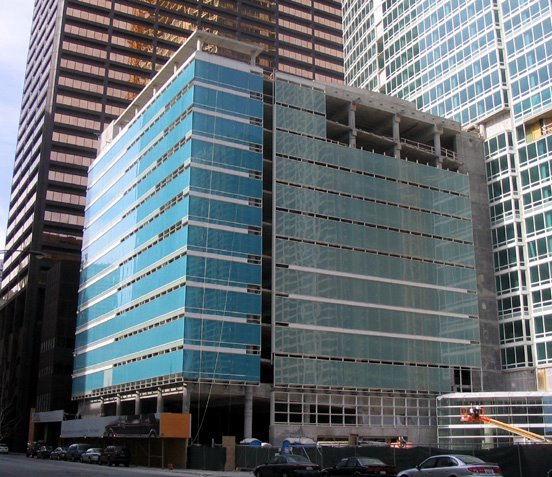
The garage for Solomon Cordwell Buenz's new condo tower, The Streeter,
on east Grand right next to another Harry Weese classic, the former Time-Life Building, may not be the same league, but it's a graceful solution. The structure is essentially a smaller bustle to the main building, and its' clad in two different tones of glass, tending toward turquoise along Grand, and a sea green along its eastern facade. Unlike the tower, where it's an insistently expressed grid of spandrels and mullions, the curtain wall on the garage reads as continous bands of glass along each floor, each topped out by white spandrel and/or short strip of clerestory windows. It provides a bright counterpoint to the warm Cor-Ten tones of its strong-boned neighbor to the west.

Tuesday, February 28, 2006

New issue of Edward Mazria's Architecture2030 E-News now online


Issue 1 of the on-line journal architecture2030 is now on-line, and includes a story on the Goddard Institute's James Hansen recent lecture, Is There Time to Avoid 'Dangerous Anthropogenic Interference' With Global Climate? architecture2030 is work of green architect Edward Mazria. Mazria will also be speaking, along with Sprawl: A Compact History author Robert Bruegmann at the AIA's two-day development conference March 9th and 10th.

And a late addition to the March calendar: This coming Friday, March 3rd at 7:30 P.M., the Rev. Dr. John Cook, former Divinity School Professor and Dean of the School of Sacred Music at Yale University as well as an internationally renowned expert will lecture on Housing the Sacred, Building the Protestant Church in America, at Winnetka Congregational Church.

Monday, February 27, 2006

From Mies' birthday to Walter Hood, Craig Dykers, Joseph Rosa, Lee Bey and beyond - nearly 50 events on March architectural calendar

Salute Mies van der Rohe with one of his signature martinis at his birthday party at IIT, hear lectures by Walter Hood, Brad Cloepfil, Craig Dykers, the Art Institute's new curator of Architecture and Design Joseph Rosa, and Lee Bey, dance the night away at fund-raising galas for the Chicago Architecture Foundation and the Landmarks Preservation Council as it salutes Los Weisberg. The March calendar of Chicago architectural events is bubbling over with almost 50 events, including a scheduling train wreck on March 2nd that includes not only the Mies celebration at IIT, but John Vinci talking about Pilgrim Baptist at CAF, and the announcement of first round winners in the Chicago Architectural Club's Learning from North Lawndale competition. Check it all out here.

Saturday, February 25, 2006

Becker discusses blogs, the internet, and the arts on Edward Lifson's Hello Beautiful Sunday morning


In cyberspace, even Max Reger has his own website. How have blogs and internet affected the arts? That's the question under discussion on this Sunday (February 26) morning's Hello, Beautiful, Edward Lifson's show on WBEZ 91.5 FM. Lifson has just started up his own blog, Teatro Lifson, and, still under the spell of the heady mania we all experience when we first realize we can be our own publishers, he's assembled a panel to discuss how blogging and the internet are - or aren't - changing the arts. It's scheduled to include Terry Teachout, drama critic of the Wall Street Journal, music critic for Commentary, and, with Chicago's Laura Demanski, creator of the About Last Night blog, Barbara Koenen, creator of the Chicago Artists Resource website, and myself. Will culture ever be the same?

The show runs from 10:00 to 11:00 A.M., CST. If you're not in Chicago, you can hear the program over WBEZ's streaming audio by going to their home page, and clicking on the Live Webcast in RealAudio link at the top of the page. Later in the week, the broadcast should also be available on the Hello, Beautiful audio library page.

Thursday, February 23, 2006

Mies' M & M goes C of A

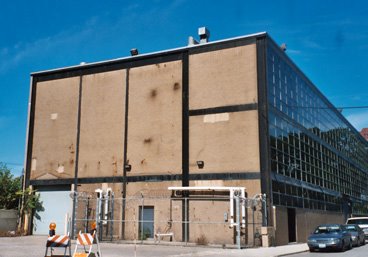
Last night, IIT Professor and architectural historian Kevin Harrington gave a highly informative lecture on Mies van der Rohe's Minerals and Metals Building. In the 1930's, Chicago's Armour Institute, soon to be renamed the Illinois Institute of Technology, brought Mies to Chicago to take over its school of architecture and design a new campus. It wasn't until 1942, however, that he was finally able to complete his first structure for the campus, the Minerals and Metals Building. Far less known than Crown Hall, it’s the building where Mies began to work out a new form architecture that would soon redefine modernism through the world. Recently, it’s been taken over by IIT’s rapidly expanding College and Architecture. I hope to soon write about Harrington’s lecture in greater depth. For the moment, here are some very informal photos to give you an idea of this unique building, whose two-story great hall hosted Wednesday night's lecture.


Wednesday, February 22, 2006

Sullivan & Wright's Charnley House seeks docents for tours


The Charnley-Persky House Museum Foundation is looking for individuals to undergo four weeks of training to become docents for tours of the historic 1891-92 Astor Street mansion. Topics covered in the Saturday sessions (1:00 to 4:00 P.M. each week) will include clients lumberman James Charnley and his wife, Helen, their architects, Louis Sullivan and Frank Lloyd Wright, a detailed walk-through of the house and an overview of the Gold Coast area. The fourth Saturday will switch to Madlener House, the current home of the Graham Foundation, which is also included in Saturday public tours of Charnley. Interested volunteers should contact William Tyre, Manager of Programs, at 312/573.1365 or via email.

Tuesday, February 21, 2006

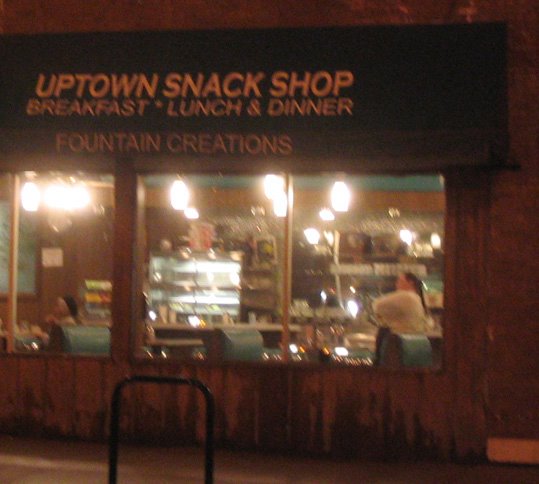
There Goes the Neighborhood - After 47 years, neighborhood gem Uptown Snack Shop is forced out of business

After 47 years in business, the Uptown Snack Shop, a neighborhood institution, was given 30 days notice to vacate, and will close this Saturday, February 25th. With a brand-new Borders, once-posh Uptown is struggling to cast off its long held status as a refuge for the city's poor, and the museum-quality Snack Shop has found itself in the way. Read all about it and see the photo's here.

Monday, February 20, 2006

Clueless Art Critic Rips ABC State Street Studio Signage

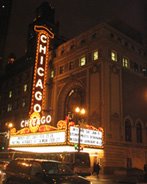
As a postscript to our post of February 9th, Tribune art critic Alan Artner has weighed in with an amazingly clueless piece ripping of the new ABC State Street studio LED, having apparently swallowed hook, line and sinker, without any evidence of independent thought, the station's PR declaring the 40 foot high video board a "sculpture" rather than signage. Artner bitches and moans how - surprise, surprise, surprise - it's not really a work of art, but a source of light pollution. Earth to critic: this is an entertainment district, not his empty idea of elysium. Artner is more than old enough to remember State and Randolph in their primes, when they were ablaze with gloriously over-the-top signage, such as the late, lamented marquee of the United Artists. The ABC concoction is a modern day counterpoint to the iconic Chicago theater sign and marquee, which is in no need of Artner's wagging finger to more than hold its own against the newcomer across the street.

Saturday, February 18, 2006

But Isn't Playing God the Whole Reason We're Here? Thoughts on Edward Lifson's oath for city planners, developers and architects


With Trump Tower now rising out of the ground and beginning to block the gorgeous, unobstructed view of Mies van der Rohe's IBM Building we've had since the old Sun-Times building was torn down, Edward Lifson, host of WBEZ's Hello Beautiful, who would had preferred to have had the view maintained with a open plaza, has been prompted to post on his Teatro Lifson blog his version of Hippocratic Oath, this time targeting city planners, developers, and architects.

Well worth a read, it's a highly idealistic call for modesty and urbanity. Some of the points - an obligation to the less fortunate (see: Archeworks), and the emphasis on the importance of craftsmanship, for example - draw on long Chicago traditions. (Although the way the Chicago architectural establishment invoked craftsmanship in their condescending trashing of Rem Koolhaas Student Center at IIT reminds me of a quote attributed to Goethe, "If the artist is not also a craftsman, the artist is nothing, but calamity: most of our artists are nothing but craftsmen.)

At Lifson's invocation, "Do not play at God!" I must draw the line. What is human life but trying to grasp within that fleeting intermission of an eternal sleep a taste of unfettered power and being? What is life for an artist or architect than to be able to think you've finally found the answers that have eluded everyone else, and, in the words of the poet:
To have squeezed the universe into a ball
To roll it toward some overwhelming question,
To say: "I am Lazarus, come from the dead,
Come back to tell you all, I shall tell you all" -
Only to have the world respond:
"That is not what I meant at all.
That is not it, at all."
The glory and the horror and architecture is how clearly it reveals our innermost aspirations, whether result be the Acropolis or Las Vegas. To ask a developer or an architect not to build is like asking a dog not to scratch. Our most natural impulse is to do what comes naturally (marketing to the reptillian brain, anyone?), and although it may be fought in finely tailored suits, in wood-paneled boardrooms, the battle to shape our built environment is a take-no-prisoners wrestle amongst both the most indolent and most aggressive elements of our deepest pysche.

That's just my initial take. There's much to think about in Lifson's oath. Check it out.

Tuesday, February 14, 2006

IIT lecture by Patricia Kelley among late entries to February calendar


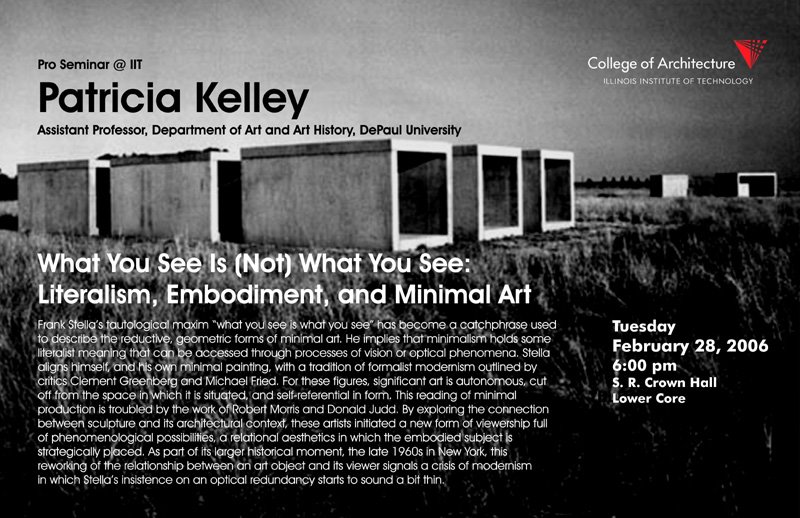
What You See is (Not) What You See: Literalism, Embodiment, and Minimal Art, is the title of a lecture to be given at 6 P.M., Tuesday, February 28, 2006 at Crown Hall on the IIT campus of Patricia Kelley, Assistant Professor, Department of Art and Art History at Depaul.

As of this moment, you can also still make reservations to hear Robert Bruegmann talk about sprawl this Wednesday, February 15th, at 6:00 P.M. at the Chicago Architecture Foundation, on a panel that will also include John Norquist, former mayor of Milwaukee, and current President of the Congress for New Urbanism.

Monday, February 13, 2006

Waterview Tower - Class Conscious Facades?

Work has begun on the site of what will be the Waterview Tower, an 82-story high mixed used development on newly reconstructed Wacker Drive at Clark Street, along the south bank of the Chicago River. In Sunday's Chicago Tribune, Blair Kamin writes of a twist in the design of the 1050 foot high tower, by Teng & Associates' Tom Hoepf, that leaves the upper stories resembling "a right triangle." Viewed from the east, the side of the big money of Michigan Avenue and Trump Tower, the building is a razor-thin 32 feet wide. Viewed from the west, from what could be called the "service entrance" side of the building facing the more workaday environs of the West Loop, it grows both wider, blunter and less graceful: less Twiggy, more Margaret DuMont. More wrapper, more views, more revenue.

It puts me in mind of another Tromp d'oeil building, Asbury Plaza at Dearborn and Chicago, which, viewed from the corner, conceals its 300 foot long bulk to appear as a bafflingly small, square tower.

From one rendering, it appears Waterview Tower's south facade will mediate with a certain amount of panache between the wide and narrow of the east and west facades. I'm probably more concerned about what appears to a tall, sheer blank wall along Wacker and Clark, above the retail, covering up the parking garage, which the floodlighting shown in the drawings may not be able to redeem from an oppressive street presence.

The slightly schizoid faces of Waterview Tower is actually a good personification of the way the project is trying to bring luxury to uncharted ground. The trains of the Loop elevated screech along their rails just a half-block south. Not that long ago, the area was home to the Shangri La, a soft-porn movie theatre torn down to make way for what is now the Renaissance Hotel. Now, Waterview Tower is to include the first Chicago outpost of the five star Shangri La hotel chain, as well as condo's that start at close to a million and just keep going up from there. Its being constructed on the last unbuilt parcel along West Wacker Drive, a surface parking lot that's been there for decades. It joins such skyscrapers as the Leo Burnett Building and 77 West Wacker, and probably puts a big red redevelop-me "X" on the C.F. Murphy's handsomely brutalist 55 West Wacker, a big building in 1968 that now finds itself a shrimp in a tank of giant lobsters.

What with Trump Tower, and Calatrava's Fordham Spire, it's astonishing there's still unquenched demand for this kind of king's ransom housing. Maybe after prospective owners work out their mortgage payments, the proximity to cheap public transportation will seem a major selling point.

Friday, February 10, 2006

OMA cooks up whole stack of Mies for Louisville


"I do not respect Mies," Rem Koolhas has written. "I love Mies . . . I do not revere Mies." Nowhere is this in greater display than in OMA's design, unveiled yesterday, for the $380,000,000 700 foot tall Museum Plaza in Louisville, whose upper reaches look like Koolhaas and OMA design partner Joshua Prince-Ramus took Mies' IBM and Seagram Buildings and stashed them atop a high shelf. Read all about it here.

Thursday, February 09, 2006

New ABC 7 State Street Studio Nears Completion in Historic Chicago Theater

It's long past the Fall 2005 opening that was anticipated at its groundbreaking last April, but ABC 7 Chicago's new sidewalk studio on State Street finally seems to be nearing completion. Within the past week, a 40 foot-high curving video panel has been illuminated with everything from the ABC logo to views of the lakefront and the city's landmark buildings. Read about it and see the pictures here.

Wednesday, February 08, 2006

A different view of classic Chicago skyscraper


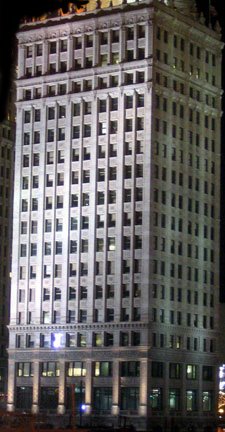
Here's an alternative view of a Chicgo landmark, a classic rectangular tower clad in glazed terra cotta, with a clear, almost Sullivanese articulation of its spare structure.

Tuesday, February 07, 2006

CAF offers up April tour of Vancouver


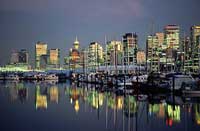
The Chicago Architecture Foundation is sponsoring a four-day study tour to Vancouver, Canada this coming April 27 through 30th. "Learning from Vancouver" has becoming a buzzword for everything from parks planning, affordable housing, and development that favors slender towers to keep openness in the skyline. This could be your chance to see firsthand whether the Vancouver mystique is reality or hype. Events will include tours and presentations by the city's co-director of planning and green architect Peter Busby, whose Brentwood transit station puts the CTA's innate conservatism to shame. (The former Busby & Associates firm is now a part of Chicago-based Perkins+Will). The $1,750 cost for the tour ($100 singles supplement), includes airfair, accomodations and meals. For information, contact Larren Austin at 312.922.3432 X 263, or check out the registration form online. The CAF will be offering another, weeklong tour to Rome this November.

Monday, February 06, 2006

MSI Highlights Black Creativity in Architecture


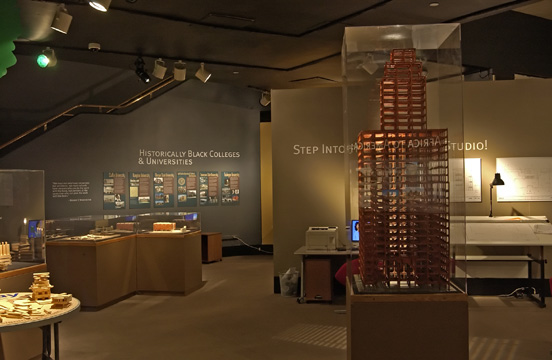
The Museum of Science of Industry's annual celebration of Black Creativity this year "highlights the contributions of African Americans and encourages deeper interest in, and understanding of, black culture and heritage." It's exhibition, Architecture: Pyramids to Skyscrapers, features the work of African and African-American architects, both past and present. It includes models and drawings of key buildings, as well as a showcase of projects from both high school and college students and professional architects. Throughout February, there are also weekly workshops that will bring students and teachers together with architects including Charles and Eben Smith, William Brazley, Jr., RaMona Westbrook and Larry Parkman. Wednesday morning, February 22nd, there will also be a symposium where high school and college students considering a career in architecture will be able to engage Africa-American architectural leaders in learning about opportunities in the field. Events are free with museum admission, but registration is often required. For full information, check out the attractively designed website. The exhibition runs through February 28th.

Sunday, February 05, 2006

Ry Cooder's ballads of Chavez Ravine


John Hill's Archidose blog has a great post on Ry Cooder's album Chavez Ravine, which recalls the almost idyllic working class Mexican-American neighborhood's destruction in the 40's and 50's in a Chinatown-like pursuit of money and power.

In this case, however, the motivator wasn't water but baseball. Even as long-suffering Dodger fans were enjoying their 1955 moment of triumph as the team won its first-ever World Series, owner Walter O'Malley was plotting to sell them out in favor of tapping into the money gusher that was mid-century California with a move to Los Angeles.

Plans for a public housing project with the achingly ironic name of Elysian Fields, whose architects included the legendary Richard Neutra, were deep-sixed, all the current residents evicted, and the neighborhood wiped off the face of the earth to make way the construction of the Dodger's Chavez Ravine stadium. It's a cautionary tale of the intersection of power, planning and architecture, especially timely in the light of the Supreme Court's recent decision to give cities carte blanche in using eminent domain in condemning people's home and businesses to turn them over to monied developers. The Archidose link's include one to Chavez Ravine: 1949, a book of photographs of pre-Dodger Chavez (example above-left). Check it out here.

Saturday, February 04, 2006

Tonight on WYIN - Founding Father Rescued from the Waxworks - Simon Russell Beale as John Adams


It's perplexing how the American Revolution, one of greatest dramas of human history, descends on film into a sort of Waiting for Guffman theatrics. America's founding fathers are inevitably reduced to pious icons, dimensionless ghosts moving through the treacherous, uncertain events of their day as if it were a sleep-inducing pageant.

A rare exception is the current PBS American Experience documentary, John and Abigail Adams, and the reason boils down to a single performance, that of Tony award-winner Simon Russell Beale as John Adams. Despite his pivotal role in arguing for and securing American independence, Adams is probably most often remembered as a rotund, would-be monarchist whose worked as a diplomat in Europe was overshadowed by Franklin, and who had the dubious distinction of being the first American President to be rejected for re-election, his one-term a biding-the-time break between the A-List administrations of Washington and Jefferson. It's Samuel Adams that gets the most airplay today, and that's through a beer commercial.

The PBS film, drawing heavily on the correspondence between Adams and his wife and collaborator Abigail, capably portrayed by Linda Edmond, is obviously intent of restoring Adams to his proper place in our history. It's capably done, but it's Beale, who's just taken over the role of King Arthur in Broadway's Spamalot, who makes the project transcend its genre.

He gives us a John Adams affording full measure to his irascibility, his stubbornness, his vanities and frustrations. Agitating for independence when others counsel moderation, struggling with the demands of diplomacy, watching as his Vice-President's role in the Senate is reduced from participant to onlooker, even pitching hay with the workers on his farm while in political exile, Beale makes Adams so visceral that it's as if you're standing beside him, feeling the heat radiating from his body and his energy displacing the air around you. You suddenly experience history, not as the usual inevitable progression seen through a thick, cloudy glass of history, but as a succession of lived moments - so familiar in our own daily lives - where nothing is certain, little settled, and achievement comes only from the constant anxiety, frustration and hope of human interaction. If John and Abigail were a feature film, Beale's work would be worthy of an Oscar.

Tonight, Saturday, February 4th at 9:00 P.M., you can catch a rerun of John and Abigail on Northwest Indiana's PBS outlet, WYIN, which is carried on many Chicago cable outlets. If you're home during the day or awake at odd hours, WTTW will be repeating the show at 1:00 A.M, 5:00 A.M, 9:00 A.M. and 1:00 P.M on Monday, February 20th. You can also order it is on DVD from PBS.

Thursday, February 02, 2006

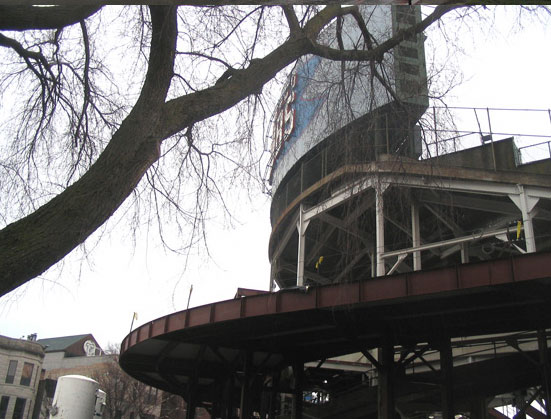
Chicago Streetscene - January 28, 2006 - Expanded Bleachers under Construction at Wrigley Field


Lecture on Mies's First IIT Building added for February 22nd


Kevin Harrington, Professor of Art and Architectural History and IIT, and co-author, along with Franz Schulze of the latest edition of the book Chicago's Famous Buildings, will lecture on - and in the 1941 Minerals and Metals Building, the first structure to be built by Mies van der Rohe on the IIT campus. Although less famous than Crown Hall, the m&m marks the first time Mies used exposed I-beams as part of his architectural aesthetic, framing the plain brick infill on the short end of the building. m&m has recently undergone renovation, and provides additional space for IIT's burgeoning school of architecture. Harrington's lecture will be at 6:00 P.M., February 22nd. The Minerals and Metals Building is located at 3350 S. Federal on the IIT campus, a block west of Crown Hall.