Tuesday, August 22, 2006

The de Tocqueville effect - San Francisco's John King takes on Chicago

John King, the perceptive architecture critic from my second favorite city, San Francisco, recently spent some time in Chicago and the result has been two major articles in the San Francisco Chronicle on our city and its architecture.

The first was written for the paper's travel section, but it's actually a great overview of Chicago's architecture, including a look at Perkins + Will's Ralph Johnson's new Contemporaine on Grand, one of the city's best new residential buildings. There's the obligatory gloss on the wonders of Millennium Park, but also a critique of the "cookie-cutter capitalism" that has created "too many tall towers that generate profit but don't stir the imagination." There are thumbnail sketches of 10 prominent landmarks, from The Rookery, to Inland Steel, to Marina City and 111 South Wacker. It's a great read for both visitors and local architecture buffs.

Then on Saturday, August 12th, King published a second piece on how San Francisco mayor Gavin Newsom is looking to Chicago Mayor Richard M. Daley for inspiration. Inevitably, such an account includes a lot of discussion about Daley's role in moving the city forward, especially with his intense focus on environmental issues. Newsom, serving in a city whose obsession with diversity and inclusiveness often seems to wind up invoking paralysis rather than progress, understandly looks longingly on Daley's aura of a strong-man able to act seemingly unencumbered by undue process or dissent.

Anyone who has read my musings on the subject know I find this to be a dangerously two-edged sword. Nowhere is this better illustrated than in the way the mayor recently repaid Newsom's admiration by telling a San Francisco official who had come to testify in support of Chicago's living wage ordinance to basically shut up and go back where he came from. "They should go back and help their own cities.... you manage your own city. We manage here. . . . We've got more work going [on] downtown in one block than . . . those cities [San Francisco and Santa Fe] combined." A perk of being a kind of elected monarch is that you can tell that kind of whopper with a high confidence no one will want to contradict you. If the mayor says so, it must be true, at least until the contradictory reality can no longer be swept under the rug.

It's always refreshing - and instructive - to read how an acute observer like King sees us, and both of his articles are well worth checking out, here and here.

Monday, August 21, 2006

110 in the Shade - Where would we be without ASHRAE Illinois, marking its 100th year?

Joan Pomeranc of AIA Chicago passes on the news that the Illinois chapter of ASHRAE, the American Society of Heating, Refrigerating and Air Conditioning Engineers, turned 100 years old last month. ASHRAE, its parent, was founded in 1894, and has grown to 172 local chapters with 55,000 members globally. Illinois ASHRAE became the organization's first local chapter, on July 19, 1906, and it remains the largest to this day.

Putting aside for the occassion the fact that our obsession for creating an indoor climate that's perfect year-round has probably played a prominent position in heating up the globe and placing our fate in the hands of countries who don't much care for us, being able to escape Chicago's (decreasingly) bitter winters and (increasingly) overheated summers is one of the real perks, along with expanding longevity, advances in health care, and big screen plasma TV's, of living in modern times.

We can only hope that the next century of ASHRAE will see the attainment of Transsolar's Matthias Schuler's goal of creating technologies that let buildings breath naturally, without chillers, even as we remain thankful, however guiltily, for the heavy-duty air conditioning that makes our current legacy of environmental clunkers bearable.

Friday, August 18, 2006

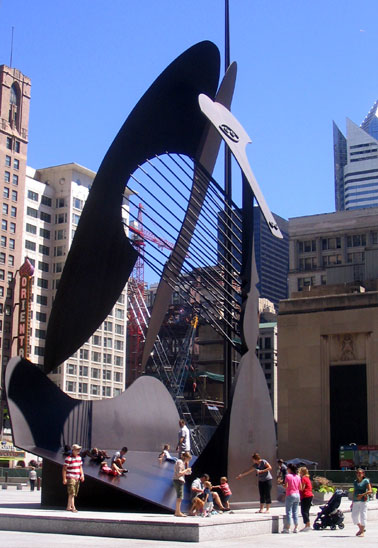
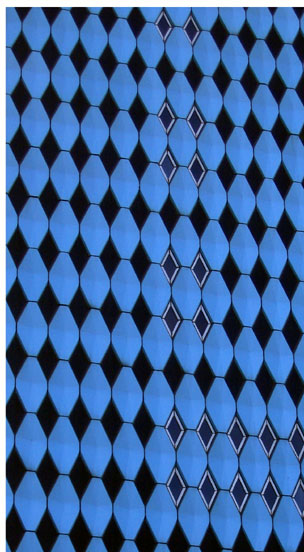
Two Chicago in August Streetscenes


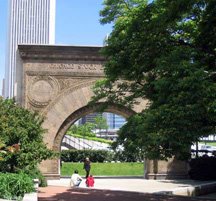
Sliding down the Picasso


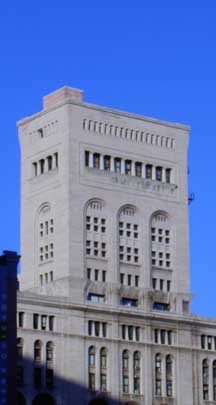
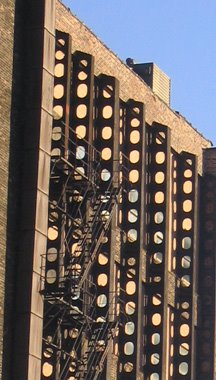
Blue Diamonds - no almonds required. Do you know it?

Thursday, August 17, 2006

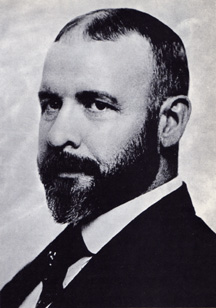
Biographer Twombly to speak at Sullivan Symposium in Grinnell, Iowa

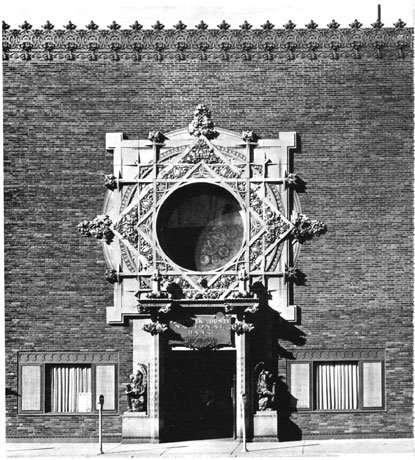
Via Pauline Saliga of SAH and Joan Pomerance of AIA Chicago comes word that the sesquicentennial of architect Louis Sullivan's birth is being celebrated not just in Chicago, where the newly renamed Chicago History Museum is spearheading Louis Sullivan at 150, a month-long series of events being sponsored by a wide range of the city's cultural institutions, but also by Grinnell College and the City of Grinnell, Iowa, with a five day sequence of events from August 30th to September 3rd. Grinnell is the site of Sullivan's Merchants National Bank, which opened on New Years Day in 1915.

According to Sullivan biographer Willard Connelly, after meeting with bank officials and visiting the site, the architect "bought at a drugstore a few sheets of yellow paper. Sitting with the committee in a little room of the old bank, adjoining the president's, he took a common desk ruler and sketched his entire plan." The result was one of a series of small bank commissions that sustained Sullivan late in his life, in polychrome brick. "The brick, through with extremes from deep blue to bread-crust brown, he so skillfully distributed that its hue as a whole seemed to be garnet," writes Connelly.

The bank's most photographed feature, however, is its entrance, described by a later biographer, Robert Twombly, as an "incredible burst of terra-cotta surrounding the stained glass ocuulus over the entrance. At least eight layers of diamond, circular and square banding, infilled with geometric and organic ornament in brown and green, combined to form a giant medallion . . . "

On August 31st Twombly, himself, will provide the keynote lecture, Louis Sullivan and his Legacy, for the Grinnell symposium, which includes other lectures - including one by the U of I's Paul Kruty, as well as music, documentaries, and tours of the bank, all culminating with a celebration on Sullivan's actual birthday, September 3rd. There will be cake.

For information, call: 641-236-1626

Wednesday, August 16, 2006

The Graham announces 2006 Carter Manny awards, new director Sarah Herda talks to Edward Lifson

Chicago's Graham Foundation for Advanced Studies in the Fine Arts has announced the winner and finalists for its 2006 Carter Manny Award, recognizing academic disserations on architectural topics. The top award, which comes with $15,000 of financial support, went to Timothy Parker of the School of Architecture at the University of Texas at Austin, for his dissertation on the topic of The Modern Church in Rome: Architecture, Theology, and Community, 1945-80.

Parker’s paper looks at sixty parish churches designed in Rome after World War II. “Twentieth-century religious architecture in general is conspicuously unstudied. I suggest that one reason for this is that, while our understanding of modernism undergoes continual revision, modernism remains largely a secular concept.” Parker explores the place of religious architecture in "canonical modernism."

Merit citations went to Kathleen E. Foley of Cornell for Islamic Centers and Land Use Conflict in the Suburbs: Designs for a Place in the American Landscape and Membership in the American Polity; Lucia Allais of MIT for Will to War, Will to Art: Cultural Internationalism and the Birth of the Functionalist Monument, 1932-1960, and Alexander Eisenschmidt of the University of Pennsylvania for Preconditioning Modern Architecture: Urban Formlessness and Architectural Form in German Modernity, 1900-1914.

It would be nice if the papers were actually made available to the general public, but that is apparently not how the academic world works. According to the Graham's website, "Award winners will be encouraged to present their dissertation in a public forum at the Foundation." The Graham already provides a valuable service, unique among Chicago architectural institutions, of putting its lectures up on their website for viewing.

The Graham Foundation's new Executive Director Sarah Herda just hit town a few weeks ago, and WBEZ's Edward Lifson snared her first local interview for his Sunday morning program Hello, Beautiful, You can listen to the interview here. Previously, Herda, 32, had served, since 1998, as director of the Storefront for Art and Architecture in New York. At the Graham, she will oversee about a million dollars a year in programs, books, and exhibitions supporting the study of architectural topics.

Herda told Lifson that she's been "spending a lot of time in the archives," which go back fifty years, and is interested in "making that history more available to the public." She said she's also been walking the city and its neighborhoods. "Every neighborhood I've been to has impresssed me in different ways."

"Chicago strikes me as a place where architects build buildings," said Herda, which would indicate she still hasn't stumbled upon the fact the city's best architects - especially the younger ones - have been largely locked out of the city's current building boom until very recently, but she'll learn. She's already hit on one of the key issues. "It would be interesting," she told Lifson, "to think about ways that people could participate in insuring that we have better buildings, better design, in the city."

Monday, August 14, 2006

Hope at Block 37? - Ownership changes hands still again

This past Friday, news outlets including the Chicago Tribune and Crain's Chicago Business reported the Mills Corporation is about to turn over control, in a deal scheduled to close within the next month and a half, of the office and residential components of the downtown Chicago's Block 37 project to the venerable Chicago firm of Golub and Company. The beleagured Mills Corporation was only the latest of a long line of developers taking a bat at developing Block 37, across from the flagship Marshall Field - soon to be Macy's - store on State Street, a full-block site that has stubbornly resisted rising above anything other than a dirt farm since every last structure on it was hurriedly demolished in 1989.

Construction had already began on the office building, which is to provide a new headquarters to the Morningstar investment firm, as well as new facilities, including a streetside studio, for CBS Chicago. What was new in the announcement is that Golub is saying it expects to now also break ground for two new residential towers, to be designed by Solomon, Cordwell Buenz - one condo, one rental, with a previous hotel component dropped - this coming Spring. Mills retains control of the block-long retail portion of the project, being designed by Gensler Chicago.

Earlier in the year, construction workers walked off the project as the firms they worked for claimed they weren't getting paid by Mills. Now, however, cranes and heavy-duty construction equipment can be seen in daily operation on the site. Could this finally be the real thing? I like to believe it's true, but I'll feel a lot better when we actually see something rising out of the ground. For countless months now, the only new construction on the site has been the giant mounds of dirt taken from the equally giant pits and moats being excavated all throughout the block.

Also in Crains is an eye-opening article on a new Civic Federation study revealing the dirty little secret that, despite Chicago business's constant complaint of increasing property taxes, their effective tax rate has actually dropped by more than half from 1999 to 2004, as the residential building boom has seen home and condo rates soar and homeowners assume an increasing share of the property tax burden. While Chicago's commercial and industrial rates remain higher than in suburbs like Oak Brook, they're now on a par - or actually a tad lower - than in locales such as Naperville, Joliet and Elgin.

Friday, August 11, 2006

Changing Skyline Vistas - Time-Life Pinched

For decades after it's 1968 completion, architect Harry Weese's Time-Life building (now known by its address, 541 N. Fairbanks) dominated Streeterville. McClurg Court's two towers and the 1926 Furniture Mart may have had it beat by a few feet, but it was the Time-Life - it's no-nonsense, brawny, big-boned, deep tawny Corten steel frame little brother to Jacques Brownson's 1965 Daley Center in the Loop - that provided the visual anchor for the district.

Now, the great building boom that has marked the turn of the 21st Century is re-ordering the scale of Chicago's skyline, turning once dominant towers into dwarfed also-rans. It used to rise majestically from a surrounding a sea of surface parking lots, but today the Time-Life is being pinched between two new high-rises, the Streeter to the east, and the Fairbanks at Cityfront Plaza to the West. It's becoming an eclipsed remnant of the architectural landscape of the 1960's, just as the domed Jewelers Building on east Wacker, a child of the booming 20's, which once rose out of a fabric of low-density parcels along Wacker beside the river, punctuating a great Chicago street vista that endured for three-quarters of a century, is being crowded out by a new king-of-the-hill, Adrian's Smith 1362-foot-high Trump Tower. Wax nostalgic for a moment and move on. A new visual order approaches.

Thursday, August 10, 2006

Walter Ahlschlager's work profiled in free download

Joanne Asala of Compass Rose Cultural Crossroads, emailed us to let us know of another great free download that follows on the heels of the wonderful facsimile of the 1925 Balaban & Katz magazine featuring the Uptown Theater that they put up earlier this year.

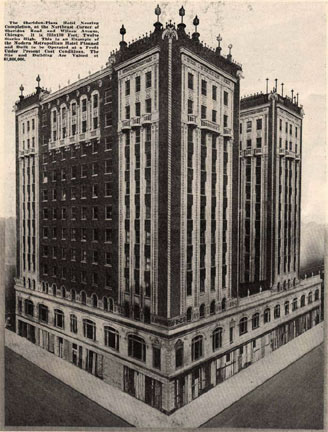
This time it's a facsimile of the 1921 edition of the American Builder magazine devoted to The Work of Walter W. Ahlschlager. Ahlschlager is one of the lesser known Chicago architects responsible for some of our more high-profile buildings, including the Inter-Continental Hotel on North Michigan, with its great carved reliefs and yellow-domed dirigible moaring at the top. He also designed the wildly ornate Uptown Broadway Building, at Broadway and Leland.

The emphasis in the American Builder reproduction is on several then new residential projects such as The Sovereign at Granville and Kenmore, the Parkway and the Webster, with prime of place given to the Sheridan Plaza residential apartment hotel at Sheridan and Wilson. then being completed. There are construction photos, floor plans, shots of various interiors including grand lobbies, and a host of interesting period ads for everything from elevators, to terra cotta ornament, marble, fire escapes - even Dutch Boy paint from the National Lead Company (??!!). It's another great snapshot both of the work and the time, and you can download it in Adobe Acrobat PDF format, for free.

Wednesday, August 09, 2006

Skyscrapers of the Sea

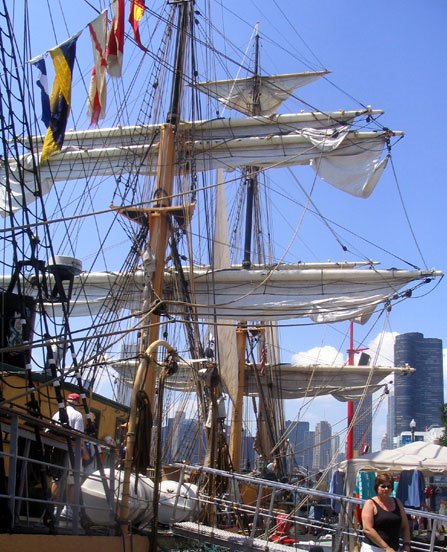
In their own time, sailing vessels like those in Tall Ships Chicago 2006 were among the tallest man-made structures, scraping the heavens on water as the spires of churches and cathedrals did on land. Read about how they stack up next to Chicago's tall buildings - and see all the photos - here.

Tuesday, August 08, 2006

Form Based Codes - Reform or Legislated Mediocrity?

The City of Evanston's Plan Commission is sponsoring a talk tonight, Tuesday, August 8th, by Paul Crawford, chairman of the Form Based Codes Institute, with the title Form Based Codes: An Alternative Approach to Regulating and Shaping Development. To quote from the commission's description, "Often associated with Smart Growth and the rise of “New Urbanist” planning concepts, form-based codes place primary emphasis upon the physical form of development, including building height, bulk, façade treatments, the relationship of the buildings to the street and to one another and the location of parking."

For information: you can email Tracy Norfleet, General Planner, or Susan Guderley, Neighborhood Planner, but since the seminar is tonight I'd recommend calling 847/866-2928.

The concept bears the fingerprints of New Urbanists like the ubiquitous Andres Duany. . . . Continue reading here.

Monday, August 07, 2006

Reprieve in works for Louis Kahn's Trenton Bath House and Chicago's Cook County Hospital?

Sometimes there's actually good, 0r at least encouraging, news to report on the preservation front.

An email on Sunday from architectural historian Susan Solomon, who has been working to save Louis Kahn's 1955 Trenton Bath House, a set of four interlocking, pyramid roofed pavilions, reports an emerging deal in which Mercer County will purchase the 44 acre wooded site that includes the Bath House for use as a new senior center, and preserve the Kahn structures, which are listed on the National Register of Historic Places. According to a report in the Trenton Times, the county continues to negotiate with two separate property owners who split ownership of the site, with a formal agreement still to be reached. Solomon and Friends of the Trenton Bathhouse continue to lobby on behalf of the purchase.

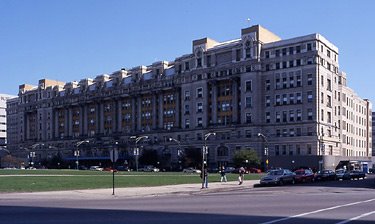
In Chicago, things may also be looking up for the historic Cook County Hospital, famous nationally for doubling as the exterior of the hospital featured in the long-running NBC television series ER. Ever since operations moved to a new Stroger Hospital in 2002, Cook County Board President John Stroger appeared adamant on razing the 1914 building. The county's original convoluted plans called for replacing the park in front of the old structure with major new construction, demolishing the 1914 building, and creating a new park on the cleared site.

Stroger's unyielding determination, despite a rising tide of opposition, made the loss of the building to almost seem a foregone conclusion - it was dropped from the 2004 AIA Guide to Chicago. However; activists like Preservation Chicago, a grass roots architectural preservation advocacy group, continued to work to save the hospital, including a petition drive that obtained more than 13,000 signatures. Independent County Board members managed to muster enough votes to put demolition plans at least temporarily on hold. A stroke earlier this year led Stroger to decide to retire from his post this past July, and now new incoming acting Board President Bobbie Steele has put her weight behind saving the structure, sending a letter to the Commission on Chicago Landmarks supporting landmark designation.

The 1914 Hospital, by architect Paul Gerhardt, is remarkable for its rich Beaux Arts facades and terra cotta ornament, for the way its distinguished massing holds down its site and adjoining park, and for its role for almost a century in guaranteeing generations of emigrants and the city's less affluent residents quality health care.

Wednesday, August 02, 2006

Louis Sullivan at 150 - a new Chicago History Museum website lists over 50 events in a six-week celebration of the great architect's birth

Architect Louis Sullivan, had he lived, would have turned 150 on his upcoming September 3rd birthday. Working with other arts and architecture organizations in Chicago, the newly renamed Chicago History Museum has just put up Louis Sullivan at 150, a website on all things Sullivan, with a calendar listing the numerous tours, seminars, lectures and films that will take place over six plus weeks beginning on September 2nd in honor of the legendary Chicago architect.

Among the highlights are a number of tours of the Charnley-Persky House, as well as a series of Louis Sullivan: Lost and Found Loop walking tours, on Wednesdays and Saturdays over five weeks, under the auspices of the Chicago Architecture Foundation.

On September 17th from 1:00 to 4:00, a Richard Nickel Bus Tour will be led by his biographer, Richard Cahan. On September 18th, there will be tours of the Auditorium Building, as well as "The Parthenon of Modern Civilization: The Restorations of the Auditorium Theatre" a panel discussion with Ben Weese, FAIA, Jack Hartray, FAIA, Laurence Booth, FAIA and Daniel P. Coffey FAIA; moderated by Rick Kogan. There will also be concerts in Ganz Hall.

On Monday, October 9th, Lost Chicago author David Garrard Lowe will present a lecture on
Louis Sullivan & the Beaux Arts. The Newberry Library will offer up a ten week seminar by scholar-in-residence Diane Dillion on The Architecture of Louis Sullivan.

CAF tours of Holy Trinity Cathedral on September 9, 23 and 30, where, on September 24th, there will also be a fundraiser to benefit the church's restoration with historian Tim Samuelson and the Pan Orthodox Choir. On October 4th, another seminar, Chicago's Great Heritage: Preserving the Work of Louis Sullivan" will feature Mary Brush, Gunny Harboe (who recently completed the restoration of the long-missing cornice on Sullivan's Carson Pirie Scott store on State Street), and Vincent Michael. October 12th will bring the first Chicago screening, at the Graham Foundation, of a new half-hour documentary: The Small Town Banks of Louis Sullivan, followed by a discussion that will include the film's producer and director, Joe Federici. The celebration will end with a three day symposium, Louis Sullivan at 150, October 13 through the 15th at the Chicago History Museum.

The Louis Sullivan at 150 website includes over 50 events spread on 29 separate days, and also offers up an extended biography of Sullivan, his partnership with Dankmar Adler, his work, life and writings. There's a very generous complement of photographs of Sullivan's buildings and ornament. It's a site that draws you in with its depth of interesting content, and if the various events live up to the same high standard, we're in for a great celebration.

Monday, July 31, 2006

Shangri-La, Uncle Dan Burnham, and Chicago Green City among the events on August Architectural Calendar

Architect Thomas Hoepf talks about his new Waterview Tower, Northwestern University hosts a three-day seminar on green architecture, and Judith Paine McBrian celebrates Daniel Burnham - things may be shut down for the summer, but there's still over two dozen architecture-related events on the August calendar, including a full roster of dates from AIA Chicago and the Chicago Center for Green Technology. Preview the complete calendar here.

Wednesday, July 26, 2006

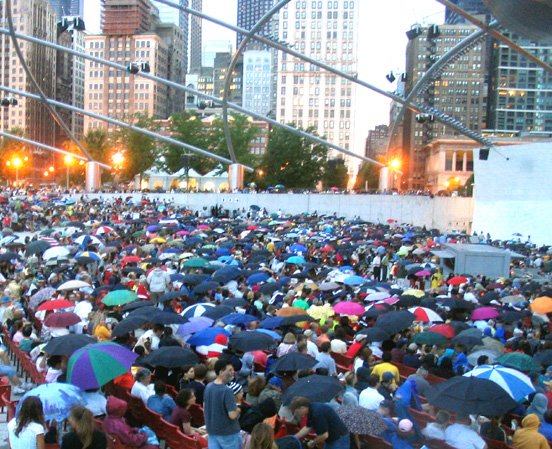
Chicago Streetscene - Pritzker Pavilion, Millennium Park

July 22nd, 2006


(It stopped raining for the second half of the concert, by the way.)

Monday, July 24, 2006

Blair Kamin's Boogers - and other great weekend reading

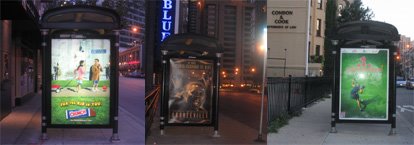
"My Boogers Itch" may be the least likely phrase that you'd ever expect Chicago Tribune Pulitzer prize-winning architecture critic Blair Kamin to write. (But you weren't the least bit surprised to find me writing it, were you? I thought not.) Nonetheless, there it was in the lead of his fine Sunday article on city bus shelters and the latest scam to invade the city's streets - large signs engraved City Information at the top that offer up little more than another slew of billboards, including the aforementioned nasally afflicted caption for an ad for Cartoon Networks. The Tribune, being a paper of probity and reserve, declined to run a picture of the offending poster, substituting instead one featuring an artfully composed bottle on Heineken. I, on the other hand, having already established my credentials as a vulgarian, include here, for your intellectual edification, a photo of the actual billboard.

While I'd like to think that a billboard featuring a cartoon character with the blades of a blender up his nose represents a populist broadside against the high-toned pretensions of Cartier Jewelers, just a few steps away, it's more likely a product both of the way, as Kamin reports, everything is for sale in today's society (can naming rights for the mayor's shorts be far behind?), but also how, in our increasingly consolidated, globalized world, more and more decisions are based on sheer abstractions, by people - far, far away - who never come face to face with the consequences of their actions.

As Kamin reports, the city is getting $300,000,000 over 20 years for permitting the shelters to be erected. But the shelter part of the deal is merely a sideshow. The main event are the ads, because that's where the money is. The size of the ads drive the size of the shelters, and they're just too damn big. Kamin is too charitable on the actual design of the shelters, by architect Robert Stern - they're fat-boned and coffin-lidded. On the broad sidewalks of Michigan Avenue, the effect is more tolerable, but plopped down on normal-width streets like Chicago, Dearborn or Grand, the one-size-fits-all shelters (can't make the ads smaller, you know) hog the sidewalks and become a charmless obstruction to the visual flow of the street and to normal pedestrian traffic.


Another compelling read from over the weekend:
Sun-Times architecture critic Kevin Nance has an eloquent piece on Gunny Harboe's restoration of the long-lost cornice of Louis Sullivan's Carson Pirie Scott store on State Street. The blunted replacement made the building look more Corbu than Louis, but the light, flowering columns that again support the open arcade that defines the roof are the perfect complement to the rich ornament framing the shop windows at the building's base, and bring back the organic unity of Sullivan's brilliant concept. An added plus - unlike the Tribune, which still rarely runs a story's photos on the web, Nance's article includes a couple of great illustrations. (log-rolling alert: Nance also includes a gracious reference to my recent Reader article on Adler & Sullivan's Harvey House, but that's not really why I'm recommending it. I think you'll agree it's a fascinating read.)

Be sure to catch these two articles over the next few days, before they disappear into paid-archive hell.

Tuesday, July 18, 2006

The Two Brads (Lynch and Pitt) on Rebuilding New Orleans

An entry from Brad Lynch of the Chicago architectural firm of Brininstool & Lynch was named Monday as one of six finalists in Global Green USA's Sustainable Design Competition for the rebuilding of New Orleans after its devestation last year by Hurricane Katrina. The competition was co-sponsored by actor and architectural activitist Brad Pitt, who also chaired a jury that included, among others, Walter Hood, Thom Mayne and Marion Weiss.

The competition's goal is to "demonstrate sustainable solutions for the redevelopment of New Orleans." Entrants were asked to submit two boards, the first for a 12-unit family housing structure with "community center features." The second was for a site plan in New Orlean's Holy Cross neighborhood near the levee and Mississippi River, including the placement of six single-family homes.

Global Green USA gets credit for putting the boards for all six finalists up on their website at the same time the first stage selections were announced. (As of today, you have to register to with an email address to see them, which also allows you to cast a vote for your favorite. There's a placeholder on the site for where a gallery of competition finalists may appear later.)

The large competition boards, however, are posted in web resolution, which makes the text and much of the details illegible, leaving us dependent on the jury's comments for descriptions of the projects. The buildings in the entry from Brad Lynch are praised as being "simple yet sensible," and the concept, itself cited for its "creative ideas about energy generation placing solar electric arrays on a barge in the adjacent Mississippi river" and for how "the design raises the living areas off the ground" in anticipation of possible future flooding. Lynch is up against national heavyweights such as Frederic Schwartz - who draws on the tradition of the areas traditional "shotgun" layout for homes, and uses solar chimneys to draw out heat via natural convection - as well as three other firms with roots in New Orleans.

Next week, a kickoff meeting for the competition's final phase will bring together the winning designers with local architects and community groups "to create a plan for selected areas in different neighborhoods of the city," including single-family housing and a community center. The final jury is scheduled for August 30th.

Monday, July 17, 2006

What Do You Give Louis Sullivan for his 150th Birthday - How About One Less Surviving Building?

One of the few remaining buildings by Dankmar Adler and Louis Sullivan, and probably their last surviving wood-frame structure, may soon disappear. The 1888 house, designed for insurance tycoon George M. Harvey, is at 600 W. Stratford Place in Lakeview, less than a block from Lincoln Park and Lake Michigan. According to advocacy group Preservation Chicago, owner Natalie Frank recently told Alderman Helen Shiller she was about to apply for a demolition permit. Will the house be saved by being designated an official Chicago landmark, or demolished for still another stack of condo's? See all the photos and read all about what is shaping up to be a classic battle between clout and culture here.

Tuesday, July 11, 2006

And Triple Points for Requiest?

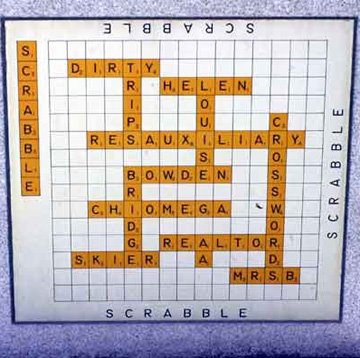
A new web site, A Grave Concern, devotes itself to the Town of Main Cemetery in Park Ridge, Illinois, chartered all the way back in 1858. Much like Graceland or Oak Woods in Chicago, cemeteries are something of a touchstone of urban history in that they tend to survive generation after generation even after everything around them is changing. Town of Main's earliest burials reflected the area's status as a center of German immigration. The website page devoted to monuments offers up several photos of the different types of markers, from benches, to boulders, to pyramids, and this rather unique headstone fashioned after a Scrabble board.

Monday, July 10, 2006

Architreasures Jewels in July

Via the Chicago Architectural Club, here's a last-minute addition to the July calendar. This Wednesday, July 12th, Architreasures will hold a fundraiser celebrating its 10th Anniversary with its Jewels in July event at the Garfield Park Conservatory, 300 N. Central Park Avenue, from 6:00 to 10:00 P.M.

Tickets are $75.00 in advance, $100 at the door. Food, drink, and a silent auction will be featured, and the group's Gems of the Community Awards will be presented to architect Peter Landon, The Puerto Rican Cultural Center, and the Richard H. Driehaus Foundation. Architreasures brings together "architects, artists, educators and urban activists with community groups, students and neighborhood organizations" to come up with ideas for redeveloping Chicago neighborhoods. Call 773/776.1040, or Hoopla Communications at 773.486.6920 for tickets.

Thursday, July 06, 2006

Lane Bryant - Urban Menace?

Wednesday's Chicago Sun-Times carried a bizarre story by Steven Patterson on how the charming suburb of Oak Park, home to Frank Lloyd Wright and Unity Temple, has blocked plus-size retailer Lane Bryant from leasing a store in a new downtown building. Village President David Pope is quoted as saying the village wanted "a more broad-based retailer" for the site.

Putting aside the triple-entendre pun in Pope's statement - he just doesn't seem to be the kind of guy able to engage in such wordplay deliberately - the incident raises the question, "What????!!!!!" Is Lane Bryant peddling crack? Pimping its customers? Soaking its clothes in trans-fats? (For those outside Chicago, our own fair city, fresh from banning foie gras in its restaurants, is now being hectored by another headline-junkie alderman to pass an ordinance banning the use of all trans fats, as well.)

Why did Oak Park do it? Just because it can. It previously owned the property, and retains veto power over potential tenants. To have a decision actually make sense or adhere to some clearly defined standard would be too much to ask. Could this be Oak Park's strategy to win the war against obesity - ban the retailers that sell the larger sizes?

Long-departed native son Ernest Hemingway once famously remembered, “Oak Park is a neighborhood of wide lawns and narrow minds." It's comforting to see Pope and his cohorts keeping up the old traditions.

Wednesday, July 05, 2006

From Tragedy to Farce at Freedom Tower

What is a Freedom Tower made of? Pure spin. Perhaps never before has a project been so encased in rhetoric, and never has that rhetoric turned out to be so feebly incapable of obscuring the bankruptcy of the ideas beneath.

Read about how this project, conceived after 9-11 with the highest optimism, is limping towards its sad, diminished conclusion.

Tuesday, July 04, 2006

Newsweek Consigns the Great Cities of the World to History's Dustbin (Or Do They?)


While last week's U.S. edition of Newsweek was content with putting Brad Pitt on its cover along with other of the 15 winners of its new "Giving Back Awards" recognizing those devoted "to helping others", the International edition focused on an exhaustive and provocative appraisal of current state of world urbanism.

It leads off with an essay by Rana Foroohar declaring that for great cities like London, Tokyo and New York, "their day is over," and that the future belongs to metropolises with less than a half-million people. (Half of today's city dwellers already reside in them.). However, there's a lot more to the issue than just the lead article, and in another piece, "The Ten Most Dynamic Cities", there, among not-yet household names like Florianopolis, Brazil and Goyang, Korea, are don't-know-they're-dead-yet Munich, Moscow, and - surprise, surprise, surprise - London. Which would seem to indicate that, despite Foroohar's proclamations, 200,000 houses and a Wal-Mart may not a civilization make.

But then, again, there's the obligatory Panglossian apologia for sprawl by the seemingly inevitable Joel Kotkin, but that, too, is balanced with another piece by Richard Florida that argues that the impetus for growth and innovation comes not from big cities or small cities, but from "New Megalopolis" type agglomerations like the Boston-Washington or Chicago-Pittsburgh corridors, that combine both. There are also a host of other articles on everything from China's Golden Cities, to Tailing the X-Commuter, profiling what is claimed to be the fastest growing category of commuters: those who spend at least 90 minutes - each way - traveling to and from work.

It's a shame that this series wasn't given similar prominence in Newsweek's U.S. edition. Do the editors believe our attention begins to drift whenever the subject is anything other than the world within our own borders? Whatever - this issue is a great piece of journalism, and it's well worth your checking out on-line.

Monday, July 03, 2006

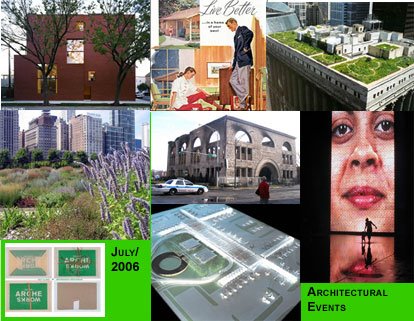
July Events Offer Up Architectural Taste of Chicago

July is a lot more than just Taste of Chicago. There's still a lot to do, as far as architectural events in Chicago. While a number of institutions - CAF, the Architecture and Design Society of the Art Institute, the University of Illinois at Chicago - are deep into summer hibernation, the schedule still includes Archeworks' open house, a Grant Part Advisory Council symposium on the proposed Renzo Piano bridge linking the Art Institute to Millennium Park, Friends of Downtown's session on new visions for Navy Pier, Timothy Gilfoyle talking about his new book on Millennium Park at the Newberry Library,and the Landmarks Preservation Council lunchtime lecture on Post-war suburban housing. The Chicago Center for Green Technology, and AIA, which is offering member tours of a number of architectural studios, including those of Zoka Zola, and a afternoon session with Wiss Janny Elstner on the stabilization of the walls of the fire-ravaged Pilgrim Baptist Church, are still going great guns. Fried dough is all well and good, but don't pass up the more intellectually satisfying offerings. Check it all out here.

Tuesday, June 27, 2006

Steven Brubaker's University Center of Lake County

Word from architect Steven Brubaker that he is now in private practice after a long association with HOK, Inc. ,which was in the news last year for their design of the the new Wrigley Global Innovation Center along the Chicago River on Goose Island.

Brubaker's and HOK's University Center of Lake County in Grayslake this part March received the Thomas H. Madigan Award for Outstanding New Construction in Illinois from the Illinois Capital Development Board. The 90,000-square-foot facility, which serves as a Distance Learning Center for a consortium of 17 educational institutions, sited on a prairie, features two brick and concrete blocks, one housing a conference center, the other, classrooms, at either end of a winding steel and glass courtyard. According to Brubaker, the brick facings insulate against northern winds, while the central commons "opens south to the sun."

Among Brubaker's other projects is a new Technology Building for the College of Lake County, recently completed, with a satellite classroom building currently under construction. Brubaker has also recently been selected to design two new buildings for Moraine Valley College, and is teaching a second-year Master's studio at IIT.

Monday, June 26, 2006

Office in a Bucket - (Wasn't That a Song by Sting?)

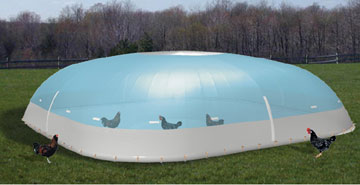
Courtesy of the Liquid Treat newsletter, here's news of the latest innovation from London's Inflate, a company dedicated to creating "inflatable structures of all scales". Office in a Bucket is just what the name implies - an inflatable nylon office, conference room or "chill out area" that comes in its own portable bucket. (Batteries not included.) Simply plug it in and watch it expand like some maniacally fast-rising dough. As if life in a cubicle wasn't tenuous enough, now your boss can literally take the wind out of your idea by simply disconnecting a power cord. Oh, and it's perfect for free range chickens, as well. Not to be outdone, The Pleasure Chest is reportedly commissioning Specialty Retailer in a Plain Paper Sack.

Saturday, June 24, 2006

Two great stories make TIF's and patents the stuff of high drama

As I write this early Satursday aftertoon, the sun is shining, so get out and enjoy. Weather forecasters, however, are predicting it will grow dark and rainy, and if you're forced indoors, it's as good a time as ever to take on some great reading on a couple of disturbing topics.

The TIF Scam - The Chicago Reader's Ben Joravsky has another great article on how the Chicago's burgeoning tax increment financing districts are turning into a vast, corrupt quagmire that put the patronage hiring scandals currently hogging the front pages to shame. Originally designed to subsidize the revitalization of depressed areas, TIF's have become a giant - and legal - patronage system with billions of dollars at its disposal. Just last week, the Daley administration PR machine was greasing the skids for a renewal of the Central Loop TIF, currently siphoning off about $90,000,000 in property taxes a year, by announcing TIF's would help fund a billion dollar plan to construct 24 new Chicago schools.

As Joravsky explains, not only is this spending on tax-exempt properties a complete corruption of TIF's original purpose to encourage private development and expand the tax base, it is also a cynical shell game that still leaves the city's schools with hundreds of millions of dollars less than they would have received if the TIF's were abolished.

But wait, there's more!

Joravsky exposes how the corruption has now also captured state finances. Accordingly to Joravsky, the TIF's have lowered the city's tax commitment to schools below a mandated state threshhold, which the State of Illinois then makes up for, by Joravsky's estimate, to the tune of $112,000,000 in 2004.

So let's summarize:
1. TIF's, created to subsidize private development to expand the tax base, are now funding public development that pay no taxes.
2. TIF's, meant to be a temporary solution, are so addictive to politicians that not one is currently scheduled to be phased out.
3. Taxpayers get to pay for the TIF's twice, once through their property taxes, and then again through their state income taxes when the state steps in to reimburse city schools for property tax revenues lost through the TIF's.
4. Because of this shell game, politicians continue to cynically claim that they haven't raised taxes.

The New Ideas Trust - The current Business Week's cover story is an eye-opening look at the Intellectual Property empire currently being built by Microsoft's former head tech guru Nathan Myhrvold. It starts out bright and shiny and positive as it describes a brainstorming session where Myhrvold has brought together some of the most brilliant minds in the country to come up with ideas on how surgery can be improved. Then the camera pulls backs, and we see that everything they say is being monitored by a bank of patent lawyers, who snatch the ideas like so many soap bubbles in the air to transform them into patents that will be owned by Myhrvold's company, Intellectual Ventures. According to Business Week, Myhrvold has a billion dollar war chest with which he's already bought up thousands of patents.

This makes Myhrvoid the world's biggest patent troll. A patent troll is a company that holds or buys up patents which it has no intention of using - Myhrvoid proudly tells Business Week his company manufactures nothing - but uses the dormant patents to shake down companies, who may well have also come up with the same idea on their own, and who actually DO want to manufacture the products or create the services that are improved by the ideas in the patent. Think of SCO's spectacularly unsuccessful, but still damaging, effort to shut down Linux with patent troll litigation. Think also of the U.S.'s amazingly broken patent system, which hands out patents promiscuously for obvious business processes such as Amazon's patent for one-click shopping, where your credit number is remembered so you don't have to reinput it on subsequent visits.

Can a big lobbying push to extend the lives of patents be far behind? Big media companies have already eviscerated copyright law. Originally, copyright law was to make sure authors were compensated for their work. Authors, of course, have a mortal life; corporations, defined as "persons" under the law, do not. Even when corporations die, their assets merely get subsumed by another, succeeding corporation. Barring a complete collapse of society, corporate personhood is immortal. What our Founding Fathers defined as a "reasonable period" for copyright has been turned into perpetual ownership by a Congress hijacked by industry lobbyists. Under the current law's provisions, not a single work created after 1923 will enter the public domain until 2019, if then.

"Not invented here" used to be a slam at inept businessmen who couldn't recognize any good idea unless it came from within. "Only invented here" is the dark promise of Myhrvoid's brave new world - a single company that monopolizes invention, converting every possible idea into a patent that they have the exclusive rights to, which they then sit on until they can sue some company who actually has made a commitment to make the innovation real (Myhrvoid denies this is his intent, but 30% of his employees are patent lawyers), or, as is actually happening, he shakes down corporations for $50,000,000 (for now) "contributions" to be assured they won't be sued by his company. Can anyone believe that such an "Ideas Trust" will do anything other than constrict, perhaps fatally, America's capacity to innovate and compete?

To bring a famous quote from Al Capone up to date, "When I separate a guy from his money with a baseball bat, it's called extortion. When a lawyer does it, it's called Intellectual Property."
Friday, June 23, 2006

Archidose's John Hill Joins New Partnership

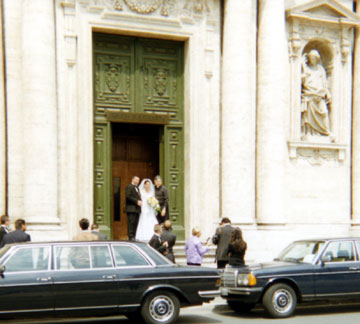
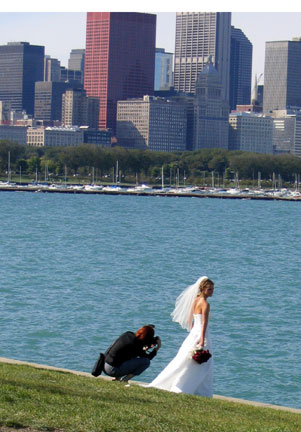
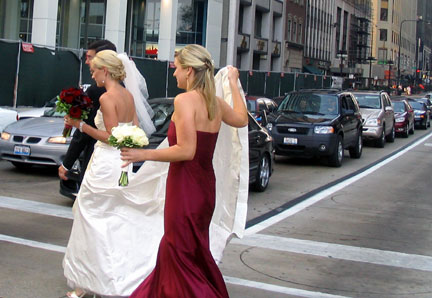
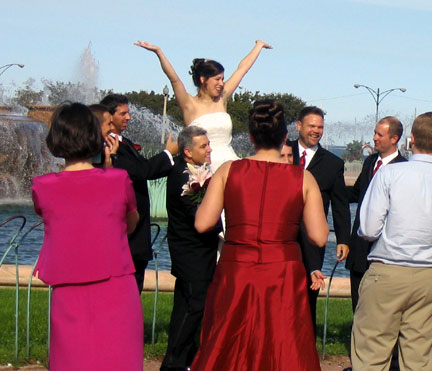
"Gettin' Hitched" was the title of today's entry on John Hill's essential Archidose blog. The architect is off until July 4th for, I hope, an extended honeymoon. Since the papparazzi have yet to come up with photos of the happy couple, we extend our best wishes with this selection of architectural backdrop wedding pictures, from Rome, the lakefront, Michigan Avenue, and Buckingham Fountain.


Thursday, June 22, 2006

Out of Time at the Wrigley Building?

Look, ma, no hands! For the last several weeks, the Wrigley Building's famous clockfaces have been denuded of both big and little, reportedly removed for their own protection during the tower's renovation. We wish them a speedy return, but for now, at least at the foot of the Mag Mile, it's pretty much any time you care to imagine.

Wednesday, June 21, 2006

Marquee Value

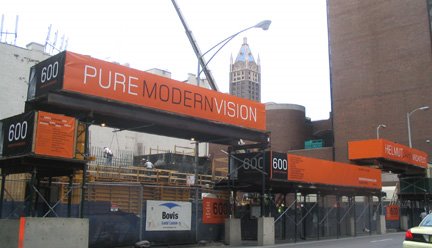
Five years ago, within the Chicago city limits, Helmut Jahn couldn't get a doghouse built. He may have been creating landmark works all across Europe and Asia, but in his home town, he remained a prophet without honor. Then came State Street Village, the stunning dorm complex he designed for the IIT campus, which opened in 2003. Last year, 600 North Fairbanks, his first condo highrise in Chicago was announced, and it's now begun to rise on its Streetville site, just south of the Schatz Building, which in the 1930's through 1960, was home to the fabled Chez Paree night club.
For the $100,000,000 600 North Fairbank's developers, Urban R2 Developent and Schatz Development, the architect has come up with a classic Jahn design: a sleek, curtain-walled 41 story, 451-foot-high tower, where the condos are placed over a lobby and 11 floors of parking that progressively cantilever, story-by-story, up to the larger floorplate of the residential portion of the building.

What's also interesting is how prominently Jahn figures in the marketing. The website features several videos of the architect talking about the project, as well as a mini-portfolio of his other buildings. At the construction site, there's another interesting sea change. Usually, on those big billboards listing the credits, the name of the architect is fairly inconspicuous, buried amidst the names of contractor and subcontractors. In contrast, the street signage at 600 North Fairbanks puts the Jahn name front and center. In some ways, it's just a case of Chicago catching up with New York, where the involvement of high profile architects such as Richard Meier has been used to help move units with multi-million dollar price tags. At 600 North Fairbanks, the signage heralds not just Jahn, but what it calls "pure modern vision."

Is cheesy historicism's stranglehold on architectural design in Chicago finally about to be broken?

Monday, June 19, 2006

111 South Wacker Wins Awards from IALD, SEAOI

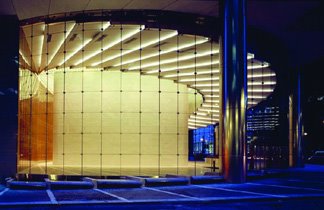
111 South Wacker, the new John Buck building designed by Goettsch Partners that, along with Pei Cobb Freed's Hyatt Center just across the street, seems to marking a resurgence in quality skyscraper design in Chicago after a long drought of abominable concrete condo towers, has garnered not one by two recent awards, from both the International Association of Lighting Designers, and the Structural Engineers Association of Illinois. Read all about the engineering challenges 111 South Wacker faced, and see the pictures, here.

Friday, June 16, 2006

Weekend Miscelleany - Fruity Pebbles in the Wine, Il Mare Chicago-Style, and How I Stopped Worrying About Giant Pandas

Why I will never be an wine expert

The new Business Week, which has the misfortune to be running a cover on Bill Gate's philanthropy just days after the even bigger story of his retirement from Microsoft broke, introduces Robert Parker, its new wine columnist (a business magazine without a wine critic is a little more than a rag ), which includes this description of a $150 French Rose:

"Vivid strawberry, raspberry, and berry fruit with hints of smoke, crushed rocks, and a touch of rhubarb." A competing critic was sure she picked up the scent of granite, but Parker is holding firm for an impudent sandstone.
Chicago on Film: The Lake House

Saw the new Sandra Bullock/Keanu Reeves film, The Lake House, which takes the architecture of Chicago as its fundamental mise en scene. The use of dozens of different locations is nothing less than splendid, with even transitional voiceovers placed over handsomely composed shots of some of city's most prominent buildings.

The film's shortfall is not so much the highly intricate plot involving Bullock and Reeves sustaining a relationship even as one of them is living in 2004, the other in 2006. (Did they set their timezone to Bermuda Triangle?) It's that for much of the film's first half, the lead characters seem to be speaking more in plot points than in any kind of recognizably human dialogue, and the action seems more about keeping things moving along than arising out of any organic motivation. As the film progresses beyond the setup, however, you begin to settle into the sometimes overlabored idiom, and the picture begins to gain a real emotional heft. It falls short of being the truly great film it might have become, but it still remains an affectingly poetic meditation on the themes of longing, loneliness and loss. Oh, and Chicago looks great in it.

Endangered Panda Problem Solved!

So you say you're always worrying about the Giant Panda. How anything that huggable could actually be facing extinction? How every time you see one of those adorable, doe-eyed faces, you can think of nothing else but throwing away your boring, empty life just to be able to have one of those cuddly furballs munching bamboo directly from your hand? And what's Robotic Giant Pandas!with the whole breeding thing? The whole world loves them -why can't they love each other, just a bit more often, know what I mean - wink, wink, nudge, nudge? Are these the questions that keep you pacing the floor in the middle of the night, bunky?

Well, lift up your spirits! Worry no more! Courtesy of Engadget.com we bring you news of the amazing Giant Panda robots, complete with 14 servo motors to create the full range of "realistic panda expressions." You'll be asking yourself: is it Ling-Ling, or Hirsute Mechanicals International? . See the pictures of the pandabots, and if you read Japanese, drop me a note about what they're saying about them.

Before Sandra and Keanu - Building The Lake House

Kevin Nance has a nice article in Thursday's Chicago Sun-Times talking about all the Chicago locations used in the new Keanu Reeves/Sandra Bullock romance The Lake House, which was shot here last year and opens nationwide Friday. Written by Chicago native David Auburn, it makes use of an unusually diverse range of Chicago architecture, not just the usual tourist standby's such as the Picasso Statue and the ice rink at Millennium Park, but lesser-known landmarks as the Old Colony and Fine Arts Building. It's reported to be an exceptionally intelligent film - both Keanu Reeves and Christopher Plummer, his father in the movie, play architects. Nance draws an interesting parallel between the picture's time shifting theme and the way architecture, itself, is a kind of time travel that bridges historic eras with the present.

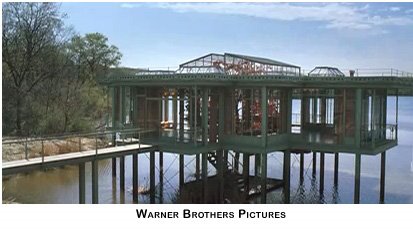
One thing Nance doesn't cover, however, is the film's title star. The Lake House was constructed specifically for the movie at Maple Lake in the Palos Forest Preserve, Production designer Nathan Crowley took the 2,000 square foot structure from sketches to completion in just ten weeks: 2 weeks design and documentation, 4 days bidding, and a scant seven weeks for actual construction. 35 tons of steel were used in the project, and a crew of nearly one hundred was required to finish the house by the time filming was scheduled to begin.

Structural engineers at McDonough Associates were honored for their work on the house by having it nominated as a finalist in the Structural Engineers Association of Illinois 2006 Excellence in Structural Engineering Awards (full disclosure: I served on the jury). The house was actually constructed on dry land next to the lake, atop steel beams that rose 10 feet above the waterline, which was created by excavating nearly 1,200 cubic feet of soil and letting lake waters flood in under the pilings. Although the house would be exposed to strong spring winds, Crowley vetoed diagonal bracing, which would obstruct camera angles. McDonough Associates had to come up with "moment resisting frames" that minimized the kind of lateral movement that could crack the house's all-glass walls.
The Lake House, however, is the only one of the movie's Chicago locations that you can't revisit. It was taken down immediately after filming. The soil was put back, and it's now the site of a new fishing pier.